2008 Cadillac XLR Custom Godfather Roadster

Palazzi Motorcars in Kingsville, Ontario (Canada) is a custom car shop headed by Tony Palazzi. Over the years, Palazzi has given the “Godfather” treatment to an eclectic mix of late-model automobiles, transforming them to look like a classic car.

Rather than mass-producing a neoclassic style automobile such as Excalibur, Zimmer, and other manufacturers, all of Palazzi’s cars are hand-built one-offs. They have done a Lexus SC430 coupe, a 10th-generation Ford Thunderbird, and a Lincoln Towncar in the past.

One of Palazzi’s most unusual creations is the Godfather Roadster, which began as a 2008 Cadillac XLR roadster and was highly customized to resemble a classic automobile.

The XLR roadster was a one-generation car produced by General Motors between 2004-2009 as a retractable hardtop 2-door sports/luxury car. It was offered as a base model with the 4.6L Northstar V8 producing 320 hp, and as a V-model with a supercharger making 443 hp.

The high cost of the car didn’t make sense to many buyers, who preferred the Corvette and its smaller price tag. Production of the Cadillac XLR ended in 2009 with a little more than 15,000 vehicles produced.

The XLR has distinct, angular body lines with hard edges from the grille to the taillights. While it is an interesting car, it is in my opinion perhaps the worst platform to start with for trying to make a gracious and curving neoclassic automobile.

The wide fender flares, white wall tires, and combination of curved bodywork with the angular roofline really looks bizarre. Confusingly, the car wears the hood ornament from an Excalibur, which is a competing brand of neoclassic automobile.

This car was offered at Barrett-Jackson’s Scottsdale 2023 no-reserve collector car auction. The seller description says that the “Palazzi package cost $79,000” on top of the purchase price of the car. It says the car was built with a retro look that resembles a Mercedes 540K from the late 1930s. The car shows just 10,866 miles on the odometer.

I was surprised to see this car sell for $44,000 at auction! What are your thoughts on the custom “Godfather Roadster?”
Barrett-Jackson 2022: 1970 Samco Cord 812 Convertible Replica

Neoclassic cars are a specialty product for a niche audience. I have written extensively about neoclassic cars for this website, and the companies that build them follow a similar pattern:

1) Company begins building fiberglass bodied cars on top of an existing 1970s or 80s Ford or GM chassis
2) Company builds a few hundred to a few thousand cars
3) Company runs into financial trouble and closes up shop
4) The cars trade hands in the secondhand market, with little to no verifiable information about the company or vehicle’s history

This story has been told time after time with Zimmer, Philips, Clenet, Classic Tiffany, Corsair, Gatsby, and the short-lived reboot of Stutz.

The story of SAMCO follows a similar path, though the cars themselves were unique in a way that stood out from the pack.

SAMCO is an acronym for Sports Automobile Manufacturing Company. It was a side project of William “Bill” Lear, creator of the Learjet – the world’s first mass-produced business jet.

While Lear was well-established in Wichita, Kansas the automobile operation was located in Oklahoma. From 1968 through 1970, the company produced approximately 400 SAMCO Cord replica cars.

According to the website www.stutzbearcat.com, the cars were offered in two models: the Warrior with a 108-inch wheelbase and the Royale with a 113-inch wheelbase.

Engine choices were a Ford 302 V8 engine or a Chrysler 440 Magnum V8 engine. The website www.barnfinds.com says that unlike most neoclassic cars which are built on another chassis, the SAMCO Cords are unique in that they are built on a custom frame.

Initially located in Tulsa, Oklahoma, production was later moved to Mannford, OK which is about 23 miles west of Tulsa.

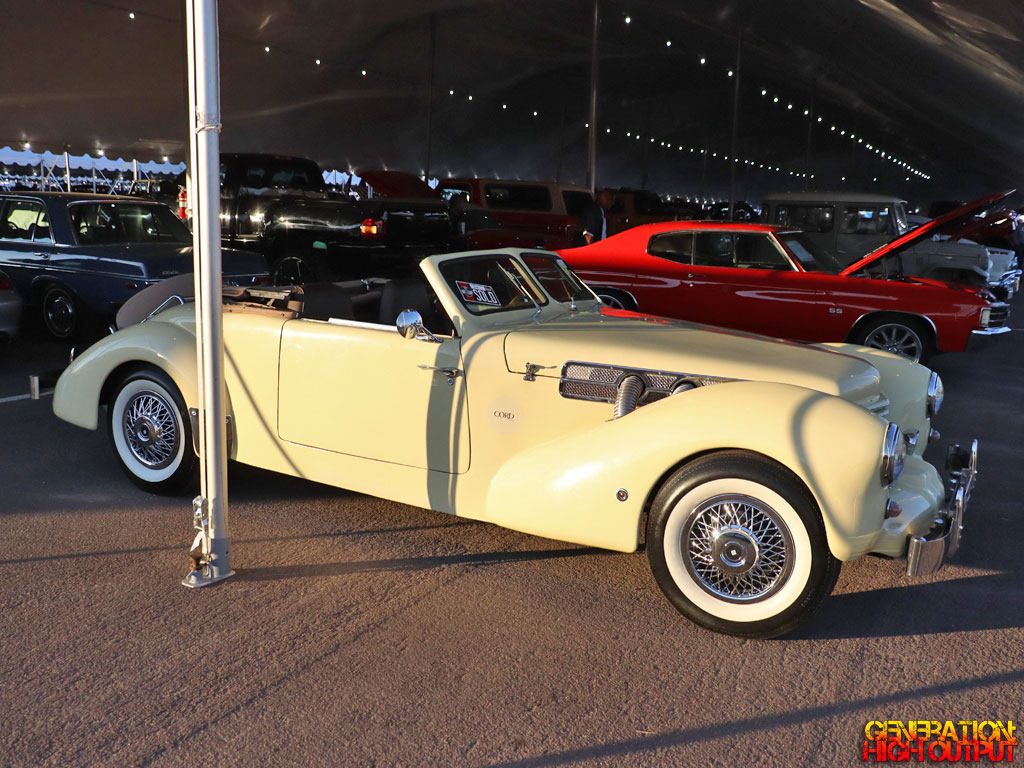
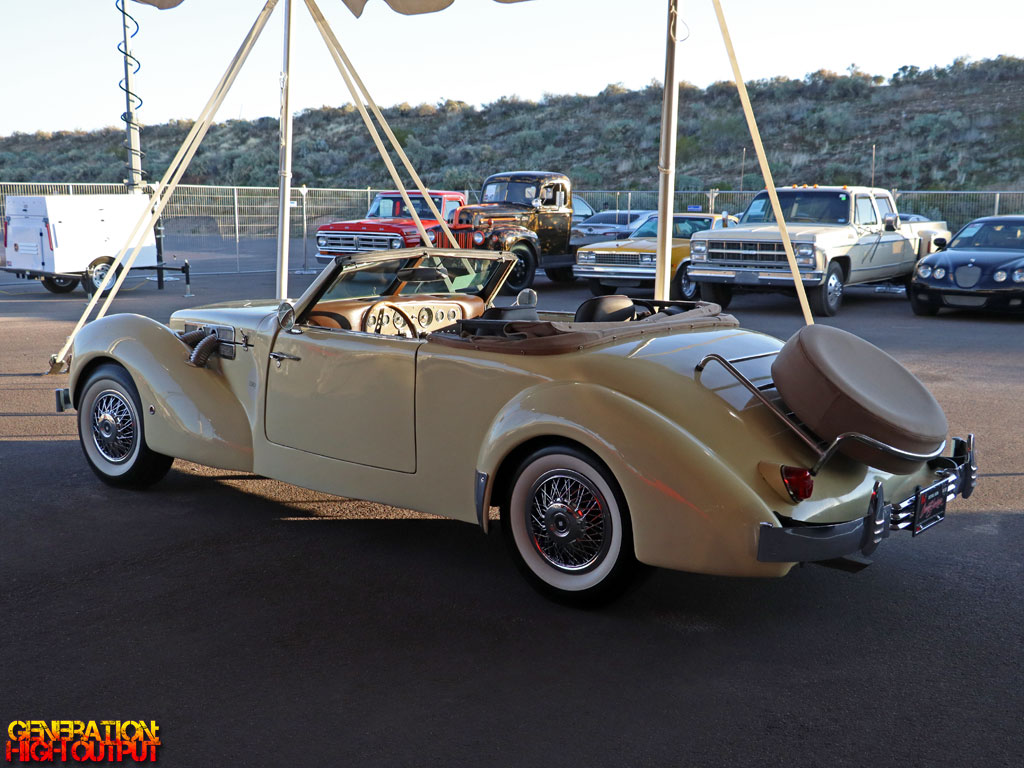
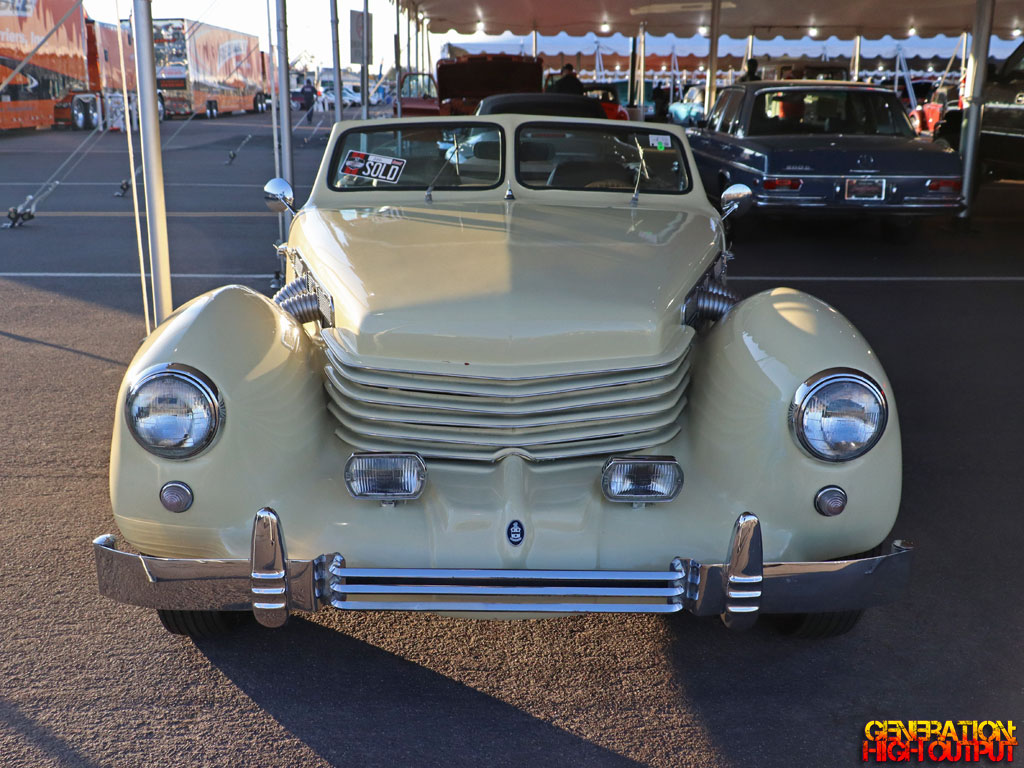
This 1970 vehicle is a replica of the 1937 Cord 812 Sportsman, though the proportions are quite different from the original. This SAMCO Cord is much too small to pass for a 1930s vehicle. The real Cord automobile is famous for its “coffin nose” styling with headlamps cleverly hidden in the front fenders. This gives the car a streamlined look that was very modern for the time. This car has no trick headlights, but a couple of round lamps fixed to each fender and two smaller lights in the middle. It’s a far cry from the sleek look of the original.

It has a manually-operated convertible top over two bucket seats up front. The vehicle is equipped with power steering, disc brakes, chrome wheels, and a rear luggage rack. Interestingly, the car does feature rear-hinged doors and white-wall tires, like the original upon which it is based.

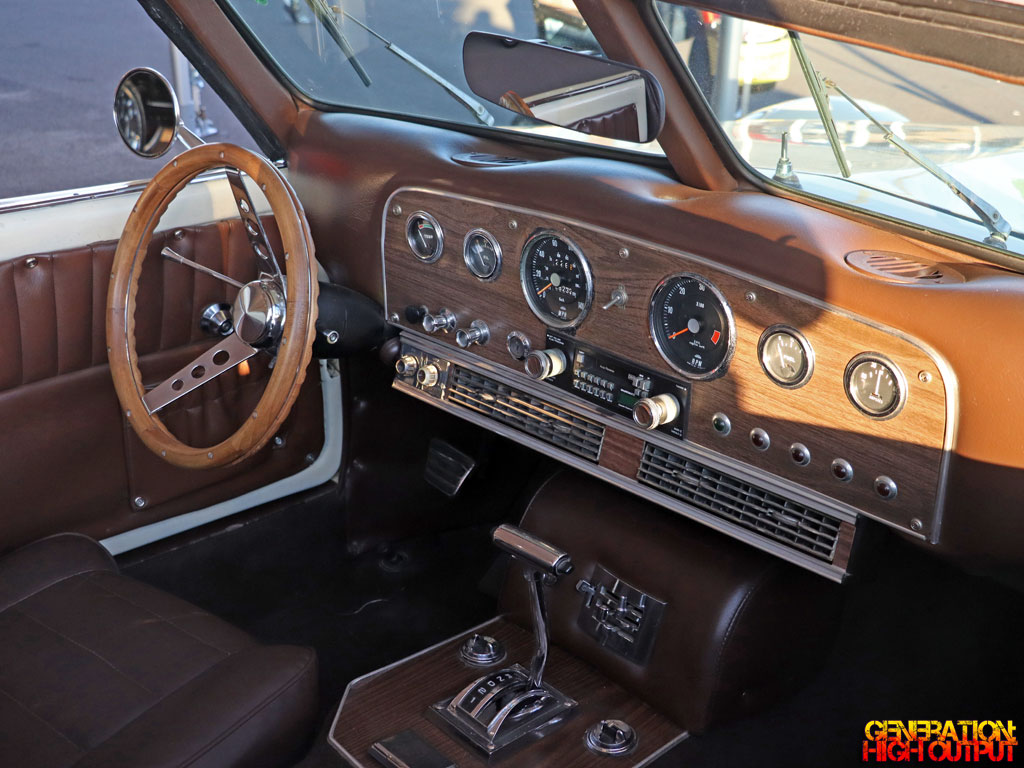
The dashboard has a cassette player radio, air conditioning, and all the faux woodgrain trim and brown vinyl upholstery you can handle. The layout is unconventional with the speedometer and tachometer in the center of the very flat dashboard. This car sold for $24,200 (including buyer’s premium) at the Barrett-Jackson Scottsdale 2022 Collector Car Auction as lot #109.

1981 Phillips Berlina – The Neoclassic Corvette

One of the most iconic cars ever created is the Mercedes-Benz S-Series. Produced between 1927 and 1933, these cars were the top performers of their time. The legacy of the Mercedes S, SS, and SSK cars lives on today, many decades after production ended.

In the 1970s and 1980s, a number of companies sprouted up to produce replicas of these famed automobiles. Excalibur, Classic Tiffany, Gatsby, Clenet, Besasie, and many others each took a turn at creating their modernized version of the classic Mercedes roadster.

In 1980, Charles W. Phillips of Pompano Beach, Florida decided to set about producing a replica of the 1934-36 Mercedes 540K Roadster, which was the follow-up to the famous S-Series cars. Neoclassic automobiles often use the chassis and powertrain of a mass-produced car, combined with custom bodywork. The Phillips Berlina is no exception. It has a fiberglass body riding on top of a stretched Chevrolet Corvette C3 chassis. This car, a 1981 model, wears a lovely shade of red with a white vinyl top.

Though it had a Chevrolet V8 engine under the hood, the Berlina Coupe produced just 190-200 horsepower. Factoring in the additional weight of the body and chassis, this is probably one of the slowest Corvettes around. But this is not a car to be driven swiftly or aggressively, this car is all about style.

The round headlamps, oversize horns, running boards, and spare wheels mounted on the fenders hearken back to the pre-war motoring era, when automobile ownership was reserved for the wealthy elite. With the long hood and short deck, it definitely resembles the Mercedes-Benz 540K. Look closely though and you can see the doors, windshield, and interior are unmistakably Corvette.

The stretched wheelbase really throws off the proportions of the car. It must have an absolutely terrible turning radius! Look at how ridiculous it looks from the side. The car’s 185/65R14 tires up front look especially small beneath the large wheel arches.

It does not appear as though there is a trunk or any kind of access through the rear bodywork. Not that Corvettes are particularly spacious cars to begin with, but from the looks of it, it wouldn’t have been that hard to make an opening rear hatch.

From what I can tell, the company wasn’t in business very long. Only 78 of these cars were produced between 1980 and 1983. If you have any more details about the Phillips Berlina Coupe, please post a comment below!

2022 Update

Another 1981 Phillips Berlina popped up for sale at the Barrett-Jackson Scottsdale 2022 collector car auction! Lot #646 is a 1981 Berlina Custom Coupe painted a gold/tan color over tan interior and showing 16,228 miles on the odometer. The car sold for $22,000 (including buyer’s premium). Interestingly, some of the words I wrote about this car in my 2020 post made it onto the vehicle description in the auction catalog!

1986 Zimmer Quicksilver Neoclassic Car

In the 1970s, there was a short-lived niche market for classic-style automobiles. Several boutique manufacturers such as Excalibur, Clenet, and others set about building modern interpretations of these 1920s style cars in low volumes. Primarily based on full size platforms from GM and Ford, these Neoclassic cars combined classic styling elements with the reliability of a modern (at the time) powertrain.

There are certain elements common to neoclassic cars: they are usually built by hand in low numbers, and have wire wheels, round headlamps, flared fenders, and of course, a waterfall grille. Many of these cars were upgraded with leather, real wood, and other high quality materials that commanded a premium price. The Zimmer Motorcar company, founded in New York in 1978, was one of the leading companies that produced these neoclassic cars.

The company’s star product was the 1920s style Zimmer Golden Spirit, which was based on the Ford Mustang platform. It was their most successful car, with approximately 1,500 units built between 1978 to 1988.

The follow up to the Golden Spirit was the Quicksilver. This car was based on the Pontiac Fiero, a unique mid-engine compact car from General Motors. Fieros were a popular platform for kit cars and customs, due to the fact that all of the car’s body panels could be unbolted and a rolling chassis/tub was easy to build around.

Produced from 1984-1988, the Zimmer Quicksilver was on the tail end of the neoclassic car trend. Its design was noticeably more subtle than other neoclassics of the 1970s and 80s. Gone are the round headlamps, replaced by pop-up headlamps. The step-side fenders common to other neoclassics have been replaced by more modestly flared wheel arches. The car does still have a waterfall grille, and plenty of chrome trim added.

This particular car is a 1986 Zimmer Quicksilver, which came up for auction at the RM Sotheby’s Scottsdale auction in January 2020. According to the listing, this car is a one-owner example with just 464 miles on the odometer. The red leather interior and engine bay shine like new, despite the car being 34 years old. In spite of the car’s old-world look, there is no hiding the fact that this is an 80’s GM car with pop-up headlights and a very square, angular interior.

From a sales perspective, the Quicksilver was not as successful as the Golden Spirit. Whereas 1,500 Golden Spirits were produced, an article on ConsumerGuide.com says that only 170 Quicksilvers were built during the four year production run, making this quite a rare car.

Sotheby’s appraisal estimated the car’s value at $40 to $50,000 dollars. The final sale price at auction was $21,280 (including buyer’s premium), possibly due to an uncertain economic outlook in early 2020, and possibly due to the rarity of the car and collectors who are unfamiliar with the Zimmer name. The value of used neoclassic cars varies wildly, depending on build quality, condition, maintenance, and other factors.

This is an interesting car that is quite possibly the fanciest, most luxurious Pontiac Fiero that money can buy.

https://rmsothebys.com/en/auctions/az20/arizona/lots/r0149-1986-zimmer-quicksilver/841861

1978 Rolls Royce “Wannabe” Neoclassic Car

Neoclassic cars are a strange breed. These cars combine classic design elements (waterfall grille, round headlights, swooping fenders) with a modern powertrain and chassis. The idea with most neoclassic cars is to create a tribute or modern interpretation of a historic vehicle, such as the Mercedes-Benz SSK.

This car takes a different approach. Built on the chassis of a 1978 Chevrolet Camaro, it has a 305 V8 engine, automatic transmission, and rear end. But instead of a custom fiberglass body from a coachbuilder, this car has the modified body of a 1973 Volkswagen beetle convertible. The doors, windshield, seats and floor pan are all VW. The front end has received some custom treatments, which resembles a certain brand of British luxury car without infringing on any trademarks.

A paper on the car’s window described itself as a “Rolls Royce wanna-be.” Indeed, the car’s body lines are designed to resemble the Rolls Royce Silver Cloud drophead coupe. The wide fender flares and wire wheels are common design elements of neoclassics, seeking to recreate that vintage motoring experience.

According to the paper, the car was titled as a Special Construction vehicle in Minnesota in 1991. “Has A/C, AM/FM Cassette, cruise control, everything works! Runs and drives like new. Professional workmanship.”

There’s no hiding that 1970s GM interior, and no mistaking this ride for a luxury car from any angle. Though I will agree that the workmanship looks good, the proportions are a bit awkward – especially with that bulge behind the convertible top.

This car also suffers the awkward work-arounds common to other Neoclassic cars, such as the strange placement of the fuel filler door, the lack of a glove box and a working trunk. These compromises make the car a weekend cruiser and not a daily driver in my book. The location of the instrument cluster in the center of the dash is also strange – perhaps a clearance issue?

Another interesting feature is the split front and rear bumpers – was this done as a nod to the 1960’s era Corvette? Your guess is as good as mine.

For some reason, it really interests me when people who are not automobile designers by trade endeavour to build their own custom cars. Though not my favorite neoclassic car, I can respect the effort that was put into building the Wanna-Be Rolls Royce.

1987 Lerini Armaretta Custom Coupe

In the mid-1930s, the Mercedes-Benz 500K was the cutting edge of automotive technology. These cars offered unparalleled performance, styling, and luxury. These were the undoubtedly the best cars available at the time, and were such incredible vehicles that they are still very expensive and desirable today. The 500K and similar Mercedes cars from the era are the benchmark, the standard for a generation of “neoclassic” automobiles that began to appear in the U.S. starting in the 1970 and 1980s.  Continue reading