1955 Chevrolet Bel-Air

If this was the 1990’s, instead of 2013, I’d be giving you a long article “ho-humming” the shit out of the little Chevy shoe-box. If you’re a younger reader then you wouldn’t understand, but for those of us who remember that time, it was the equivalent to what you see now with 60’s muscle cars. The generation that grew up with, or aspired to own 1950’s steel happened to be the ones with the buying power at the time. A 1971 Chevelle, Gran Sport, Lemans or Cutlass wasn’t an expensive car then. They were about as viable as say, a late 4th gen F-body is now, or a Fox body Mustang was 5-10 years ago. If you opened an issue of Super Chevy Magazine, you were liable to get your eyes overcome with Bel-Airs replete with loud paint, tweed interiors, lots of billet nonsense, and a TPI motor.

Thankfully for this Chevy Bel-Air, it doesn’t succumb to any of that nonsense of the past. It’s a nice clean example of a cool cruiser. As far as this model of cars go, the ’55 happens to be my favorite, styling wise. It has the short grill up front (which was apparently unpopular at the time) and the bodywork is subtle compared to the big fins and huge side chrome on the rock-and-roll 1957’s. 1955 was also the first year for the now ubiquitous small block Chevy V8 powerplant. In the Bel-Air it displaced 265 cubic inches and was rated at 180hp. It’s no rip-snorting ’55 324 Olds, but the small block Chevy’s smart design and insect-like infestation into other GM brands in the mid 70’s ensured it would be the V8 to survive the longest. As far as the design of the Bel-Air, it’s generations came and went like pop songs and by 1958 it was a new design, only to be used for a year and redesigned again in 1959.

1970 Buick GSX

During the time of A-body GM cars such as the Pontiac GTO “Judge”, the Oldsmobile Cutlass 4-4-2 W-30, and the Chevrolet Chevelle Super Sport 454, Buick decided that it wanted to carve a niche for a doctor’s car that hauled ass with the blue-collars. The 1970 Buick GSX stands alone among the others with it’s absolutely absurd gross torque rating that is rated over 500 ft lbs below 3000 rpm. With it’s 455 cubic inch Buick engine (Pontiac and Oldsmobile offered their own brand of similarly displaced 455 cubic inch engines, Chevrolet offered the now well-known 454) it certainly measured up to the rest, and with the good looks that A-body platform provided, it was nice edition to General Motors high performance stable.

I absolutely love this time in the automotive industry. Not because it rings nostalgically with me like all the baby boomers I see spending astronomical sums of money to own one again before they’re worm food, but because they’re from a time before the evils of badge engineering. The above cars may have shared a general platform, but they all got different body work and sheet metal, had engines designed completely different for one another and were all gunning to be the top dog under GM’s banner. It wasn’t about making a car that was better than a Charger, ‘Cuda, or Gran Torino, it was about having a car that was better than the one being done by an “in-house” brand. I think that the friendly rivalry kept the imagination and output high, even if all the different parts and pieces being made by each brand was a nightmare for the bean counters. Continue reading

Swede Talker: 1967 Volvo P1800S

Okay, I know what you’re thinking: when was the last time you heard the words “Volvo” and “sports car” in the same sentence? Volvos are famous for being some of the safest and most reliable cars on the road, but they’re also quite boring. However, it wasn’t always this way. Volvo did make a sporty little coupe that was introduced back in 1960: the P1800.

Continue reading

The Chimera That You Can Sleep Inside

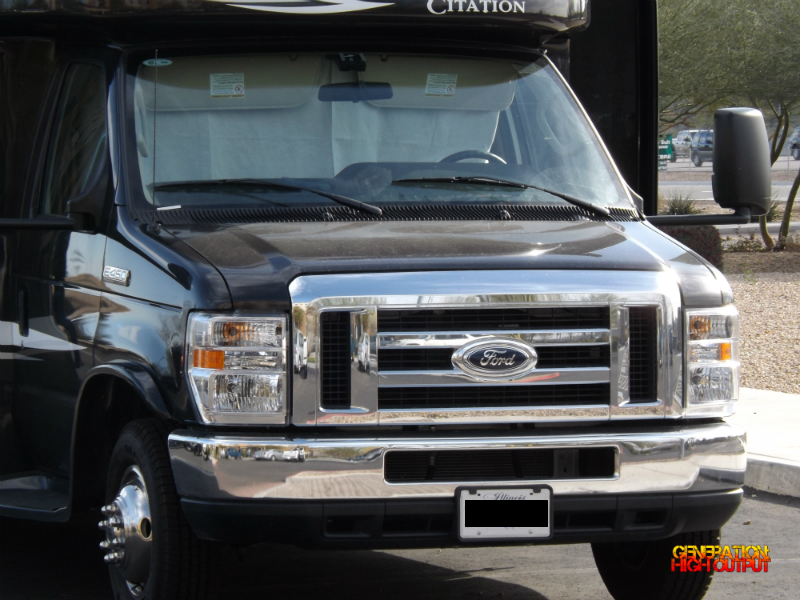
What has the face of a Ford, the ass of a Dodge and the name of a Chevrolet? Apparently this Recreational Vehicle.