SEMA 2025: 1953 Corvette CF1 Fastback by Kindig-It Design

Every once in a while at SEMA you come across a car that immediately tells you two things:

1. A ridiculous amount of time, money, and talent went into it
2. It will probably never do anything as undignified as getting a grocery run or sitting in traffic next to a lifted Tahoe with mismatched panels

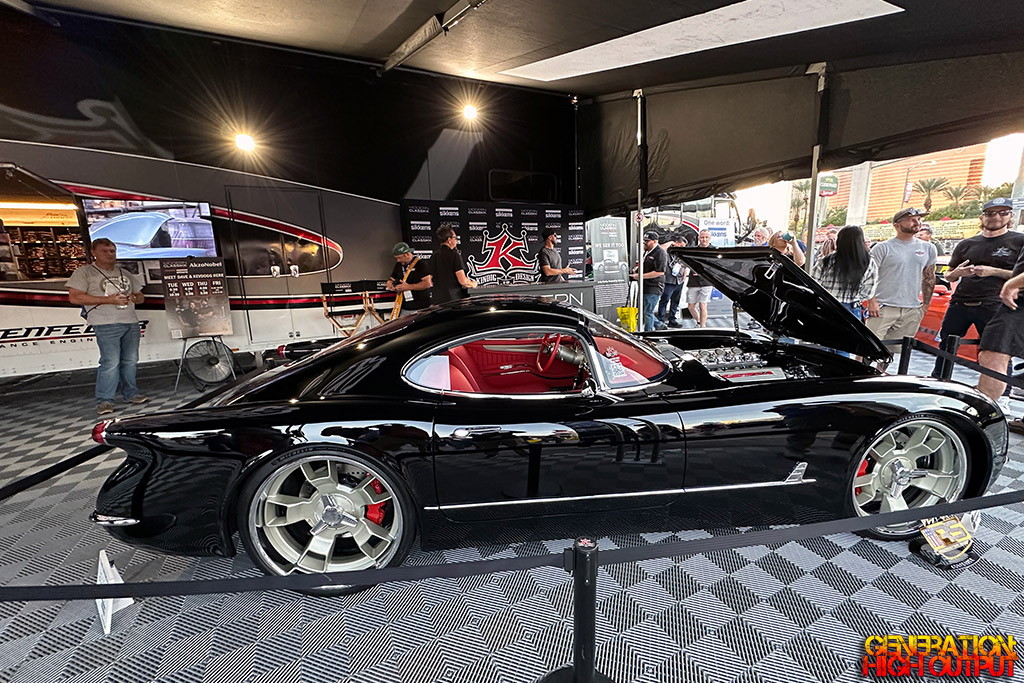
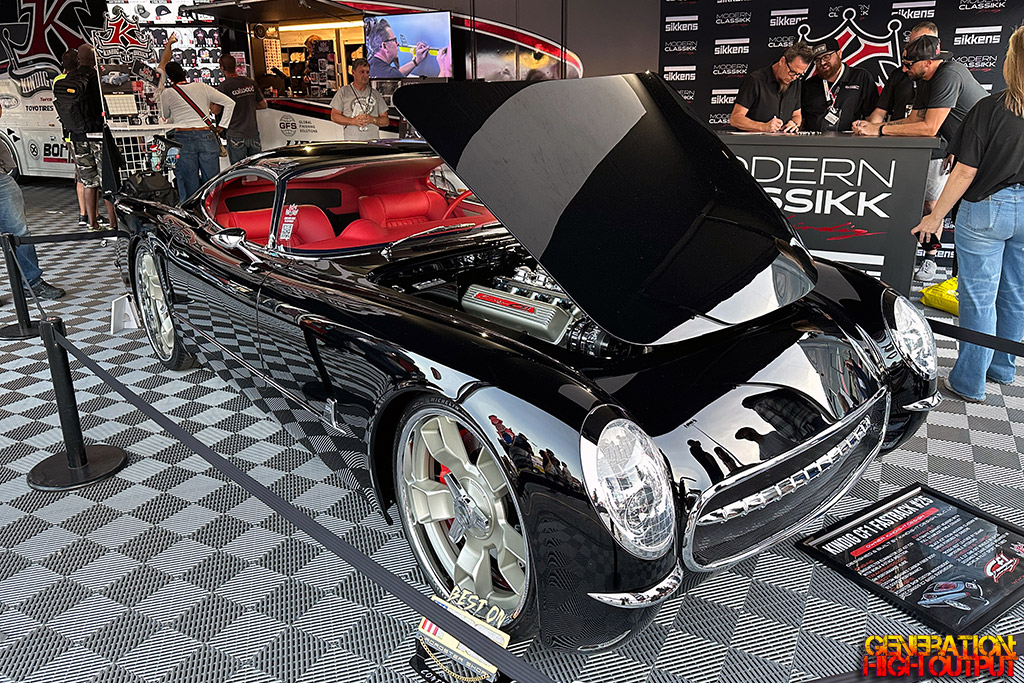
This year, that car was the new CF1 Fastback from Kindig-It Design.

And honestly, it doesn’t really feel fair calling it a “car” in the normal sense. It feels more like a design study that was made into a real object.
Dave Kindig’s Side Project

If you’ve spent any time around custom cars, the SEMA Show, or turned on cable TV in the past decade, you probably already know the name Dave Kindig. His shop in the Salt Lake City area has basically turned into a rolling portfolio of “what if we just… did it better than factory” ideas, many of which have been documented over 11 seasons of Bitchin’ Rides.

But somewhere along the way, Kindig launched a side project of building a small-run of series production cars. The CF1 series is that idea fully realized.

It started with the CF1 Roadster in 2021, followed by the Cabriolet in 2023, and now the Fastback version making its debut at SEMA 2025.

Each one is a continuation of a thought experiment:

“What would a 1953 Corvette look like if it was actually allowed to evolve normally instead of getting frozen in time?”
A Corvette That Never Existed, But Should Have

The inspiration is obvious: the original 1953 Chevrolet Corvette. But the CF1 Fastback isn’t really a tribute car in the traditional sense.

It’s more like someone took the concept of that car and removed all the limitations that existed in 1953 such as budget, materials, tire technology, chassis engineering, and general understanding of physics, and then rebuilt it from scratch.

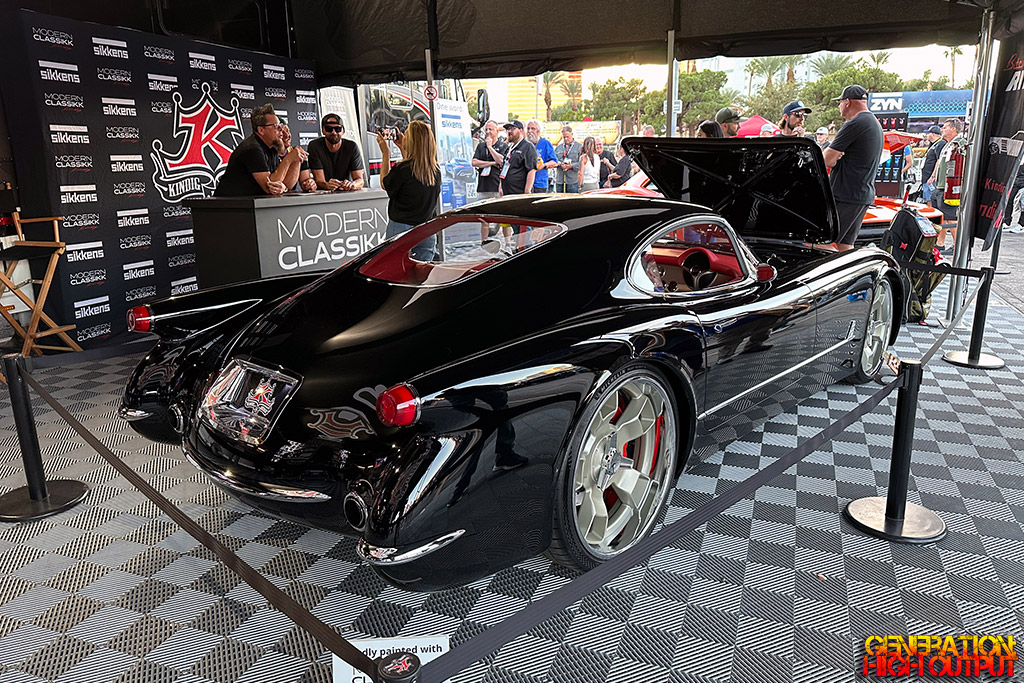
There are no donor shells. No chopped-up classics being sacrificed in the name of nostalgia. Just a fully custom carbon fiber body sitting on a purpose-built platform.

Which, depending on your mood, is either the purest form of respect for the original design… or a very expensive way of refusing to leave the past alone.
Underneath the Pretty Surface

The CF1 starts with a custom chassis from Roadster Shop, using suspension geometry borrowed from the C7 Corvette platform. This isn’t a “vintage feel” car that also happens to stop and turn poorly. It’s engineered to behave like something modern, even if it looks like it belongs in a black-and-white photograph.

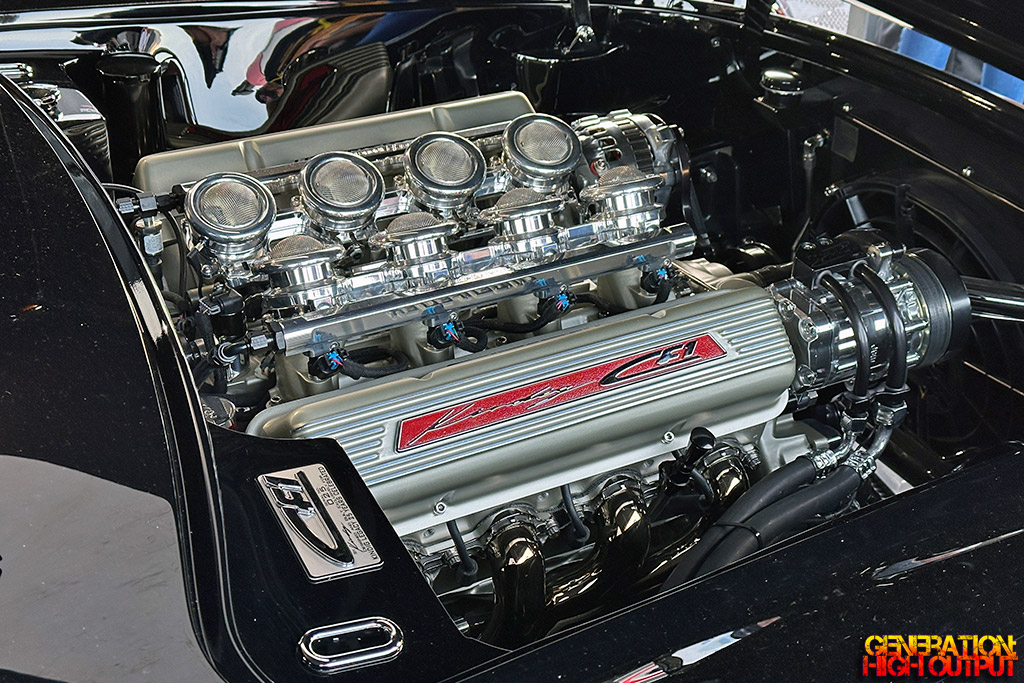
Power comes from a 427 cubic inch LS7-based engine built by Lingenfelter Performance—an Eliminator package pushing around 650 horsepower. On top sits an 8-stack electronic fuel injection system from Borla, feeding a full stainless exhaust setup that probably sounds a lot angrier than anything wearing 1950s styling should reasonably sound.

Bolted behind it is a GM Performance 4L80E transmission, which is about as far from “vintage” as you can get without involving a CVT and regret.

So yes—it looks like a classic Corvette.

But mechanically, it behaves like something that quietly skipped 70 years of automotive evolution and showed up already finished.

Interior: Luxury That Doesn’t Know It’s in a Hot Rod

Inside, things go from “restomod” to “luxury boutique hotel that forgot it was supposed to be a car.”

Rosso red leather by Seams Impossible Interiors gives the cabin a level of visual drama that feels closer to concept car than street machine. Dakota Digital gauges handle instrumentation duties, a Vintage Air system keeps things comfortable, and a custom steering wheel with a tilt column.

It’s all very deliberate. Very controlled. Very expensive.

And very far removed from anything that ever had a carburetor and a choke lever.

Jesus, Take the Wheel

The CF1 rides on custom EVOD wheels designed by Kindig himself. They are 21 inches up front, 22 in the rear. They are too big and too goofy for the car. I know it’s a restomod, but I feel that a more “OEM Plus” style wheel would suit the car better. The proportions of the car don’t look right with the wheel arches completely filled.


Time, Money, and the Slow Disappearance of “Normal Ownership”

Each CF1 takes roughly 9 to 14 months to build depending on specification. Finished examples of the CF1 Roadster have sold at auction for between $500 to $700,000 dollars, which puts it firmly in the category of “objects that will be carefully curated rather than used.”

And that’s where things get a little complicated.

Because the CF1 Fastback is undeniably beautiful. It’s one of those cars you walk around twice without realizing you’ve done it. It has presence, proportion, and craftsmanship that most production cars don’t even attempt anymore.

But it also feels like it’s been pre-assigned a life that never includes:
• Parking lots
• Road trips with questionable gas stations
• Door dings from someone’s overenthusiastic Civic door
• Or any situation involving weather

It’s already been mentally placed on a pedestal.

Probably before it even left the booth.

Final Thoughts

What Kindig-It Design has done with the CF1 Fastback is technically impressive in every measurable way. The engineering, design execution, and build quality are all at a level that most manufacturers would struggle to match outside of a concept studio.

But it also highlights something a little bittersweet about the modern custom world.

We’ve gotten so good at building dream cars that we’ve almost eliminated the part where they have to live in the real world.

And maybe that’s the trade-off.

The CF1 Fastback isn’t really meant to be driven like a normal car. It’s meant to exist. Which is fine.

But part of me can’t help but think the original 1953 Corvette didn’t plan on becoming an untouchable art piece either.

Follow Kindig-It Design:

https://kindigit.com/
https://www.facebook.com/Kindigit/
https://www.instagram.com/kindigitdesign/
https://www.youtube.com/@kindigitdesignofficial
SEMA 2024: 1965 Buick Skylark “The Enforcer” by VRD Customs

There are certain types of cars that appear over and over again at the SEMA Show, such as: first-gen Camaros, Dodge Challengers, and Ford Mustangs. All of these cars are popular with performance enthusiasts, and the cars are well-supported by the aftermarket industry. But after multiple days of walking the giant convention halls, the cars start to look the same.

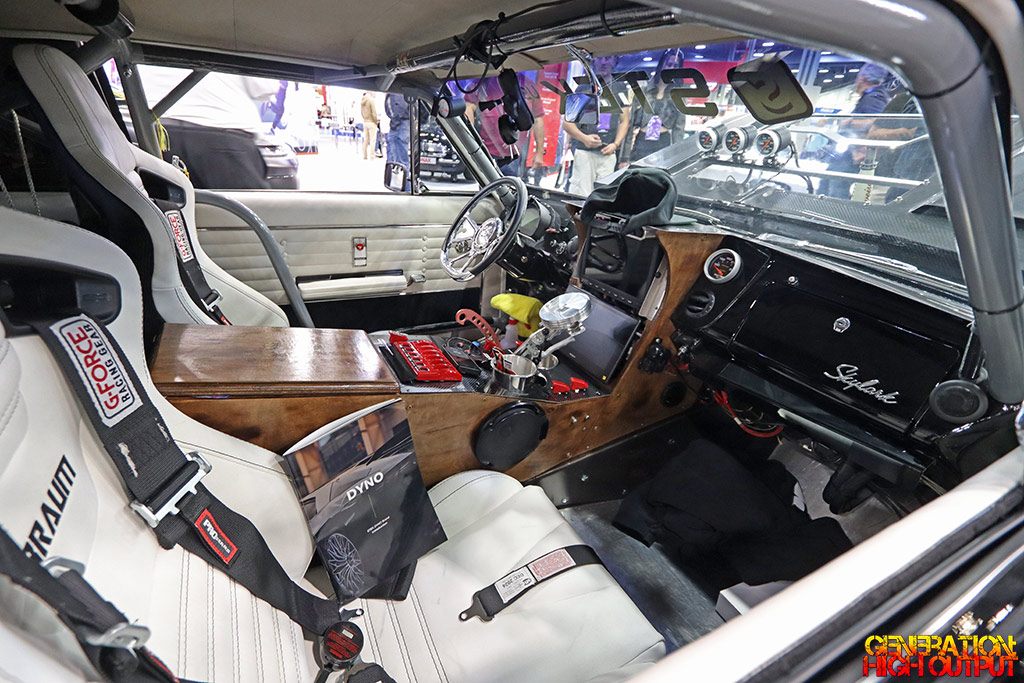
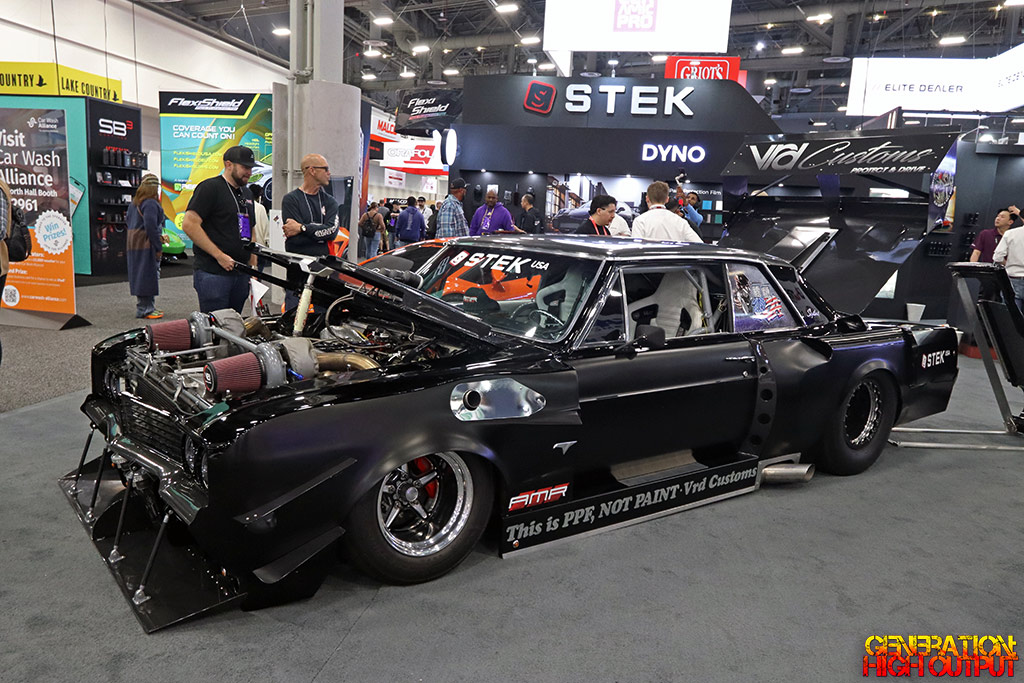
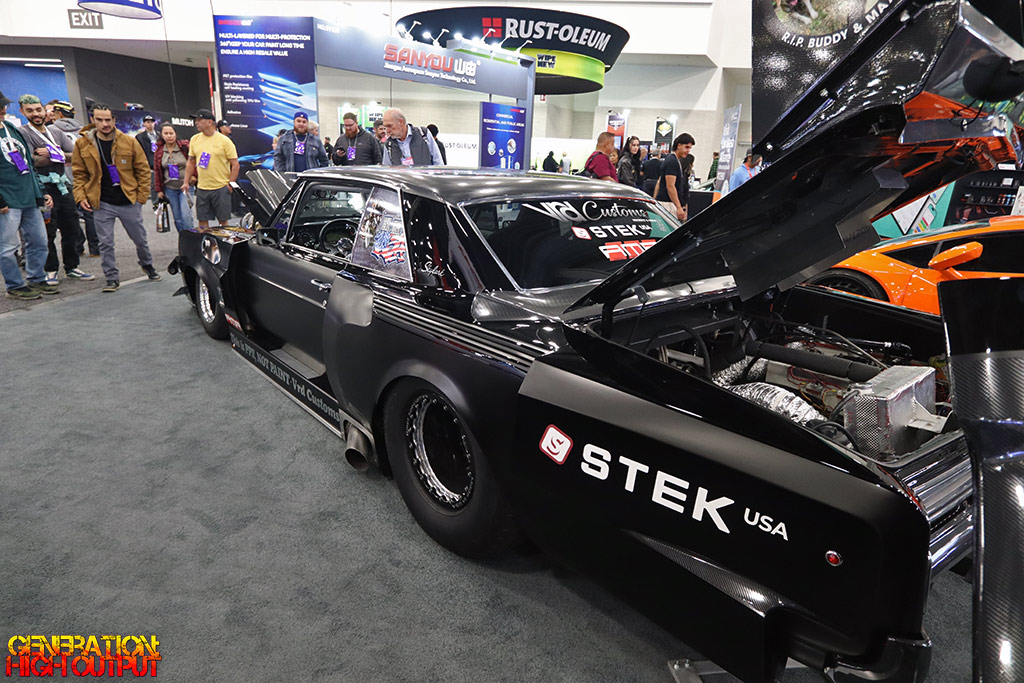
Walking the floor at the 2024 SEMA Show, I passed by the STEK book and saw a very unique car that drew me in for a closer look. It was a wild custom 1965 Buick Skylark built by VRD Customs of Danbury, CT. The car is nicknamed “The Enforcer” and it blends modern technology with classic style.
The exterior is painted black, and every inch of the car is wrapped with a combination of Satin Black, Gloss Black, and Carbon Fiber paint protection film (PPF) from STEK. This gives it an interesting visual look.

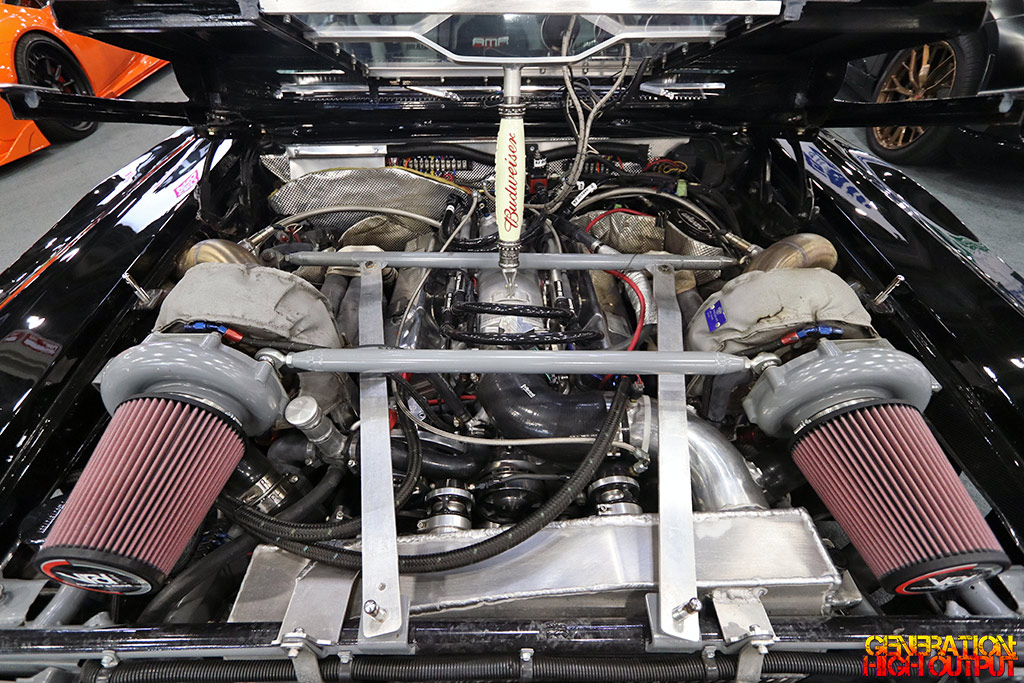
The exterior is adorned with a carbon fiber hood, roof, and trunk lid, as well as front aero components, including a large front air dam. Sticking up through the hood are a pair of twin turbochargers, hinting at the performance under the surface.

Hidden under the front carbon fiber canards are night vision cameras, which are an unusual feature you don’t typically see on a high-performance drag car.
Speaking of performance, this Skylark features a 350 cubic inch Small Block Chevy engine with twin turbos, producing a strong 1,400 horsepower on 93 octane fuel. It has a custom fuel delivery system with two injectors per cylinder, and the whole thing is managed by a Haltech ECU. This is an interesting choice to go with a Small Block Chevy instead of an LS-based engine, and one that I think is pretty cool.

Even with all this performance, the car doesn’t skimp on driver comforts. It includes air conditioning, power steering, and Wilwood hydroboost brakes to help make it more comfortable and controlled on the street. Yes, this car is street legal!

The custom steel widebody fenders give the car a wider, aggressive stance. You’ll also notice the side-exit exhaust pipes just in front of the rear wheels, which add to the hot rod look. It rides on air suspension at all four corners, allowing for ideal height adjustment depending on road or track conditions. The car rides on Billet Specialties wheels with wide drag slicks in the back.
Inside, the car is fitted with Braum seats and G-Force harnesses, providing both safety and comfort. A full roll cage has been installed and painted gloss grey, adding structure and reinforcement to the car’s A-body chassis. Additional comforts include Bluetooth, navigation, and Wi-Fi modules.

Open the trunk, and you’ll find an interesting layout: dual fuel cells and a nitrous bottle are mounted over the rear-mounted radiator and transmission cooler. There is so much going on with this car that it really takes a while to let it sink in.

While it may look intimidating at first glance, The Enforcer is a no-compromise build that mixes vintage muscle and modern tech. Instead of having this or that, have both! VRD Customs has taken the classic Skylark and turned it into something truly special, a drag racing beast that can also be driven on the street. I enjoyed checking out this car at the 2024 SEMA Show.

For more, follow @baggedttbuick on Instagram.

SEMA 2024: 1993 Honda Civic EG Hatch Tesla Swapped by RyWire

The 1990s Honda Civic hatchback is one of those cars where you either had one, knew someone who had one, or wanted one. Cheap to own and endlessly modifiable, the Civic EG hatch was a favorite among tuners.

I remember high school classmates rolling up in Civics with neon underglow, painted interior bits, and the ever-present “fart can” exhaust. This was an era of questionable taste and boundless creativity. Keep in mind, this was only a few years after the original Fast and the Furious movie came out.

Fast forward to 2024, and the Civic is still a staple in the tuning world, but the game has changed. At the 2024 SEMA Show in Las Vegas, the Toyo Tires Treadpass area featured a remarkable build that represents just how far this 30+ year-old platform can be pushed. Enter RyWire Motorsports’ fully electric 1993 Honda Civic EG hatchback, which combines JDM style with cutting-edge EV tech.The car was built by Ryan Basseri of RyWire Motorsports of Santa Ana, California. Basseri is no stranger to high-end vehicle builds and custom wiring. He previously did a full EV conversion on a Honda S2000, which is documented on the RyWire YouTube channel. But this Civic? It’s next-level.

Gone is the original gas-powered Honda engine, replaced with a Tesla-sourced electric powertrain. He salvaged a Tesla motor, inverter, and charge controller and adapted them to fit the EG chassis.

Under the hood, the exceptionally clean installation shows off Basseri’s attention to detail. The electric motor delivers an estimated 300 horsepower, which is triple the car’s original 90 horsepower. In the trunk is a 16 kWh battery pack, which was salvaged from a Chrysler Pacifica hybrid. The pack runs through an AEM battery management system and offers roughly 70 miles of range, which is more than enough for short trips around the neighborhood or silently rolling up to the local cars and coffee.

And yes, it even has air conditioning! A stock Tesla compressor has been adapted to work in this setup, ensuring the essential passenger comfort of cooled air on a Southern California day.

Braking has also received a high-tech overhaul. The factory vacuum-assisted system has been swapped for a Bosch iBooster unit from a Honda CR-V, complete with a custom reservoir. The fully electric iBooster provides consistent and reliable brake pressure, which is essential when dealing with instant torque.

Inside, the car is just as impressive. Instead of the rattle-can-painted dash, the RyWire EG features Recaro DC2 JDM Type-R front seats, with the rear seat reupholstered to match in black suede with red stitching. The cockpit is rounded out with a fully digital AEM dash and a Spoon steering wheel.

The stance is proper, sitting on custom Nitron springs and a set of 15-inch Volk Racing TE37 wheels in dark silver. These one-piece forged wheels are a favorite among JDM enthusiasts and lend a timeless motorsport look to the modernized hatch.

The RyWire Civic wasn’t alone at SEMA this year. Sharing the spotlight was a second Civic in the CSF Radiators booth. That car was a red 1999 EK hatch with a dual-motor, all-wheel-drive swap and a larger 85 kWh battery pack built into a custom-fabricated floor. But while that car was technically more impressive, the 1993 EG in the Toyo Tires pavilion was the one that caught my eye for its super clean setup.

This build is more than just a show car, it is pushing the boundaries of the Honda tuning scene into the EV era. While many see electric conversions as soulless, RyWire has shown that with craftsmanship, creativity, and respect for the platform, even the humble Civic hatch can be reborn as something truly electrifying.

For more, follow @rywire_motorsport on Instagram.

2006 GDT Speedster – A One-Off Corvette Creation

The 2006 GDT Speedster is one of those unique creations that I discovered while walking the endless rows of cars at the Barrett-Jackson Scottsdale Fall auction. Built on a 1994 Chevrolet Corvette, this one-of-a-kind car showcases the creativity and craftsmanship of a dedicated team of automotive professionals.

Recently sold for $19,250 at the Barrett-Jackson Scottsdale Fall 2024 collector car auction, the GDT Speedster is a fascinating experiment—but is not without its quirks and compromises. Let’s take a closer look at this polarizing creation.

A Unique Vision

The GDT Speedster—named for the Gene Dickirson Team—is the result of a group of industry veterans’ desire to build a car from scratch, free from the constraints of corporate bureaucracy. While their mission was ambitious, the execution raises questions about practicality and usability. The project, which spanned from February 2000 to November 2005, resulted in a machine that features more than 2,000 customized and one-off parts but seems to prioritize style over substance. To me, the car looks like a concept vehicle straight from an auto show.

Corvette Foundations

Beneath its radical exterior, the GDT Speedster retains the chassis, steering, suspension, and engine of a 1994 Chevrolet Corvette. No matter what it looks like, it does at least drive like a sports car. However, one can’t help but wonder if retaining the stock Corvette platform undermines the ambition to create something truly original. By leaning heavily on Corvette’s mechanicals, the Speedster may have limited its potential for innovation.

Radical Design with Questionable Practicality

The GDT Speedster’s design is undeniably striking, but it comes at the cost of practicality. Its red exterior and brown interior are eye-catching, yet the extreme raked-back windshield and lack of a top or side windows severely limit its usability. This is a car built for perfect weather and not much else.

Additionally, the absence of conventional amenities like cup holders, a glove compartment, or side mirrors feels less like a bold design choice and more like an oversight. While these omissions might enhance the car’s minimalist aesthetic, they detract from its functionality as a vehicle that can be enjoyed beyond an auto show floor.

One of the standout features of the GDT Speedster is its integrated headrest humps or fins, which are reminiscent of race cars such as the legendary Jaguar D-Type. While visually striking, these elements feel more like a nod to classic designs than an innovative addition, reinforcing the sense that the car’s creators were more focused on aesthetics than breaking new ground.

A Labor of Love or an Exercise in Excess?

Creating the GDT Speedster was no small feat. Over five years, the team meticulously engineered every detail, from its bespoke bodywork to its entirely reimagined interior. However, the end result feels like a vehicle caught between two worlds: it’s neither a fully functional sports car nor a groundbreaking concept. Instead, it exists as a curious hybrid that struggles to find its purpose.

The Price of Exclusivity

When the GDT Speedster crossed the auction block at Barrett-Jackson, it hammered for $19,250. While this might seem like a bargain for a one-of-a-kind car, the price also reflects the reality that its appeal is limited. For all its bespoke craftsmanship, the Speedster remains a niche vehicle that may struggle to find a broader audience, even among Corvette purists.

Final Thoughts

The 2006 GDT Speedster is a bold experiment that deserves credit for its ambition, but it’s not without its flaws. Its striking looks and handcrafted details make it a standout, but its practicality leaves something to be desired. For the winning bidder, the GDT Speedster represents a fascinating piece of automotive history—albeit one that may be more at home in a collection than on the open road.

SEMA 2023: 1976 Chevrolet Impala Wagon by 187 Customs

If you have turned on a TV at all in the last several years, you have probably heard of Shawn Ellington and 187 Customs. They have been featured numerous times on Street Outlaws and Street Outlaws: No Prep Kings on TV.

Based in Oklahoma, Shawn and his team have built the famous 1969 “Murder Nova” that puts down 4-second times in the 1/8 mile and 6-second times in the quarter mile. But we’re not here to talk about the Murder Nova today.
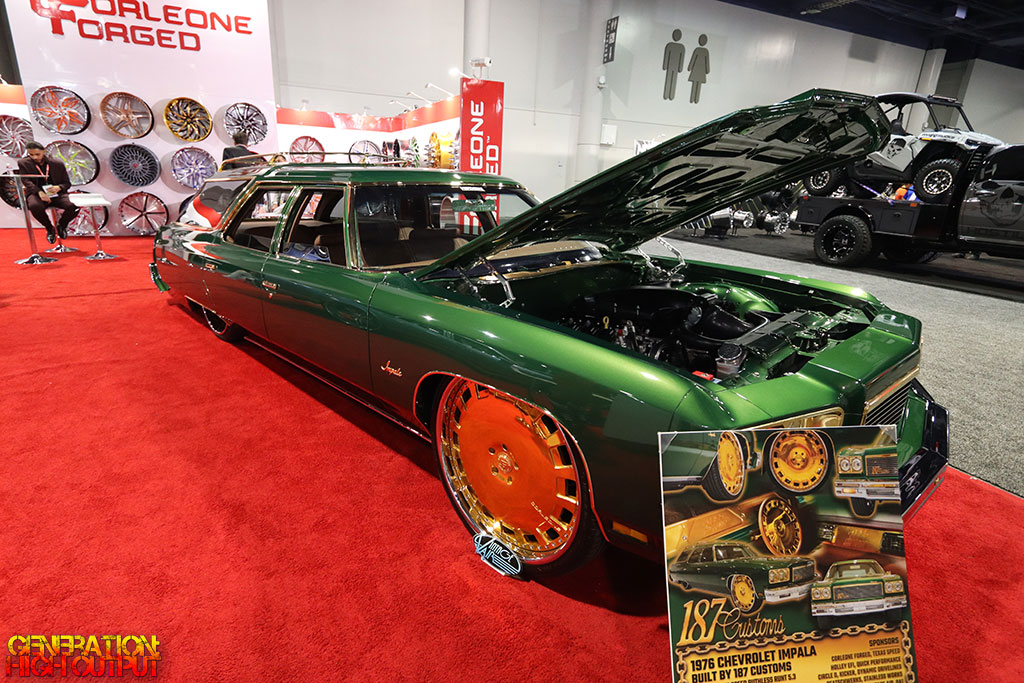
Instead, we are taking a look at the 1976 Chevrolet Impala wagon that 187 Customs brought to the 2023 SEMA Show. I saw the car at the Corleone Forged wheels booth.

Having attended SEMA for several years, I have noticed some patterns among custom car builders. There is no shortage of custom Camaros, Novas, Corvettes and Mustangs at SEMA. Nobody is building anything from the mid-to-late 1970s, or any station wagons for that matter. So it was really different to see something like this.
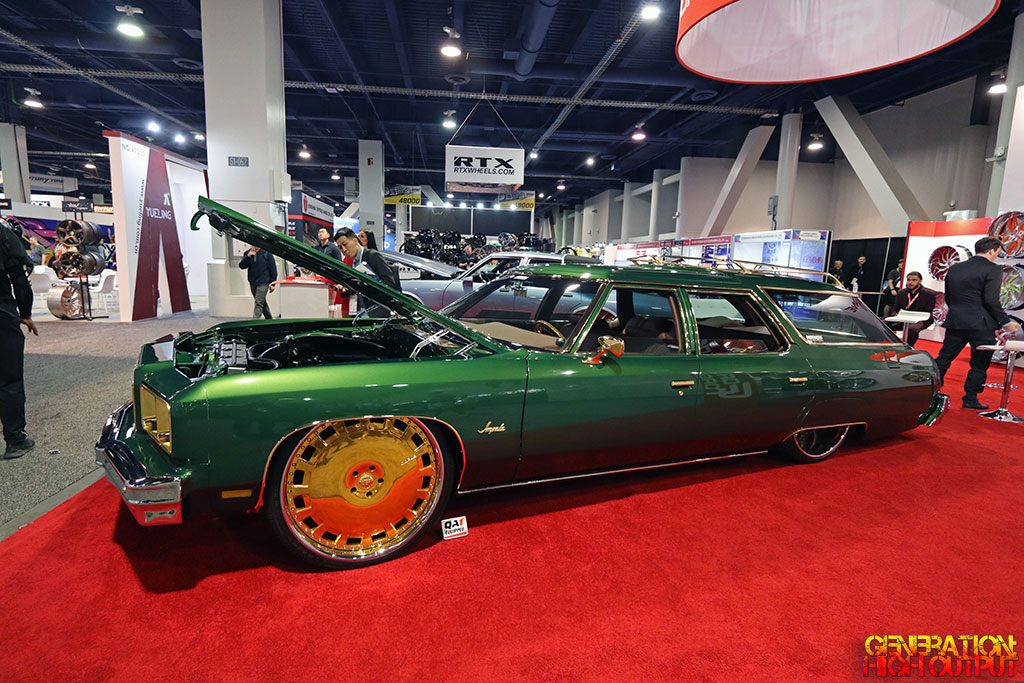
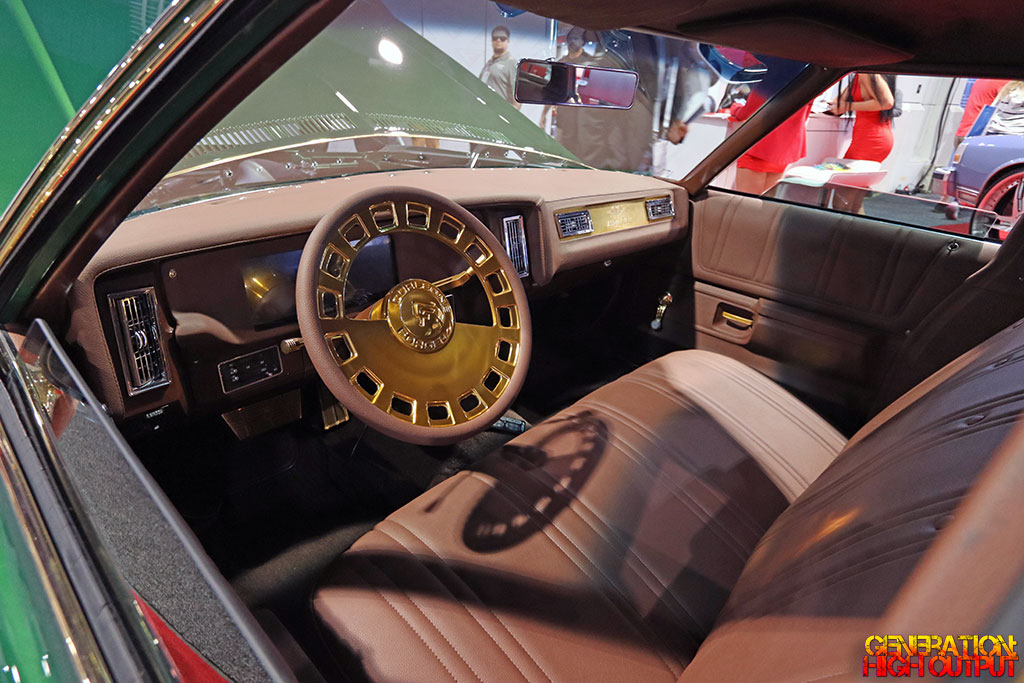
The car’s metallic green paint with gold grille and headlight surrounds is certainly eye catching! The car is a certified land yacht, measuring in at 228 inches in length. However, this family station wagon has been completely upgraded by 187 Customs into a modern, high-performance machine.

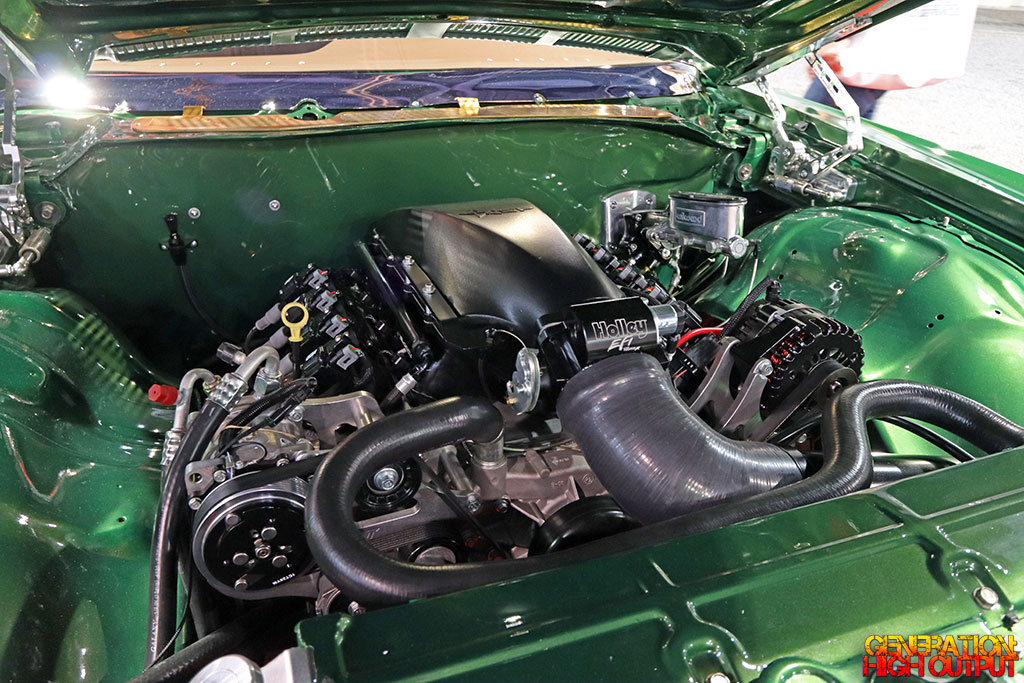
Under the hood is a 5.3L LS “Ruthless Runt” engine from Texas Speed, with a Holley Terminator X-Max fuel management system controlling Deatschwerks injectors and fuel pump. The engine is coupled to a 4L80E transmission with Circle D torque converter. There is a Dynamic Driveline driveshaft connected to a Quick Performance 9″ rear end.
The car rides on QA1 control arms and coilovers with an Accuair Air suspension system. A set of Wilwood disc brakes hides behind the gold 26-inch Corleone Forged wheels.

This is a unique build that really stood out from the crowd at SEMA.

SEMA 2023: Lincoln Continental Twin Turbo

The fourth generation Lincoln Continental was in production from 1961 through 1969. Just over 334,000 units were produced during the eight year production run. The Continental is an elegant car with beautiful body lines that look fresh and modern even today.

Wicked Welds Custom Shop in Fort Collins, Colorado has taken the American luxury sedan to the extreme with their build that was on display at the 2023 SEMA Show in Las Vegas.

The family sedan has been completely transformed into a powerful drag racer, owned by @Masters824.
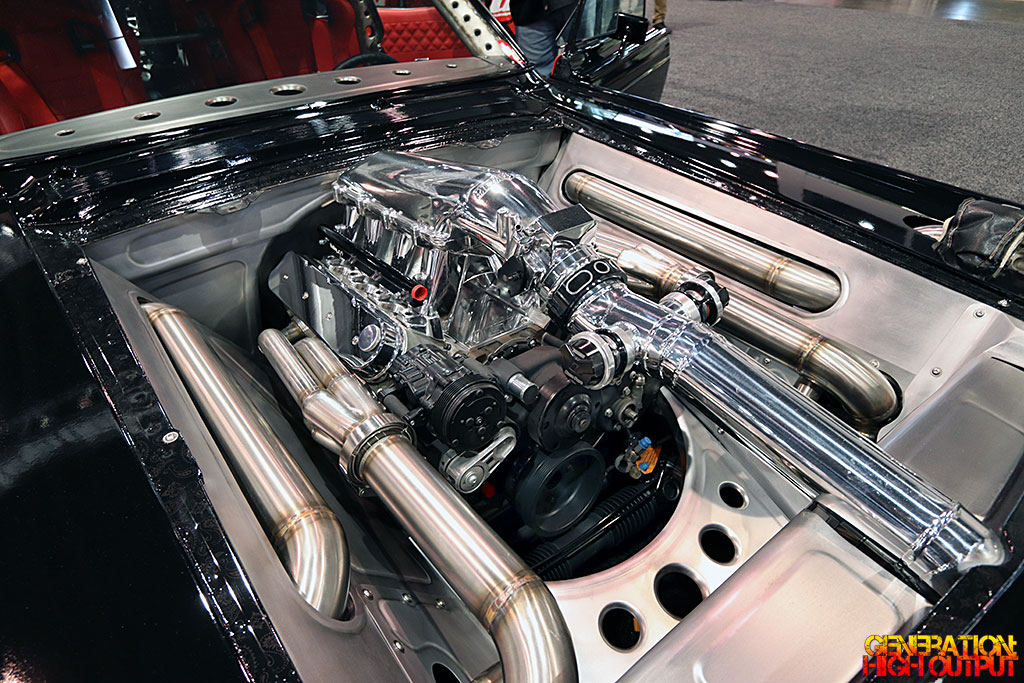
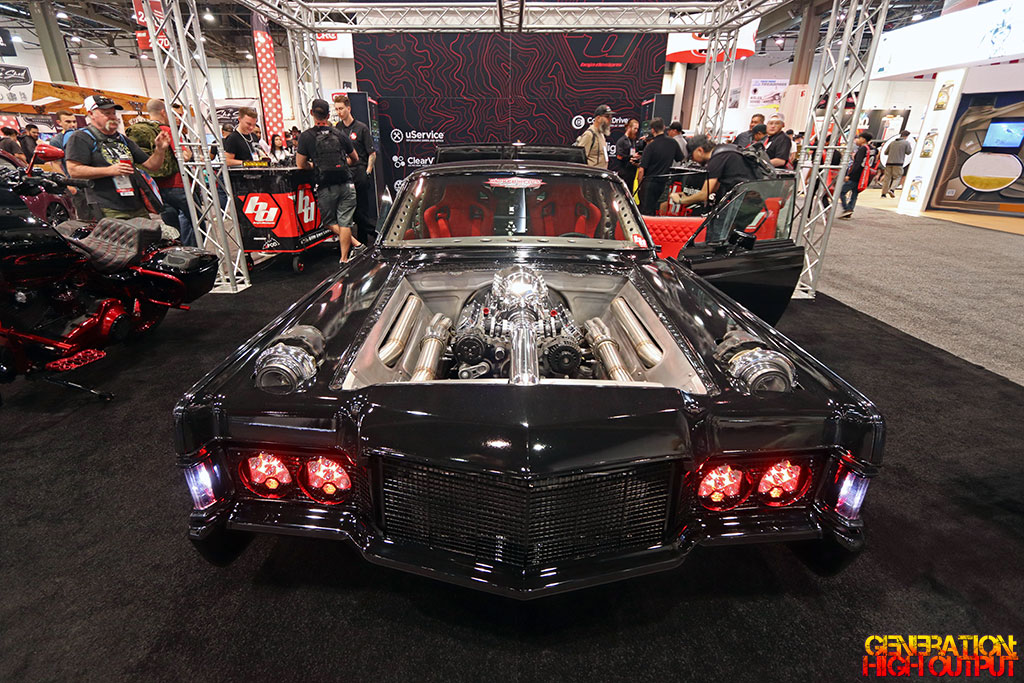
Under the hood is a twin-turbo Chevrolet LS engine producing upwards of 1,000 horsepower and fed by a pair of Turbosmart turbos with a Holley EFI system. The intake and piping are all polished to a mirror finish. The turbos are mounted in the front fenders just behind the headlights, which gives the car a really menacing look.

It’s backed by a 4L80E automatic transmission with an FTI Performance billet torque converter. The driveline includes a narrowed Ford 9″ rear end with Moser axles.
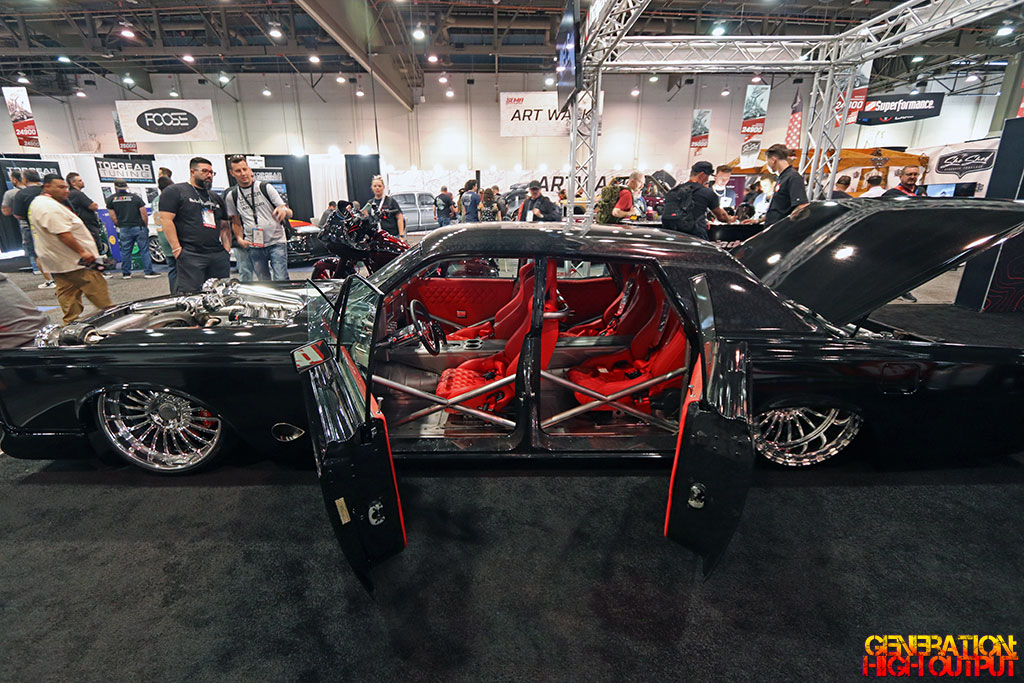
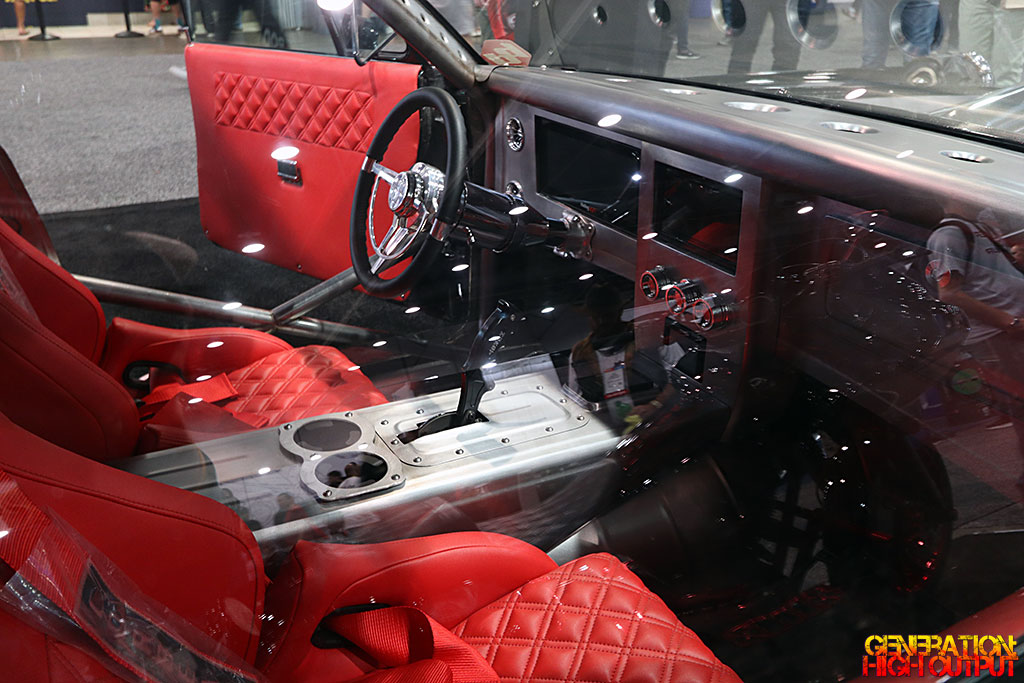
For a drag car, the interior is quite a comfortable place to be. The interior was done by 5280 Upholstery in Denver with diamond tufted seat inserts and matching door panels in bright red – which is certainly an eye-catching look! A Restomod Air A/C system ensures passenger comfort in any weather.

The car is slammed to the ground thanks to the air ride kit from Devious Customs in Riverside, CA. The custom exhaust exits through the front fenders through a unique teardrop shaped outlet. Wilwood disc brakes, a roll cage, and a drag chute on the rear bumper round out this fully customized Continental.

Admiring the car in person, I noted how every single body panel had been modified in some way. This is a full custom build that must have cost at least six figures in parts and labor. I have always appreciated the Lincoln Continental’s styling, and it was cool to see one of these land yachts reimagined as a drag racer. Excellent work by Wicked Welds and all of the different shops and specialists who contributed to this amazing build!