The sunken headlights, pointed nose and bubble greenhouse on the early fourth-generation Camaro recalls images of fighter jet fuselages. This anniversary model with the typical orange and white paint scheme obscures that image some, but makes up for it with a mean 340hp LT4 engine in place of the factory 275hp LT1.
A G92 performance axle RPO in turn makes up for the 4L60E automatic. The tri-color tail lights that would be a staple of the later models were first found on these 1997’s and are a welcome addition to the overall cars exterior. The Anniversary package, 7,091 miles and pristine condition make this optispark actually fire to the tune of $17,050.
What comes to mind when you think of Volvo? Probably words like safe, practical, boring. None of those are words that would describe Sean Fogli’s 1983 Volvo 242 coupe. The resto-modded car was featured in the Optima Ultimate Street Car area at the 2019 SEMA Show in Las Vegas. I stopped in for a closer look at this amazing build.
What looks like a dull, early 80s Swedish car is actually a highly capable, tire-smoking, track-ready race car in sheep’s clothing. The car’s original 4-cylinder engine has been swapped for a GenIV 6.0L V8 LS engine mated to a T-56 manual gearbox. The cherry on top is an LSA supercharger from a Cadillac CTS-V, and an LS9 fuel rail and injectors.
Peering in the windows, the roll cage, Racepak display, and Recaro seats with Schruth harnesses are more clues that this is no ordinary car. This Volvo is set up to handle the twists and turns of a road course, which was definitely not in its original design requirements.
The car has a great stance and rides on CCW Wheels with Bridgestone tires. It competed in the 2019 Optima Ultimate Street Car Invitational, an annual track event that is open to street legal cars and trucks. The LSX badge on the rear of the car is one of a few subtle hints that this Volvo is definitely not stock. This is a super cool build and one of the standout cars of the Optima Ultimate Street Car Challenge. I was privileged to see this car at SEMA 2019, and really enjoy featuring these types of custom cars for our readers. The car participated in the end of show SEMA Cruise on November 8, 2019.
What do you get when you combine a pickup truck bed with a passenger car? There’s no witty punchline here – you get a car-based pickup truck or “Ute” vehicle, though few know the official name of “coupe utility” vehicle. The body style originated in Australia in the 1930s. By the 1950s, it had made its way to America as the Ford Ranchero and soon afterward, the Chevrolet El Camino.
These vehicles were in production for many years and offered a unique experience that many drivers couldn’t find elsewhere: car-like handling and size, but with the cargo carrying ability of a light pickup truck. The Ranchero ended production in 1979, and the El Camino met a similar fate in 1987.
For more than 30 years, no automobile maker has stepped forward to fill the demand for this type of vehicle in the market. As a result, a number of custom “car-based pickup trucks” have begun popping up. We’ve covered a few of them before, such as an E36 BMW Truck, Volkswagen Ute, and an Audi Ute around town.
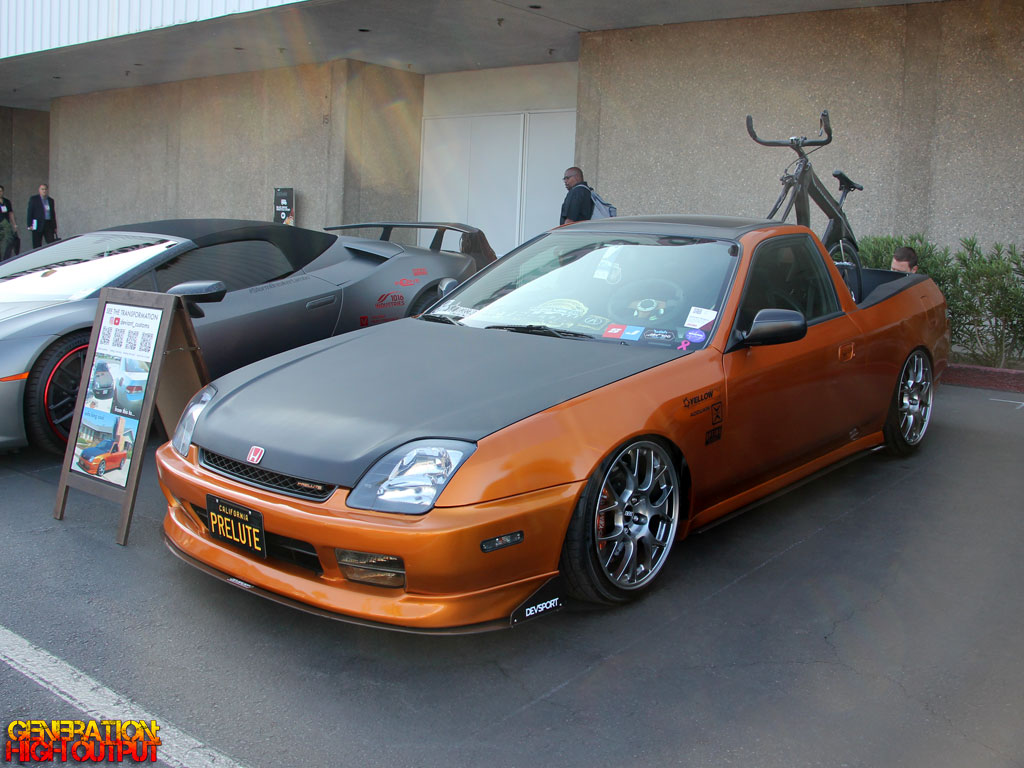
At the 2019 SEMA Show in Las Vegas, I happened across one of the cleanest car-based pickup custom builds I have seen to date. This car began life as a 1997 Honda Prelude, and was converted by the owner Song Toh into a small pickup. In a YouTube video covering the build, Song says it took him 15 months and more than 600 hours of time to complete the build. He has also given the car the incredibly clever name of “Prelute” – a combination of “Prelude” and “ute” – the Australian term for this kind of vehicle.
I saw the vehicle on display at the 2019 SEMA Show in Las Vegas, where it had a steady crowd of admirers. The build photos on the Deviant Customs Facebook page show the progress of the car, from adding additional chassis bracing to the glossy orange wrap, doing basically all of the work himself. Congratulations on a super cool, unique, and very clean build.
Be sure to follow the owner on Instagram @deviant_customs for more updates.
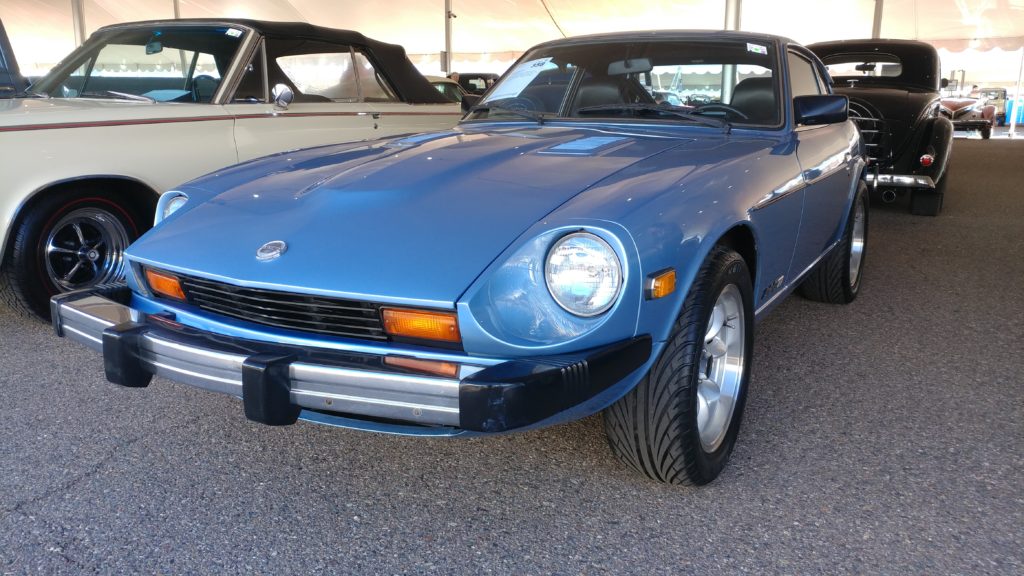
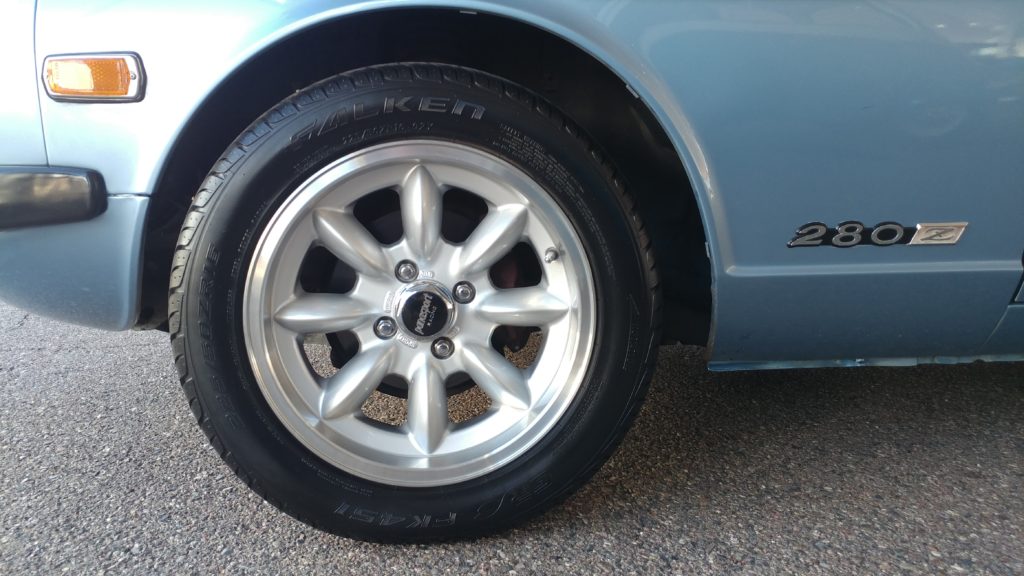
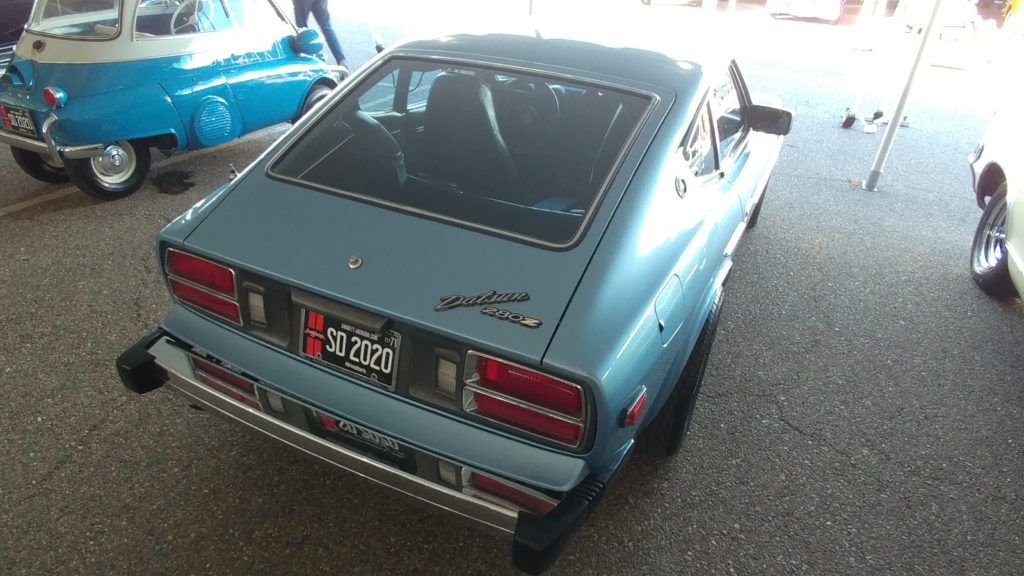
Before the emergence of the Nissan 280zx there was the 280z. Named for it’s L28E 2.8L inline 6 SOHC which claims a 148hp rating. With a manual transmission less than 150hp was more than enough for a sporty six-cylinder in the late 1970s. However, this fair lady is equipped with the lackluster 3-speed automatic. It makes up for this deficiency with clean body lines and pure Japanese sports car charisma. A 3.55:1 final drive ratio doesn’t hurt either, helping to propel the handsome Panasport racing wheels and this car’s final price to $23,100.
The Specialty Equipment Market Association is the governing body that organizes the SEMA Show, a trade show and exposition for the automotive aftermarket industry. On August 6th, 2020, the association announced that the 2020 SEMA Show will not take place as planned. Originally scheduled to take place November 3-6, 2020, the annual event has been rescheduled as a virtual event.
First held in 1967, the SEMA Show moved to Las Vegas in 1977 where it has remained for the past 42 years. The massive trade show is one of the largest in the country, drawing more than 165,000 attendees in 2017. 25% of the attendees traveled from outside of the U.S. to attend the week-long event. The economic impact of the show is also significant, even in a city known for large trade shows and industry events. The flights, hotels, meals, and convention services have a total economic impact of $315 million, according to a 2017 article by the Las Vegas Review-Journal.
The SEMA Show covers all corners of the automotive industry, from performance and aftermarket companies, to wheel and tire manufacturers, off-road, high end stereos and equipment, tooling and equipment, and auto body and restoration shops.
SEMA typically begins weeks ahead of time, with show services staff and exhibitors setting up their booths in the massive convention center, which has more than 3.2 million square feet of exhibit space (and still growing!). The week of the show, Monday is open to members of the press. Tuesday through Friday are open to registered attendees, including buyers, exhibitors, and other attendees. The show ends with the SEMA Cruise – a parade of hundreds of show cars leaving the convention center. A new event called SEMA Ignited gives the public a chance to see some of the custom cars from the show in an evening event, held close to the convention center.
The details of how the show will transition to a virtual format have not yet been disclosed. The New Products Showcase and Education Sessions will likely be webinars or video presentations, and the networking and happy hour events could be held as virtual meetings. But for many attendees, the big feature of SEMA is the cars: more than 2,000 customized cars, trucks, vans, SUVs, and other vehicles take over the convention center are a huge draw for companies showcasing their products.
Generation: High Output has covered the SEMA show since 2012, and we look forward to bringing you coverage of the automotive aftermarket industry again this year.
Upgrading from the previous years 4.7L v8, the 928S’s DOHC 5.0L V8 is good for 288hp, which is 88hp more than the 911 of the same year. With it’s more-favorable weight balance, the 928S could have laid the ground work for a new era of Porsche. The water-cooled, front-engine V8 coupe was just a little too extreme for Porsche purists in the mid-80s and it was a format porsche never explored again.
The Bosch Jetronic fuel injection and five speed manual raises the fun factor on this unique German sports car. As with the other water-cooled Porsches of this era, typical 928’s embody the saying about nothing being more expensive than a cheap Porsche. Thankfully at $18,150 and only 63,000 original miles it’s not cheap, and likely babied enough to have years of use ahead of it.