
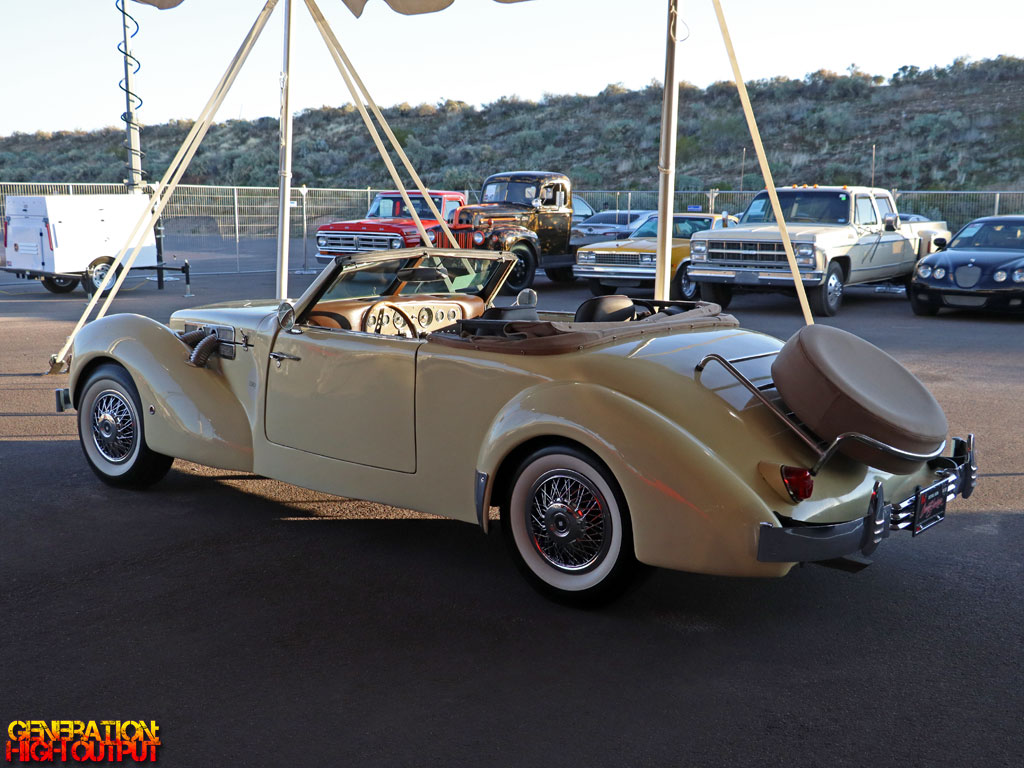
Barrett-Jackson 2022: 1970 Samco Cord 812 Convertible Replica

Neoclassic cars are a specialty product for a niche audience. I have written extensively about neoclassic cars for this website, and the companies that build them follow a similar pattern:

1) Company begins building fiberglass bodied cars on top of an existing 1970s or 80s Ford or GM chassis
2) Company builds a few hundred to a few thousand cars
3) Company runs into financial trouble and closes up shop
4) The cars trade hands in the secondhand market, with little to no verifiable information about the company or vehicle’s history

This story has been told time after time with Zimmer, Philips, Clenet, Classic Tiffany, Corsair, Gatsby, and the short-lived reboot of Stutz.

The story of SAMCO follows a similar path, though the cars themselves were unique in a way that stood out from the pack.
SAMCO is an acronym for Sports Automobile Manufacturing Company. It was a side project of William “Bill” Lear, creator of the Learjet – the world’s first mass-produced business jet.

While Lear was well-established in Wichita, Kansas the automobile operation was located in Oklahoma. From 1968 through 1970, the company produced approximately 400 SAMCO Cord replica cars.

According to the website www.stutzbearcat.com, the cars were offered in two models: the Warrior with a 108-inch wheelbase and the Royale with a 113-inch wheelbase.

Engine choices were a Ford 302 V8 engine or a Chrysler 440 Magnum V8 engine. The website www.barnfinds.com says that unlike most neoclassic cars which are built on another chassis, the SAMCO Cords are unique in that they are built on a custom frame.

Initially located in Tulsa, Oklahoma, production was later moved to Mannford, OK which is about 23 miles west of Tulsa.
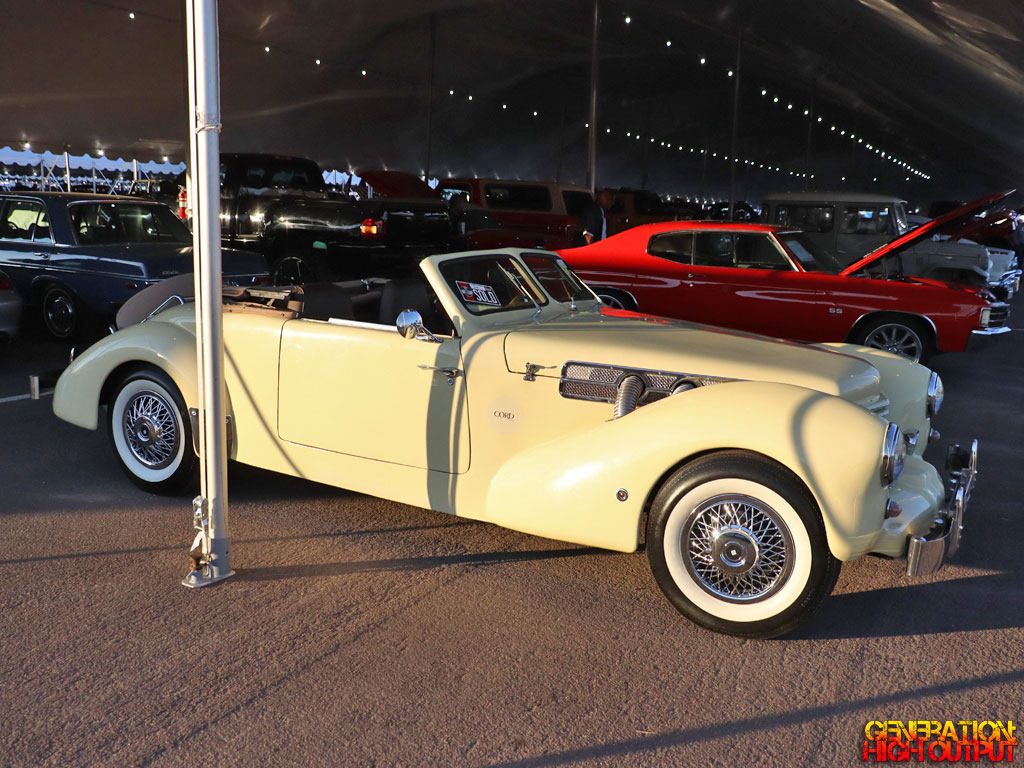
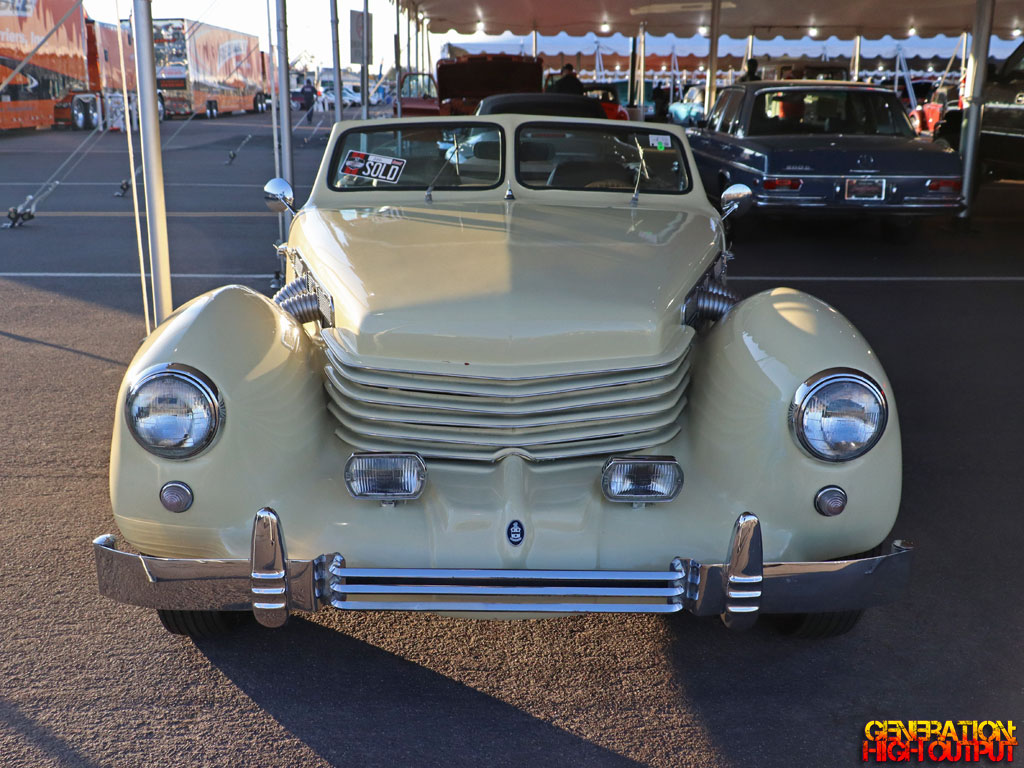
This 1970 vehicle is a replica of the 1937 Cord 812 Sportsman, though the proportions are quite different from the original. This SAMCO Cord is much too small to pass for a 1930s vehicle. The real Cord automobile is famous for its “coffin nose” styling with headlamps cleverly hidden in the front fenders. This gives the car a streamlined look that was very modern for the time. This car has no trick headlights, but a couple of round lamps fixed to each fender and two smaller lights in the middle. It’s a far cry from the sleek look of the original.

It has a manually-operated convertible top over two bucket seats up front. The vehicle is equipped with power steering, disc brakes, chrome wheels, and a rear luggage rack. Interestingly, the car does feature rear-hinged doors and white-wall tires, like the original upon which it is based.

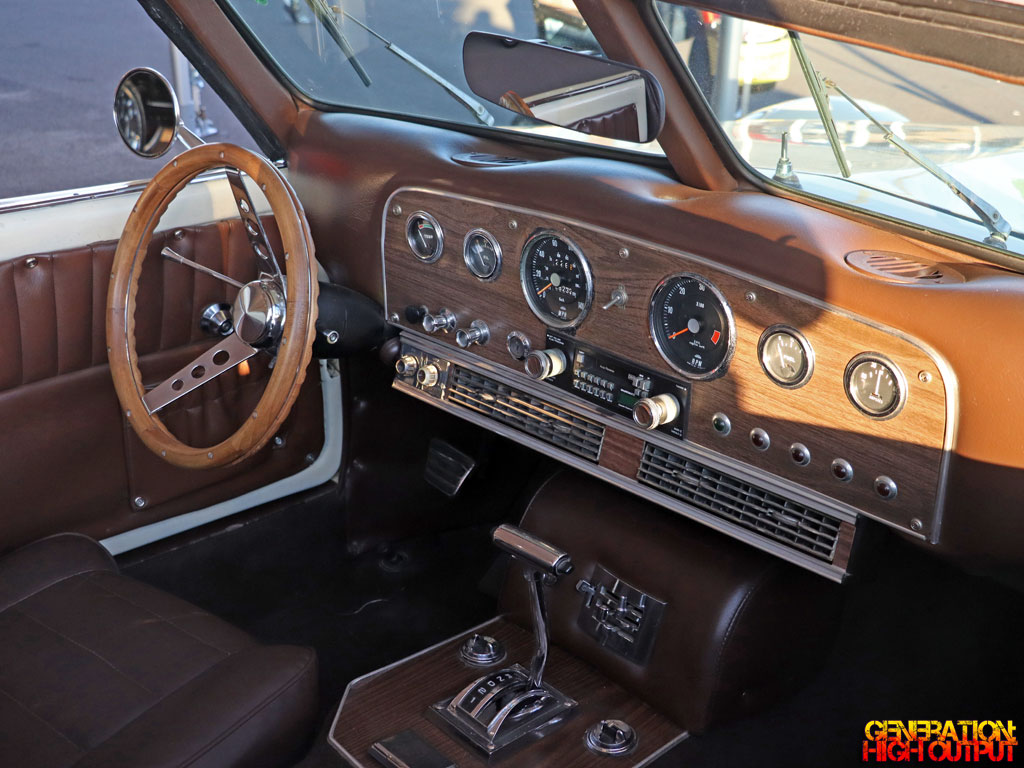
The dashboard has a cassette player radio, air conditioning, and all the faux woodgrain trim and brown vinyl upholstery you can handle. The layout is unconventional with the speedometer and tachometer in the center of the very flat dashboard. This car sold for $24,200 (including buyer’s premium) at the Barrett-Jackson Scottsdale 2022 Collector Car Auction as lot #109.
The Last Ford Galaxie

last-galaxie-sideIn October of 2015, I was on a road trip to New Mexico that took me though the old Route 66 town of Holbrook, Arizona. Holbrook is famous as the home of the Wigwam Motel, which has been featured in numerous movies for its teepee-shaped rooms.

The Wigwam plays up to tourists with a bunch of old cars parked on the property, ranging from 1940s to 1970s vehicles. Skipping past the Studebaker and the Oldsmobile, I went right for the malaise-era 1970s Ford Galaxie.

Continue reading

1970s Dodge Ram Custom Van

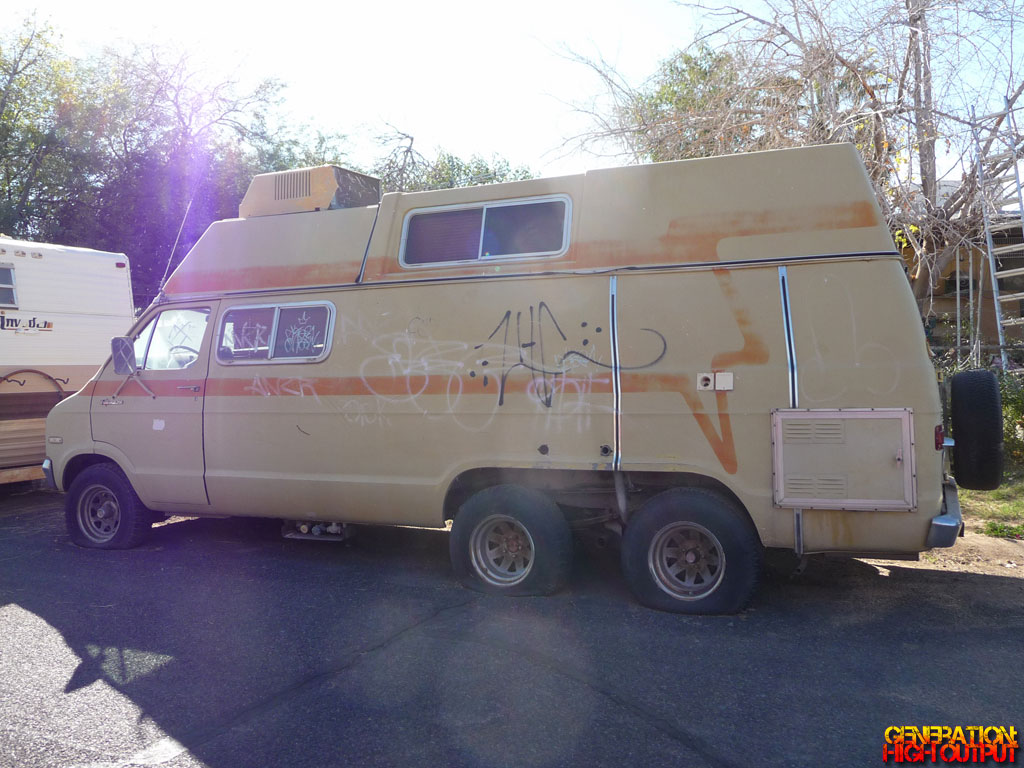
dodge-van-custom-dual-tandem-axleThe 1970s are remembered today as a decade of excess, and nothing embodies that mindset greater than the cars that people were driving. This was the era that gave us the Dukes of Hazzard, Smokey and the Bandit, and the original “Gone in 60 Seconds.”

There was another craze during the 1970s: custom vans. People would take full-size vans from Ford, Chevrolet, and Dodge and trick them out with shag carpet, a stereo system, custom paint and wheels, custom interior, CB radio, and even accessories like mini fridges!

“Vanning” exploded in popularity and was featured in movies and songs of the era. Like vinyl records and most things from the 1970s, “street vans” fell out of fashion to fade into obscurity, only to see a small revival today.

This 1970s-era Dodge Ram van may be a relic of that era. It looks to have been converted to a camper/motorhome at one point, and is now languishing on a side street. The interesting thing about this van is its dual rear axle setup – something I have not seen before and can find very little about on the Internet. I suspect it may have been a custom modification.

The Roadster Shop’s 1970 Plymouth Cuda ‘HellFish’

roadster-shop-1970-plymouth-cuda-hellfish-rearYou may be familiar with the expression “like a bat out of hell” to refer to something moving wildly and out of control. In this case, this 1970 Plymouth Cuda moves like a “fish out of hell!”

We spotted this 1970 Plymouth Cuda nicknamed “Hellfish” on display at SEMA 2014, mere steps away from its cousin, the 1968 Charger. Like the Charger, this car was also built by The Roadster Shop, who seem to be up to their ears in vintage Mopars lately.

Continue reading

The Roadster Shop’s 1970 Camaro ‘Rampage’

roadster-shop-1970-camaro-rampage-rearWhen building a custom car, a number of things have to be considered. Will it need air conditioning? Will the suspension be set up for the street or for the drag strip? Where is the engine’s powerband? A lot of choices have to be made in order to dial a car in for its chosen application.

For most people, the luxury of owning a track-only car is not something they can afford. That means compromises need to be made so that the car can be streetable as well. This 1970 Camaro “Rampage” is a car that makes no compromises – it is a race car built for the track. Continue reading

SEMA 2014: Car Fix 1971 Chevrolet Camaro

1971-camaro-stabil-rearBuilding a custom car is an exciting project because it gives the owner a chance to personalize it with their own style. The choice of color, wheels, and any performance modifications will reflect the personality of the owner – and no two owners seem to share the same tastes. That’s why I found it odd that STA-BIL 360 had this custom 1971 Chevrolet Camaro as a grand prize in their booth at SEMA 2014.

The car was built by Jared Zimmerman and Lou Santiago from the TV show Car Fix on the Velocity Network. Working 12 hours a day for almost five months, these guys transformed a 1971 Camaro into a powerful custom street machine. The value of the car has been appraised at $98,000 dollars. Continue reading