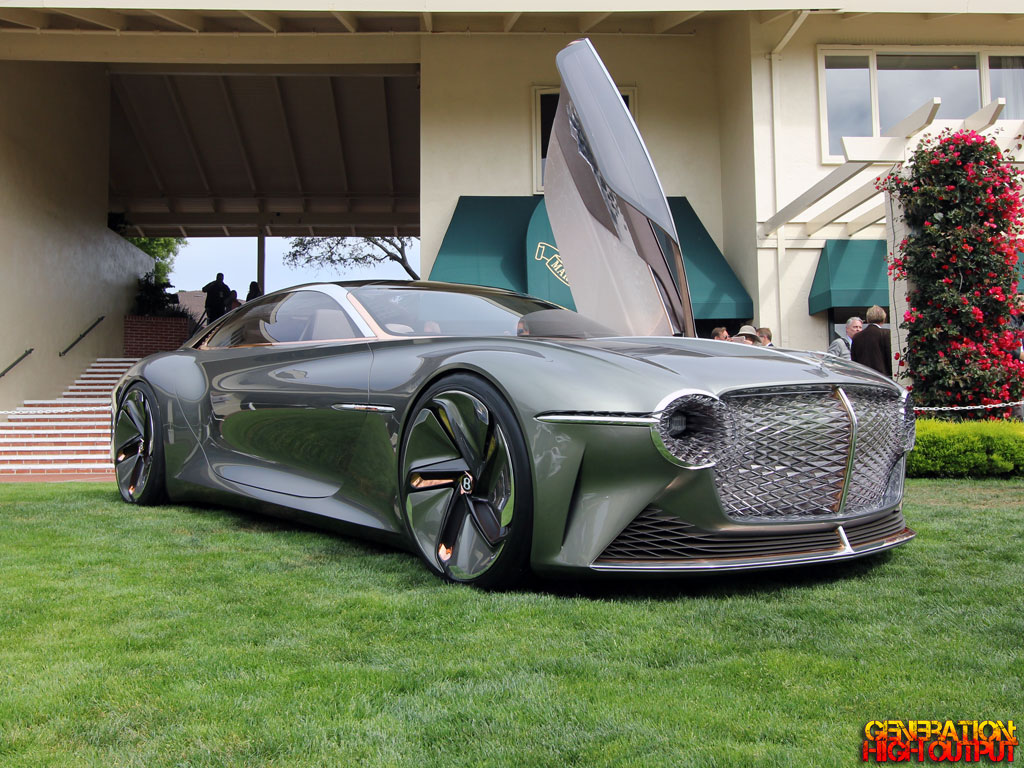
Bentley EXP 100 GT on the concept car lawn at the 2019 Pebble Beach Concours d’Elegance. Photo by: Trevor Freeman.
The Pebble Beach Concours d’Elegance is the cornerstone event around which Monterey Car Week is based. It is the world’s premier automotive event, drawing attendees from all over the world. Now in its 69th year, the Pebble Beach Concours is a true competition of elegance, with honorary judges and class judges awarding points to the finest automobiles in each class. At this year’s event there was one word, one brand, on everyone’s mind: Bentley.
There was a buzz in the air about Bentley as I rode the shuttle bus from the parking area along 17 Mile Drive into the Concours event. I overheard people talking about Bentley as I waited in line to get my wristband. Stepping onto the Concept Car lawn near The Lodge at Pebble Beach, I was greeted with a flurry of activity around the latest and greatest concept car from Bentley: the EXP 100 GT. A constant flow of people were leaning over the barricades, mobile phones in hand, eager to get a snapshot of this exciting new car.
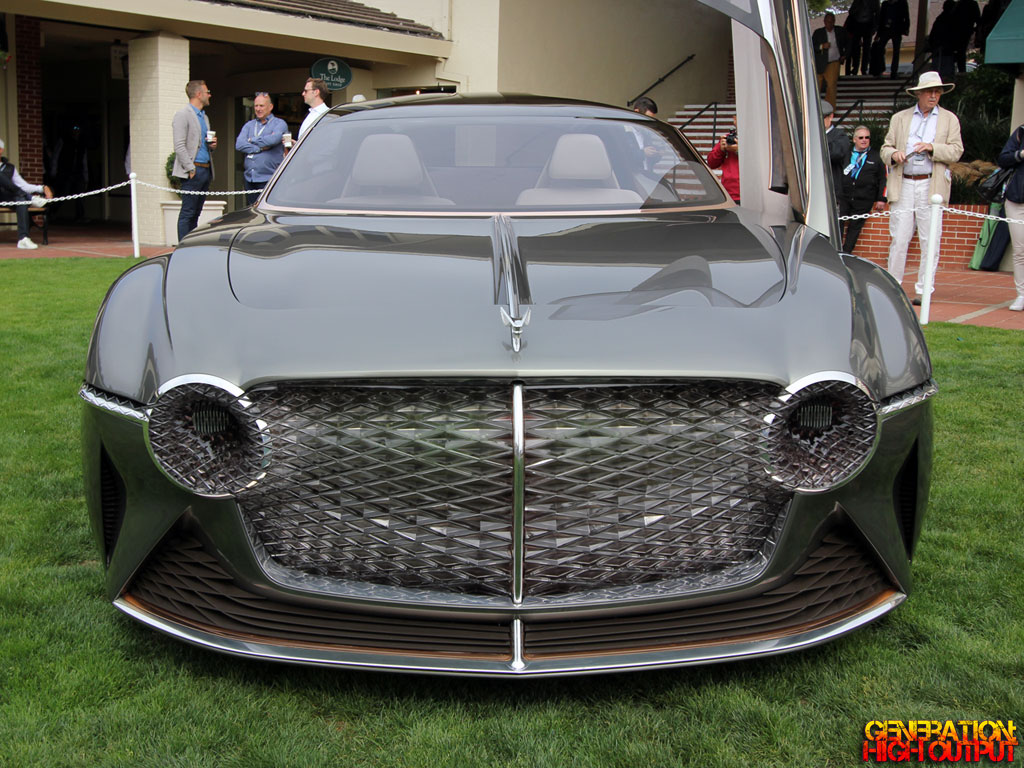
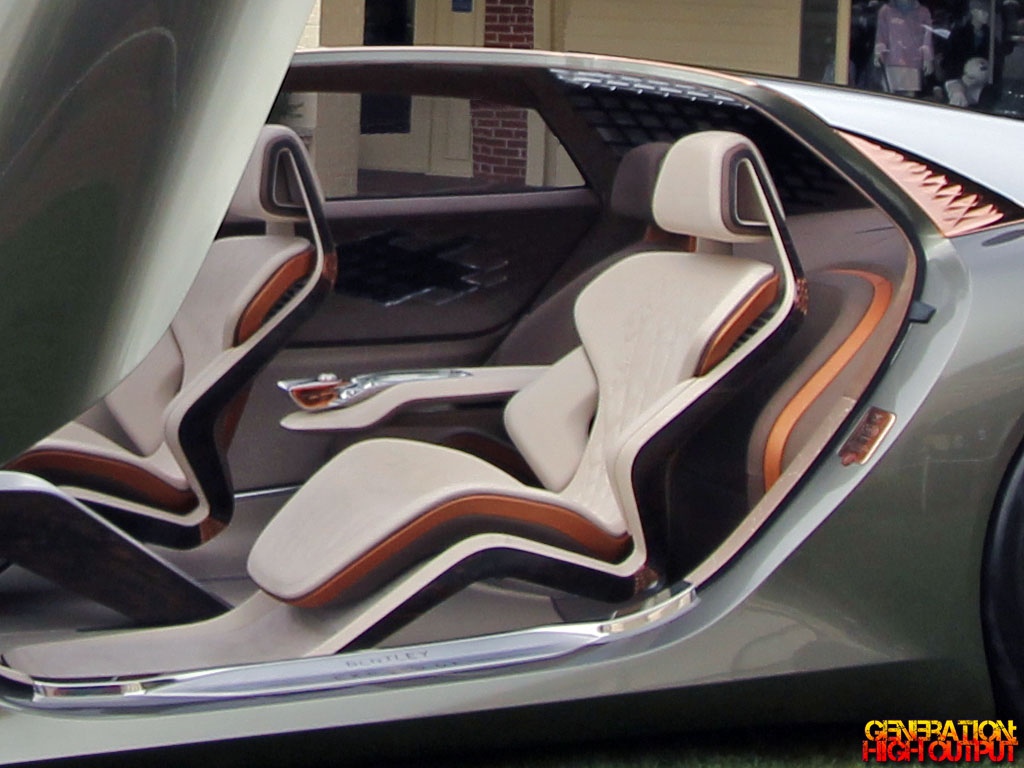
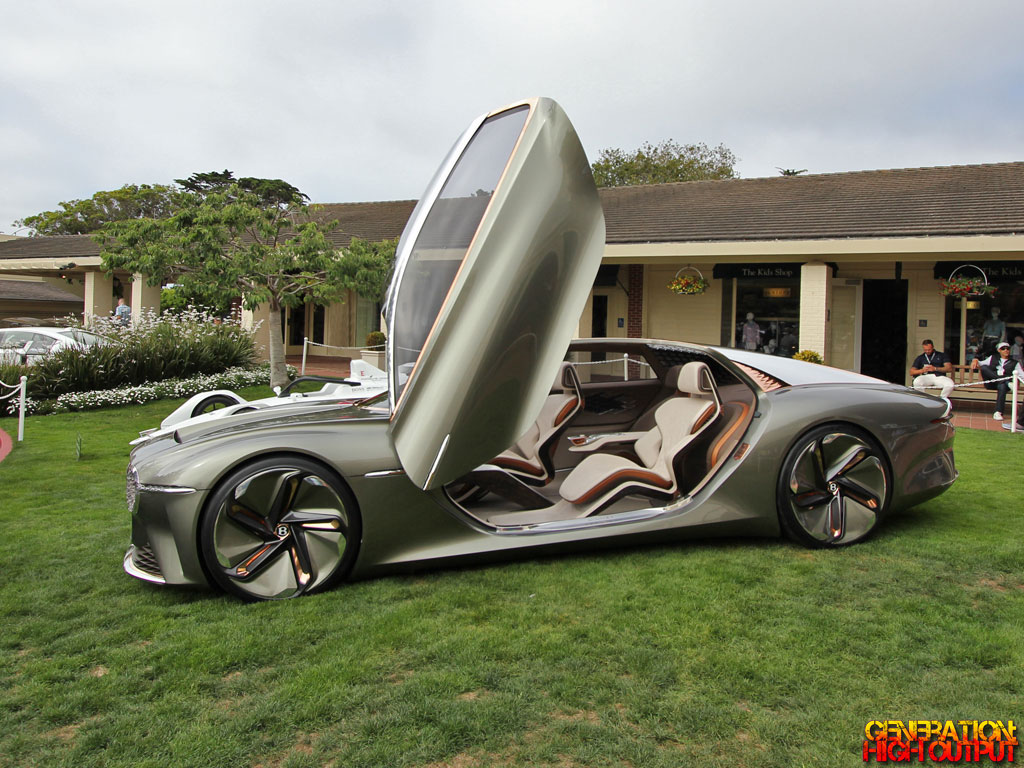
This cutting-edge automobile shows what a Bentley grand touring car might look like in the year 2035. A lot of people think that electric vehicles are the future of motoring, and Bentley is among them. The EXP 100 GT is an all-electric vehicle powered by four electric motors with torque-vectoring that produce a combined 1,400 horsepower and 1,106 lb-ft of torque. This enables the massive coupe to propel itself from 0-60 mph in 2.5 seconds, and reach a top speed of 186 miles per hour. Bentley says the car’s battery pack has a range of 435 miles on a charge.
The EXP 100 GT has the stunning road presence one would expect from one of the world’s most prestigious automobile manufacturers. The coupe is nearly 20 feet long and 8 feet wide, with doors that are 6.5 feet long and open outwards and upwards in a butterfly-like way. The car retains the “Flying B” emblem on the hood, a signature design of Bentley going back to the beginning. A new take on Bentley’s design is the car’s front grille, which incorporates more than 6,000 individual LEDs.
But this is more than a pretty concept car designed to showcase a new design language for the brand. The EXP 100 GT is a truly “smart” automobile. An onboard system filters the cabin air, removing pollution and channeling it out to the tear to aid the car’s aerodynamics. The car also makes use of fiber optics to transfer natural light into the cabin, which can be re-played on future journeys.
The car’s interior is a palette of luxurious materials, from reclaimed 5,000 year old oak wood infused with copper, to a completely sustainable textile developed in Italy and stitched with a centuries-old Hand and Lock embroidery, to the Adaptive Biometric Seating that features an integrated temperature sensor and massage function. A Cumbria Crystal centerpiece made by artisan craftsmen in the UK adorns the car’s center console, and is one of the voice-activated AI consoles.
The EXP 100 GT offers fully autonomous driving as well as adaptive wheels that sense the road and adjust the ride quality to ensure a smooth, safe journey. Bentley has certainly packed plenty of 21st century technology into the car, demonstrating the innovation and commitment to quality that the brand has been known for over the past century.
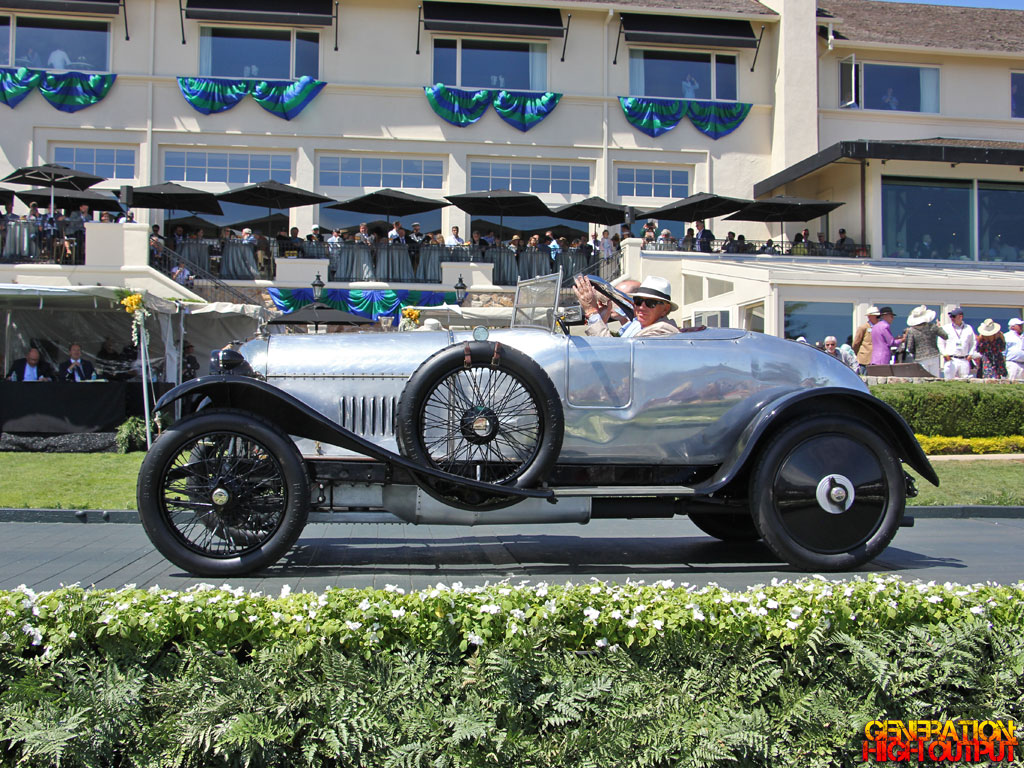
1921 Bentley 3 Litre Harrison Open Two Seater Sports, the oldest known Bentley automobile in existence. Photo by: Trevor Freeman.
Also present at this year’s Pebble Beach Concours was a 1921 Bentley 3 Litre two-seater, which is the oldest original production Bentley in the world, and the first car that founder Walter Owen Bentley sold to a customer. The 98 year old automobile is stunningly original, down to its brass fittings and polished aluminum body. It is a testament to the build quality of these vehicles, many of which were built as competition cars for early motor racing events. The car is shown here on the awards ramp, where it received a special award from the Center for Automotive Research at Stanford (CARS Award), in addition to placing Second in its class.
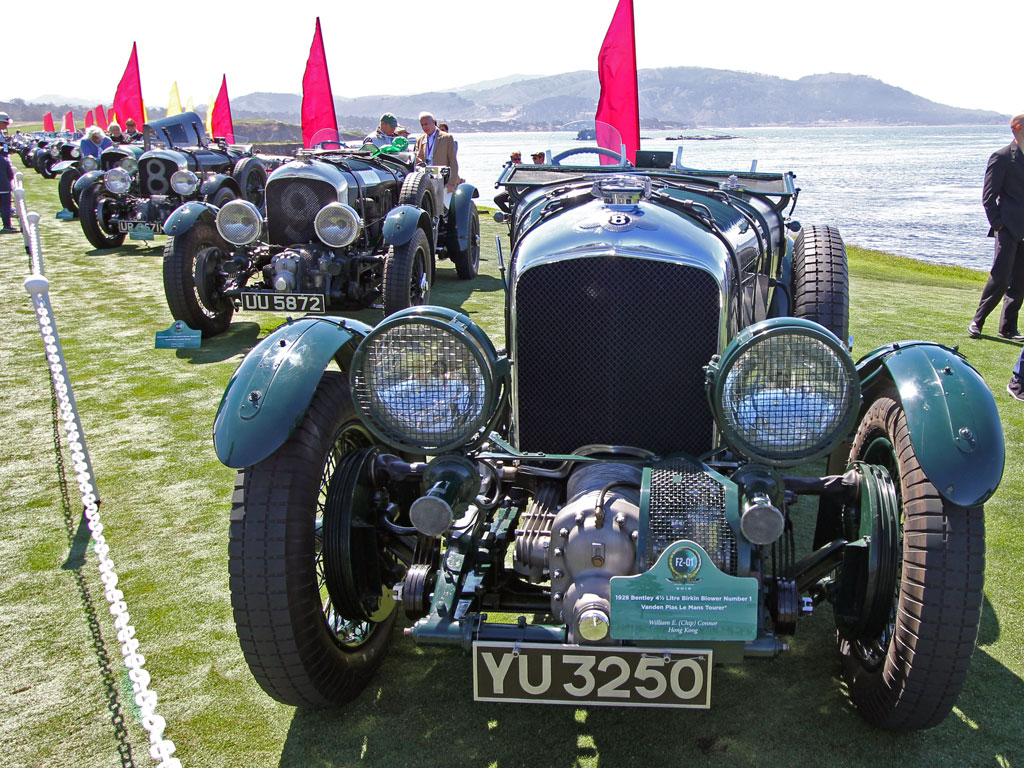
Bentley 4 ½ Litre class at Pebble Beach Concours d’Elegance. Photo by: Trevor Freeman.
The 1921 3 Litre was one of fifty-five classic Bentley vehicles on display in six different classes at the 2019 Pebble Beach Concours d’Elegance. A remarkable collection of Bentley automobiles from the 3 litre, 4 ½ litre, 6 ½ litre, and 8 litre eras were on display from throughout the company’s history. More than 15,000 attendees congregated on the 18th hole of Pebble Beach Golf Course on Concours Sunday to admire these exquisite vehicles.
While each vehicle has its own unique story and history, the judges felt that the 1931 Bentley 8 Litre Sports Tourer with Gurney Nutting coachwork deserved the coveted “Best of Show” award. Owned by the Honorable Sir Michael Kadoorie of Hong Kong, the car is the one of two short-chassis 8 Litre cars ever built with this particular body style, and the only one left in existence. The body of the other car was transferred to a Rolls Royce Phantom many years ago, making this car truly one of a kind.
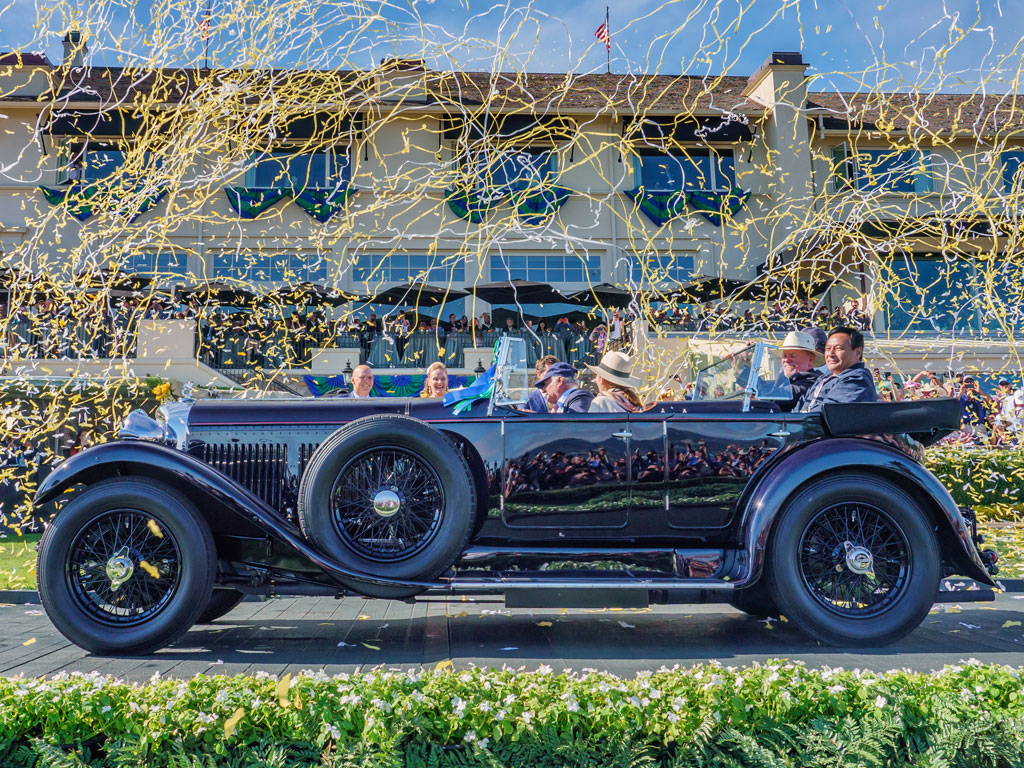
1931 Bentley 8 Litre Gurney Nutting Sports Tourer wins Best of Show at the 2019 Pebble Beach Concours d’Elegance. Photo by Kimball Studios.
The Sports Tourer was guaranteed by W.O. Bentley to achieve a top speed of 100 miles per hour (regardless of what coachwork was fitted). This demonstrates Bentley’s enormous confidence in their 8 Litre, Speed Six engine with a new, lower chassis design.
A centenary celebration is an important milestone for any business, especially one that changes as rapidly as the automobile industry. The Pebble Beach Concours d’Elegance presented an impressive tribute to the engineering, heritage, and legacy of Bentley automobiles at their 2019 event. With such an illustrious history as well as some exciting new concepts for the future, I cannot wait to see what Bentley has in store for the next hundred years.