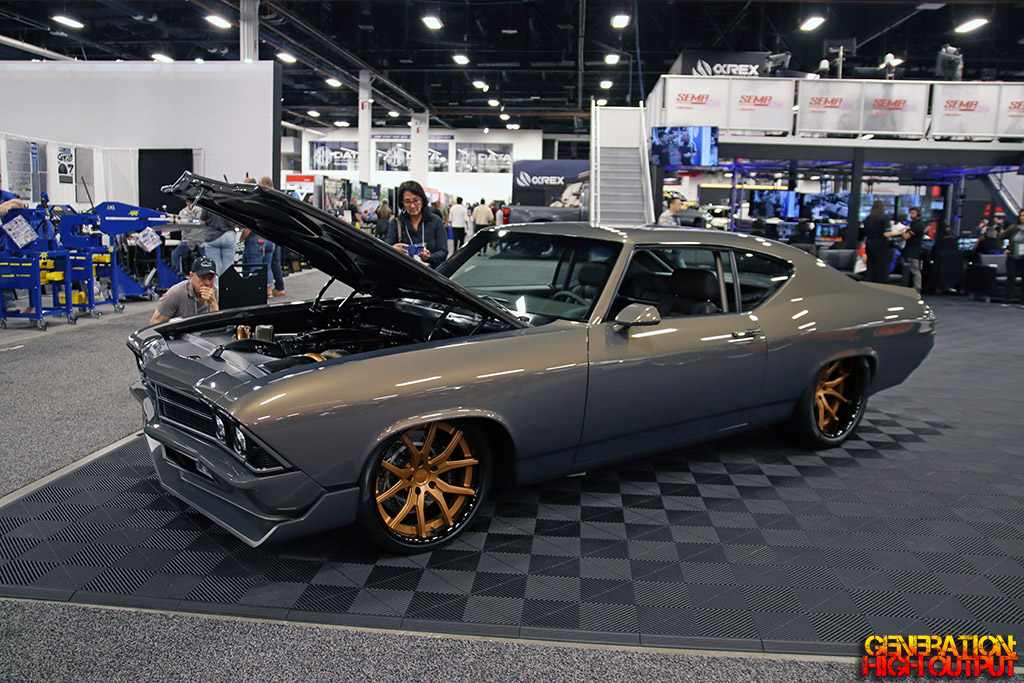
SEMA 2025: 1969 Chevrolet Chevelle Twin Turbo Restomod by Velocity Restorations

Velocity Restorations has a shop in Cantonment, Florida, which is one of those places you only really think about when you’re driving through and wondering how many classic trucks are out there quietly rusting into the ground behind someone’s barn.

They’ve built a solid reputation doing full restorations and restomods on classic Broncos, Blazers, Scouts, and the usual Chevy C/K and Ford F-Series trucks. Basically the kind of stuff that either gets “frame-off restored to factory spec” or “left under a tarp for 20 years until someone drags it into daylight with a tractor.”

So at the 2025 SEMA Show, I wasn’t exactly expecting them to show up with a 1969 Chevrolet Chevelle that looks like it got lost on its way to a completely different universe. And yet, there it was.

A restomod 1969 Chevrolet Chevelle built in partnership with Dutch Boys Hot Rods, sitting there like it had been assembled by someone who read the factory service manual once and then immediately decided it needed “more everything.”
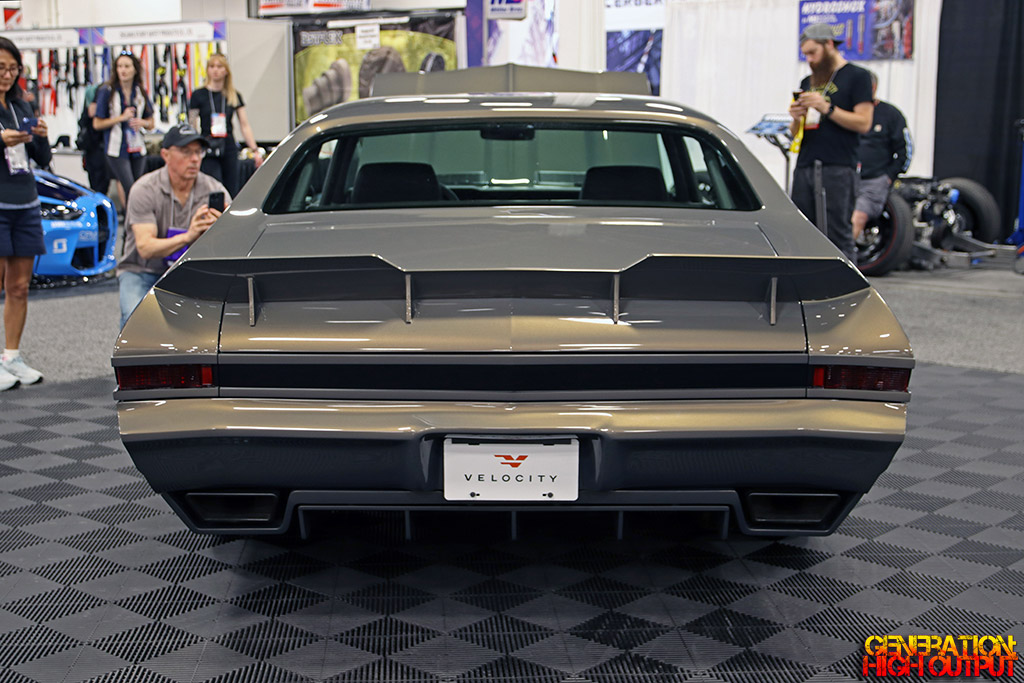
Before anyone jumps in with corrections, yes, it’s a 1969, but it’s wearing rear sheet metal from a 1968 Chevelle. I don’t know why they did that. Nobody at the show seemed interested in explaining it either, which honestly feels on-brand for SEMA at this point. You just accept things and move on.

And from there it only gets more complicated.

The body has billet door handles, a hand-built front splitter, a custom rear diffuser, and tucked bumpers. Which is basically a polite way of saying they smoothed and sharpened everything until it looks like a Chevelle that has been spending time in a wind tunnel instead of a Midwestern driveway.
Underneath, it sits on a Roadster Shop Fast Track chassis with modern suspension, Baer 6-piston disc brakes, and three-piece billet wheels from Greening Auto Company wrapped in Pirelli tires. At some point you stop calling it a restoration and start calling it “an engineering problem with really nice paint.”

Speaking of which, the paint is a three-stage Aurelium Bronze Pearl from BASF Glasurit, which is one of those colors that looks normal until it catches light in a way that makes you briefly consider repainting everything you own.

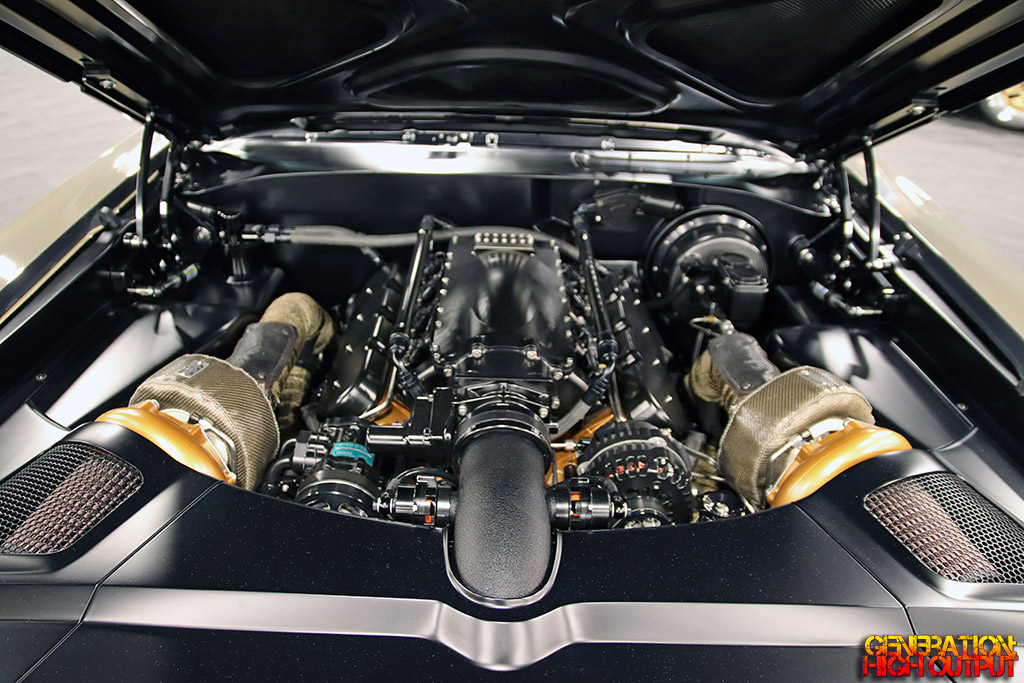
Under the hood is where things completely stop behaving. It’s a 427 cubic inch LS built by Nelson Racing Engines with twin turbochargers making a claimed 1,000 horsepower, backed by a TREMEC T-56 Magnum six-speed manual. Which is a funny combination when you remember the original version of this car was happy just existing with a big block and a carburetor that may or may not have been tuned correctly depending on the weather.

The engine bay has custom hand-built closeout panels, which is the kind of detail you only really appreciate when you realize someone had to spend hours making metal behave in ways it absolutely did not want to behave.

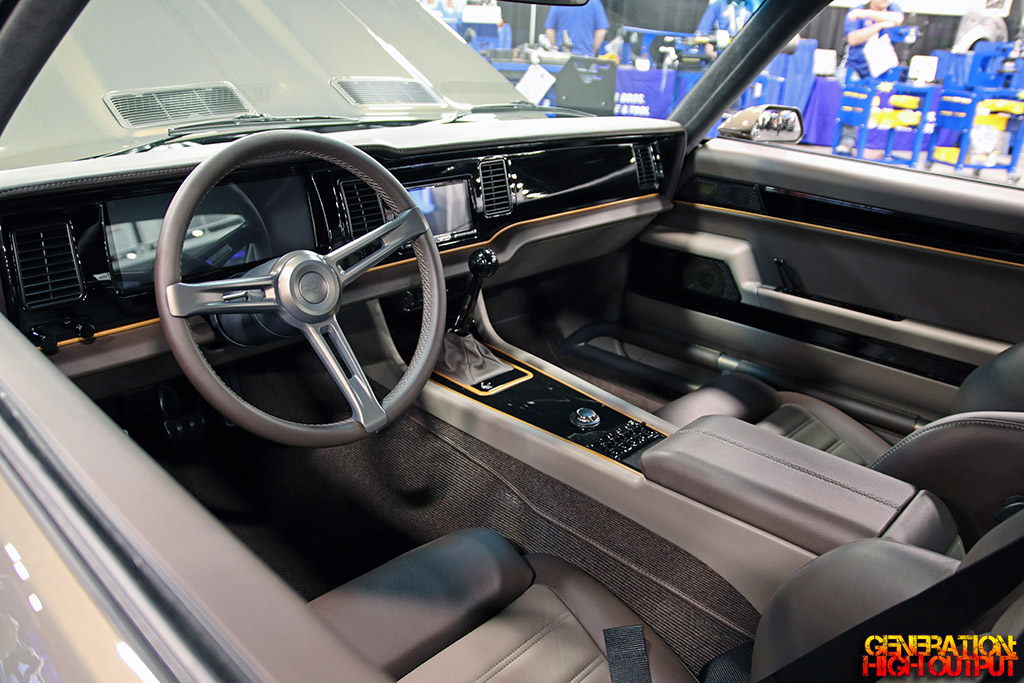
Inside, it’s a full custom setup with a roll cage, Recaro Expert M seats, a Holley EFI Pro dashboard, an Alpine head unit, Focal speakers, and a Sparc Industries steering wheel. It’s the kind of interior that looks like it was designed by someone who wanted equal parts race car, concept car, and very expensive gaming simulator.
And here’s where I probably should admit something.

I grew up around a 1972 Chevelle that has been in my family for as long as I can remember. Not the same one, obviously, but the same shape, the same smell, the same way the door sounds when it closes like it’s still made of something that could survive a minor war.

So I’ve always had a soft spot for these cars. Not in the “collector value” sense. More in the “this is what I think a car is supposed to look like” sense.

Seeing a 1969 Chevelle turned into a 1,000-horsepower modern muscle car with smoothed and shaved body work, flush mounted glass, and wide tires is one of those things that should probably bother me more than it does.

Instead, I just kind of stood there thinking about how my family’s version would probably stall trying to leave the parking lot if it had to deal with modern fuel, let alone twin turbos.

Anyways.

It’s not really a Chevelle anymore in the traditional sense. It’s more like someone took the idea of a Chevelle, fed it a gym membership, a CAD file, and a very large budget, and then said “go do something aggressive with your life.”

And honestly… I’m not entirely sure what that says about it.

Or me.

Probably nothing good.

I’ll probably go look at old factory Chevelle brochures again later just to reset my brain.

Follow Velocity Restorations:

https://www.velocityrestorations.com/
https://www.facebook.com/VelocityRestorations/
https://www.instagram.com/velocityrestorations/
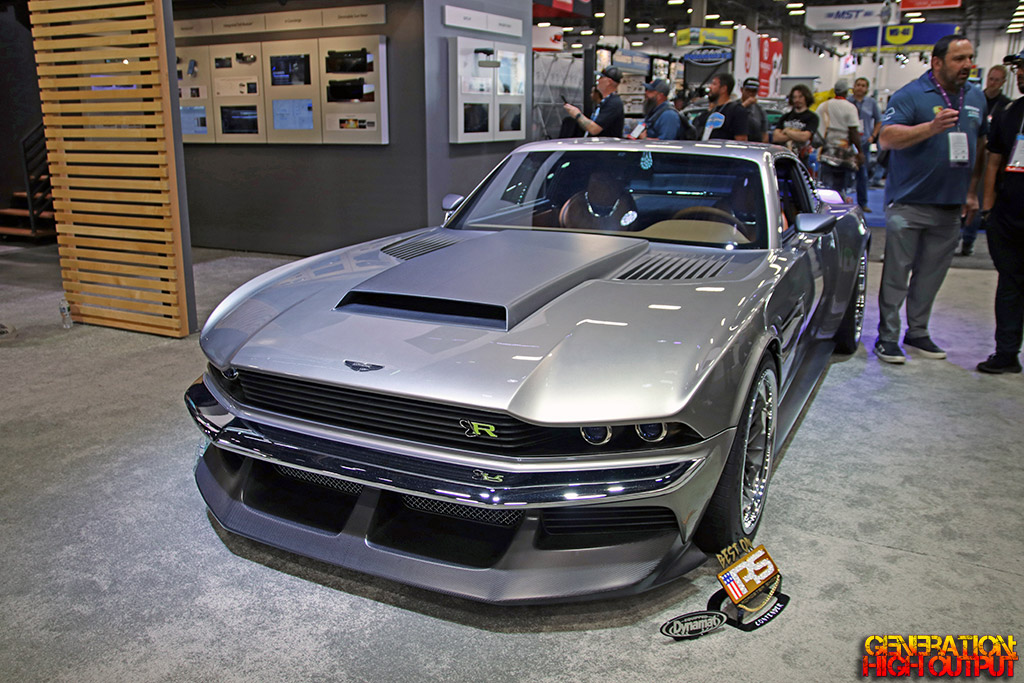
SEMA 2025: 1971 Aston Martin DBS “Octavia” by Ringbrothers

One of my favorite custom car builders is the Wisconsin-based team of Mike and Jim Ring, better known as the Ringbrothers. Over the past two decades, the brothers have built some of the most meticulously engineered and beautifully crafted custom vehicles in the world. Their projects consistently combine innovative design, advanced manufacturing techniques, and incredible attention to detail.

The Ringbrothers unveiled their latest creation, a heavily modified 1971 Aston Martin DBS nicknamed “Octavia,” during Monterey Car Week in August. I caught up with the car a few months later at the 2025 SEMA Show in Las Vegas. The car was displayed in the Gentex booth and quickly became one of the standout builds of the show.

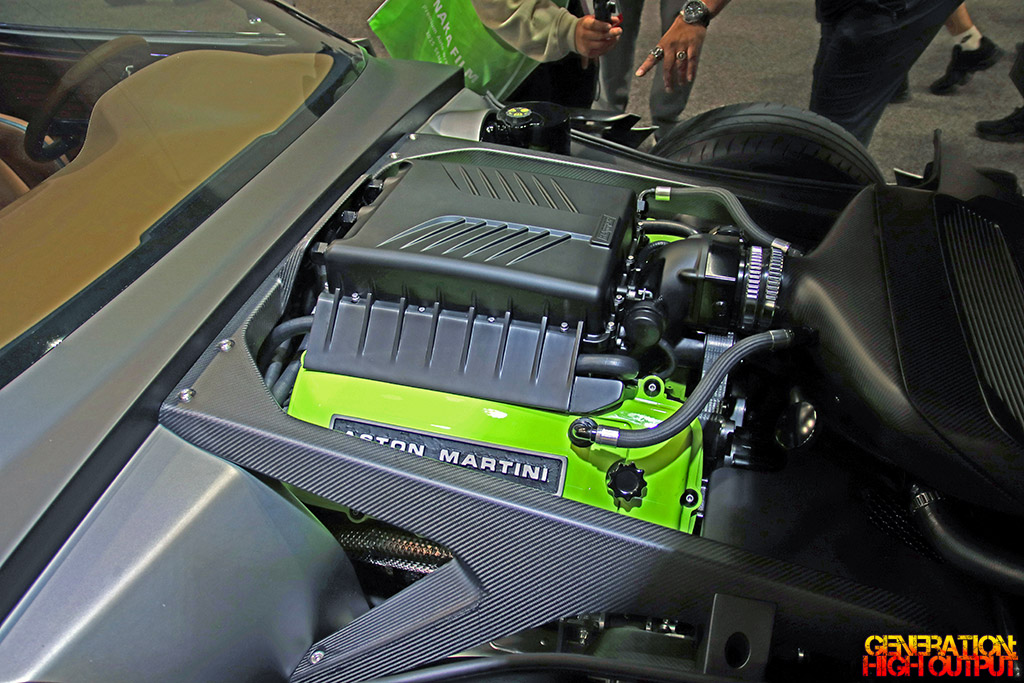
As with other Ringbrothers builds, there is more to the car than meets the eye. “Octavia” has numerous James Bond references. The custom BASF Glasurit paint color is called Double-O Silver, a nod to Bond’s 00-agent designation. The engine wears custom valve covers that say “Aston Martini,” while the dipstick handle is shaped like a Martini glass complete with an olive garnish. Even the car’s name references the villain Octavia from the 1983 James Bond film Octopussy.

The scope of the project is difficult to overstate. According to Ringbrothers, approximately 3,900 hours were invested in computer-aided design before construction even began. Starting with a Roadster Shop Fast Track chassis, another 4,300 hours went into the physical build, bringing the total project time to roughly 8,200 hours.

Although the car began life as a 1971 Aston Martin DBS, very little of the original vehicle remains. The entire body was recreated in carbon fiber and extensively modified. The front track was widened by eight inches, while the rear gained an additional ten inches. The wheelbase was also stretched by three inches to achieve the desired proportions and stance.
Power comes from a Wegner Motorsports-built 5.0-liter Ford Coyote V8 equipped with a custom Harrop supercharger and controlled by a Holley Terminator X-Max engine management system. The combination produces an impressive 805 horsepower. A Bowler Performance TR-6060 Magnum six-speed manual transaxle transfers power to the rear wheels.

Handling and comfort are vastly improved thanks to the independent rear suspension system. It rides on a set of custom HRE wheels measuring 19×11 inches in the front and 20×13 inches in the rear, wrapped in Michelin Pilot Sport Cup 2 tires. Behind those, Brembo disc brakes provide upgraded stopping power.

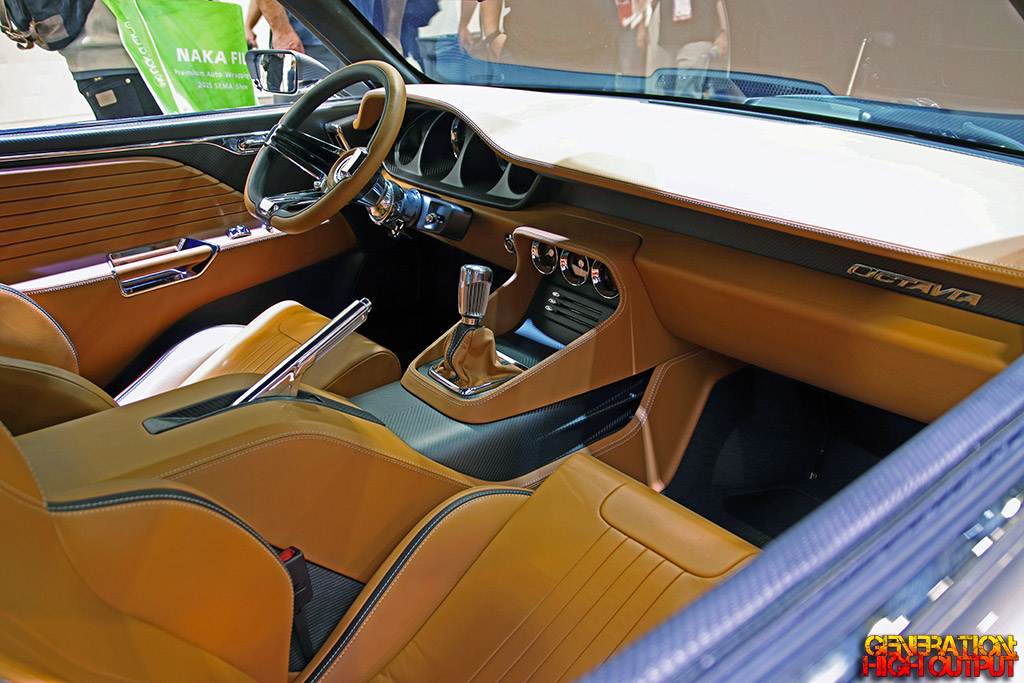
Ringbrothers also fabricated a custom exhaust system with Borla mufflers and unique exhaust tips machined from carbon fiber and stainless steel. Inside, the cabin was completely reimagined by Steve Pearson of Upholstery Unlimited, creating a bespoke interior worthy of the extensive exterior and mechanical modifications.

The Ringbrothers have built some remarkable vehicles over the years, but Octavia may be their most ambitious project to date. They transformed a 1970s luxury car into a modern muscle car with custom bodywork, modern performance, advanced materials, and James Bond-inspired details, creating a truly unique automobile. “Octavia” shows what Ringbrothers can do, and why they are one of the premier custom car builders in the industry.

Follow the Ringbrothers:

https://www.ringbrothers.com/
https://www.facebook.com/RingBrothersOfficial/
https://www.instagram.com/ringbrothers/

SEMA 2025: 1953 Corvette CF1 Fastback by Kindig-It Design

Every once in a while at SEMA you come across a car that immediately tells you two things:

1. A ridiculous amount of time, money, and talent went into it
2. It will probably never do anything as undignified as getting a grocery run or sitting in traffic next to a lifted Tahoe with mismatched panels

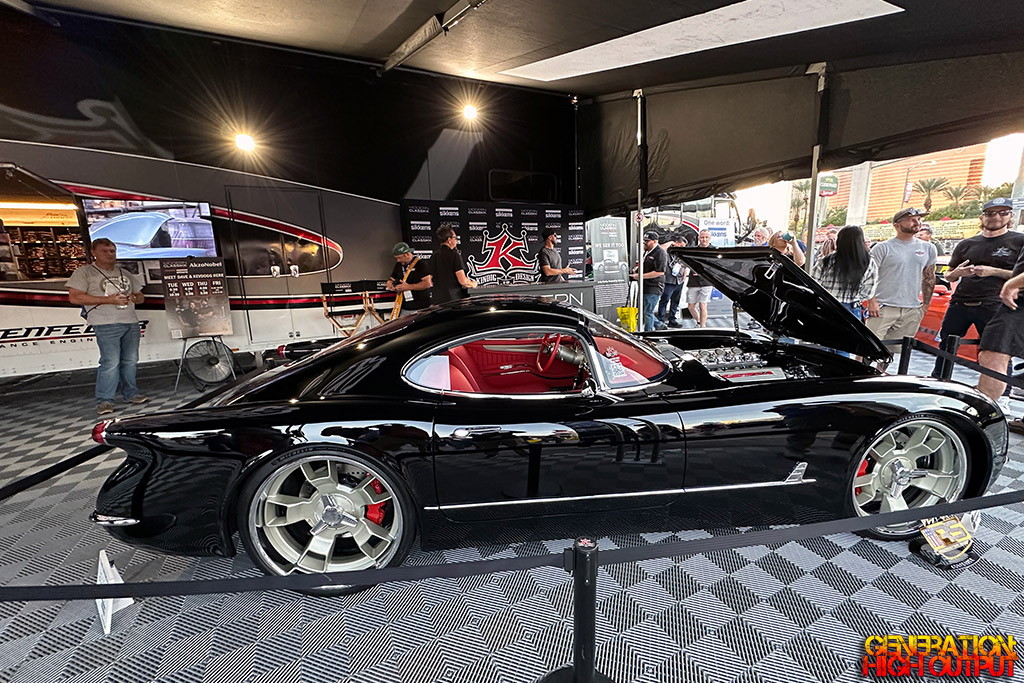
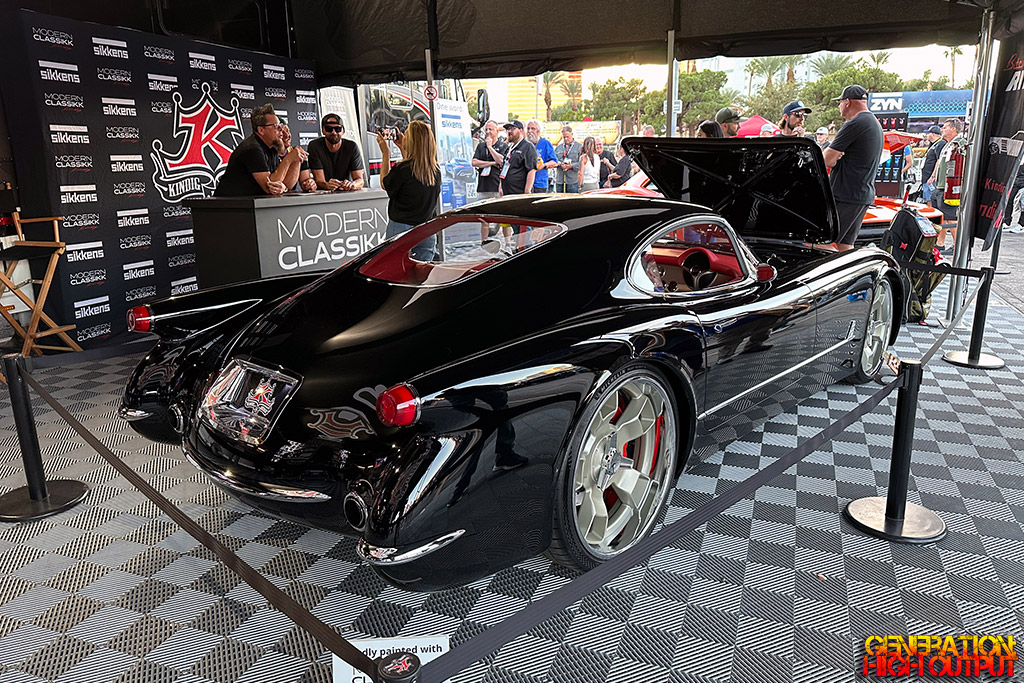
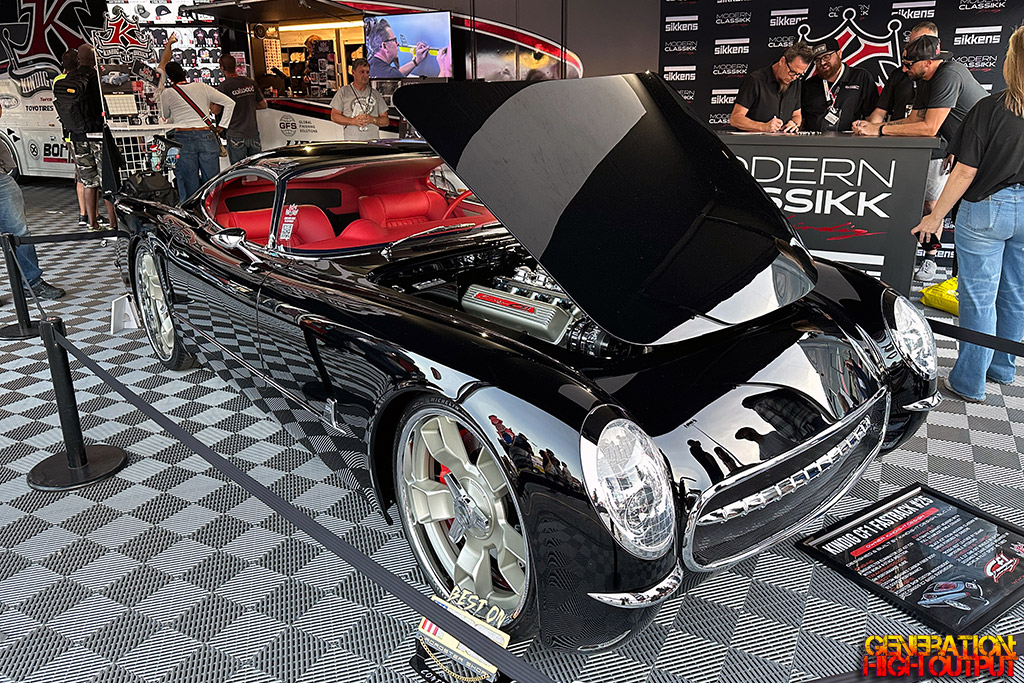
This year, that car was the new CF1 Fastback from Kindig-It Design.

And honestly, it doesn’t really feel fair calling it a “car” in the normal sense. It feels more like a design study that was made into a real object.

Dave Kindig’s Side Project

If you’ve spent any time around custom cars, the SEMA Show, or turned on cable TV in the past decade, you probably already know the name Dave Kindig. His shop in the Salt Lake City area has basically turned into a rolling portfolio of “what if we just… did it better than factory” ideas, many of which have been documented over 11 seasons of Bitchin’ Rides.

But somewhere along the way, Kindig launched a side project of building a small-run of series production cars. The CF1 series is that idea fully realized.

It started with the CF1 Roadster in 2021, followed by the Cabriolet in 2023, and now the Fastback version making its debut at SEMA 2025.

Each one is a continuation of a thought experiment:

“What would a 1953 Corvette look like if it was actually allowed to evolve normally instead of getting frozen in time?”

A Corvette That Never Existed, But Should Have

The inspiration is obvious: the original 1953 Chevrolet Corvette. But the CF1 Fastback isn’t really a tribute car in the traditional sense.

It’s more like someone took the concept of that car and removed all the limitations that existed in 1953 such as budget, materials, tire technology, chassis engineering, and general understanding of physics, and then rebuilt it from scratch.

There are no donor shells. No chopped-up classics being sacrificed in the name of nostalgia. Just a fully custom carbon fiber body sitting on a purpose-built platform.

Which, depending on your mood, is either the purest form of respect for the original design… or a very expensive way of refusing to leave the past alone.

Underneath the Pretty Surface

The CF1 starts with a custom chassis from Roadster Shop, using suspension geometry borrowed from the C7 Corvette platform. This isn’t a “vintage feel” car that also happens to stop and turn poorly. It’s engineered to behave like something modern, even if it looks like it belongs in a black-and-white photograph.

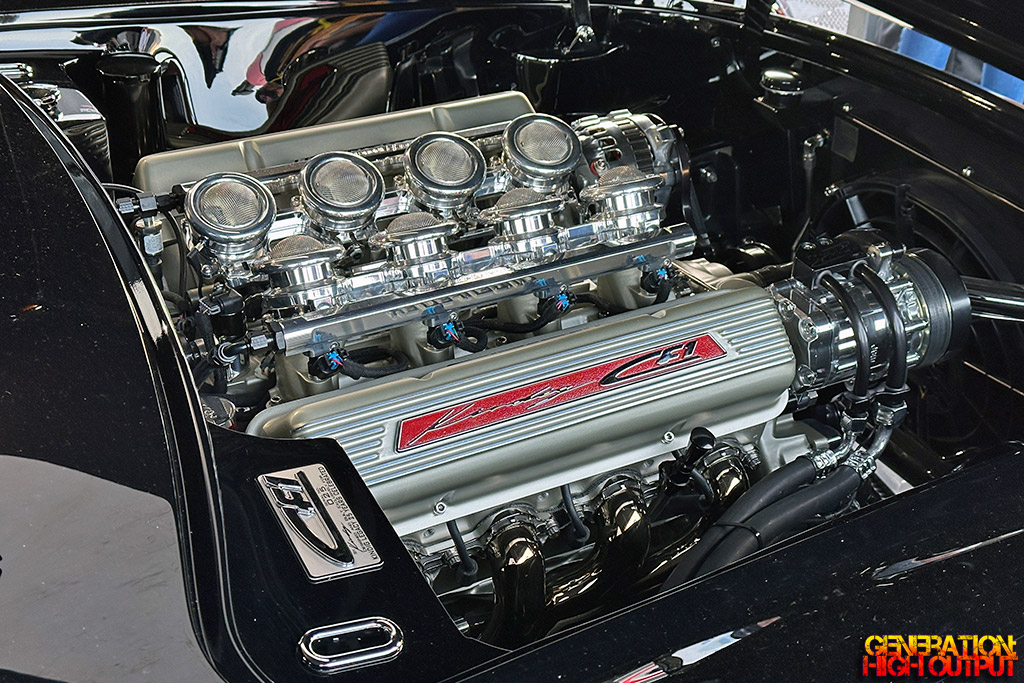
Power comes from a 427 cubic inch LS7-based engine built by Lingenfelter Performance—an Eliminator package pushing around 650 horsepower. On top sits an 8-stack electronic fuel injection system from Borla, feeding a full stainless exhaust setup that probably sounds a lot angrier than anything wearing 1950s styling should reasonably sound.

Bolted behind it is a GM Performance 4L80E transmission, which is about as far from “vintage” as you can get without involving a CVT and regret.

So yes—it looks like a classic Corvette.

But mechanically, it behaves like something that quietly skipped 70 years of automotive evolution and showed up already finished.

Interior: Luxury That Doesn’t Know It’s in a Hot Rod

Inside, things go from “restomod” to “luxury boutique hotel that forgot it was supposed to be a car.”

Rosso red leather by Seams Impossible Interiors gives the cabin a level of visual drama that feels closer to concept car than street machine. Dakota Digital gauges handle instrumentation duties, a Vintage Air system keeps things comfortable, and a custom steering wheel with a tilt column.

It’s all very deliberate. Very controlled. Very expensive.

And very far removed from anything that ever had a carburetor and a choke lever.

Jesus, Take the Wheel

The CF1 rides on custom EVOD wheels designed by Kindig himself. They are 21 inches up front, 22 in the rear. They are too big and too goofy for the car. I know it’s a restomod, but I feel that a more “OEM Plus” style wheel would suit the car better. The proportions of the car don’t look right with the wheel arches completely filled.


Time, Money, and the Slow Disappearance of “Normal Ownership”

Each CF1 takes roughly 9 to 14 months to build depending on specification. Finished examples of the CF1 Roadster have sold at auction for between $500 to $700,000 dollars, which puts it firmly in the category of “objects that will be carefully curated rather than used.”

And that’s where things get a little complicated.

Because the CF1 Fastback is undeniably beautiful. It’s one of those cars you walk around twice without realizing you’ve done it. It has presence, proportion, and craftsmanship that most production cars don’t even attempt anymore.

But it also feels like it’s been pre-assigned a life that never includes:
• Parking lots
• Road trips with questionable gas stations
• Door dings from someone’s overenthusiastic Civic door
• Or any situation involving weather

It’s already been mentally placed on a pedestal.

Probably before it even left the booth.

Final Thoughts

What Kindig-It Design has done with the CF1 Fastback is technically impressive in every measurable way. The engineering, design execution, and build quality are all at a level that most manufacturers would struggle to match outside of a concept studio.

But it also highlights something a little bittersweet about the modern custom world.

We’ve gotten so good at building dream cars that we’ve almost eliminated the part where they have to live in the real world.

And maybe that’s the trade-off.

The CF1 Fastback isn’t really meant to be driven like a normal car. It’s meant to exist. Which is fine.

But part of me can’t help but think the original 1953 Corvette didn’t plan on becoming an untouchable art piece either.

Follow Kindig-It Design:

https://kindigit.com/
https://www.facebook.com/Kindigit/
https://www.instagram.com/kindigitdesign/
https://www.youtube.com/@kindigitdesignofficial

SEMA 2025: 1970 Plymouth Roadrunner “Haraka” by Pure Vision Design

Officially, the SEMA Show is a trade show for automotive industry professionals to meet and do business. Unofficially, the main attraction is the more than 2,000 custom vehicles on display throughout the massive convention halls.

While some custom car builders focus on originality, the cars that catch my eye are the “restomods,” cars which blend classic style with modern performance parts and technology. I love walking the show floor and discovering a great custom car build that has modern paint, suspension, brakes, and power, while retaining the character that made the car special in the first place.

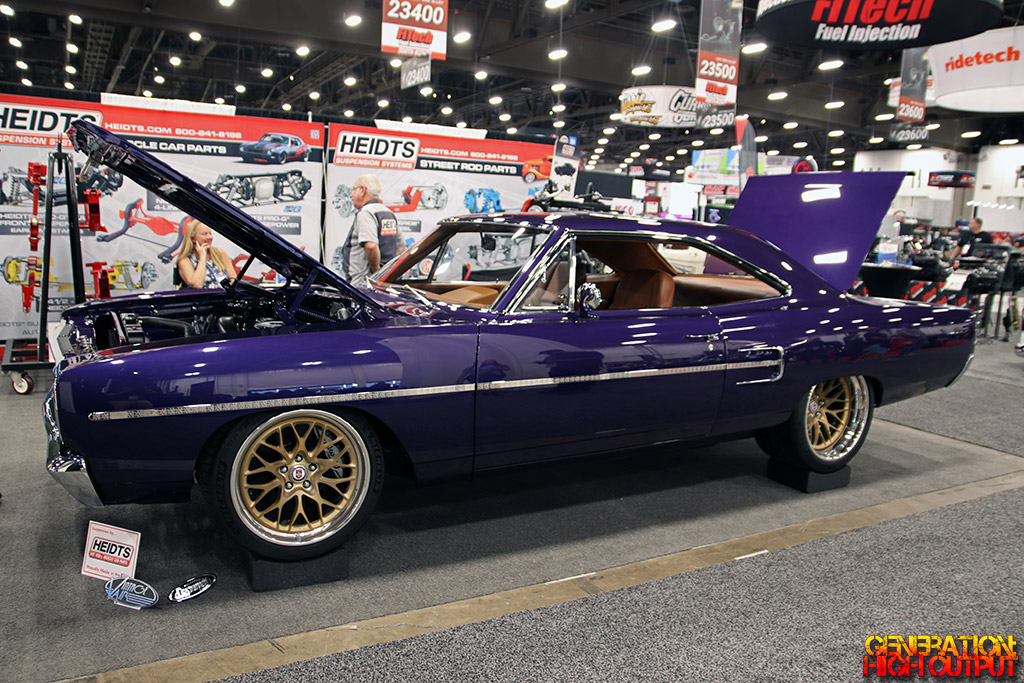
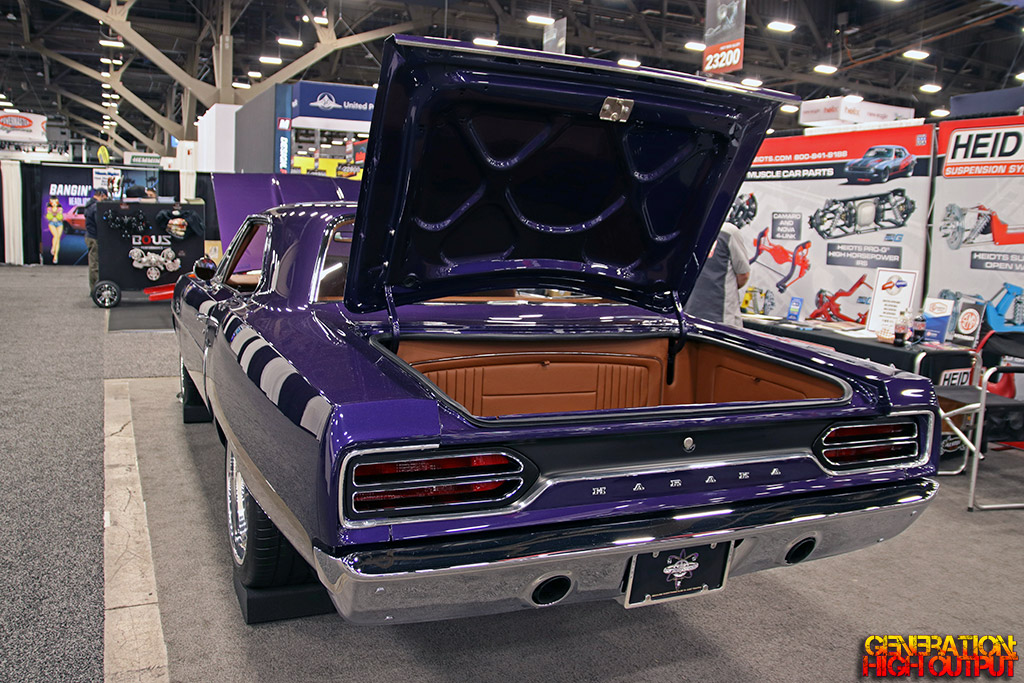
One vehicle that caught my eye at the 2025 SEMA Show was this 1970 Plymouth Road Runner “Haraka” by Pure Vision Design. I have followed Steve Strope and his shop for years, and I am a big fan of their work. The name Haraka comes from the Swahili word for “speed,” which seems fitting for a car built with both performance and drivability in mind.

Finished in a striking dark purple paint color, this Roadrunner commands attention from every angle. The car rides on a set of gold HRE wheels with polished hoops, wrapped in Michelin performance tires. Behind those HRE wheels is a Wilwood disc brake system featuring the company’s new electric parking brake setup.

The suspension has also received a significant upgrade. Pure Vision equipped the car with independent front and rear suspension systems from Heidt’s, which is now available for B-body Mopar vehicles. This modern suspension setup provides a substantial improvement in handling and comfort compared to the original 1970 Road Runner.

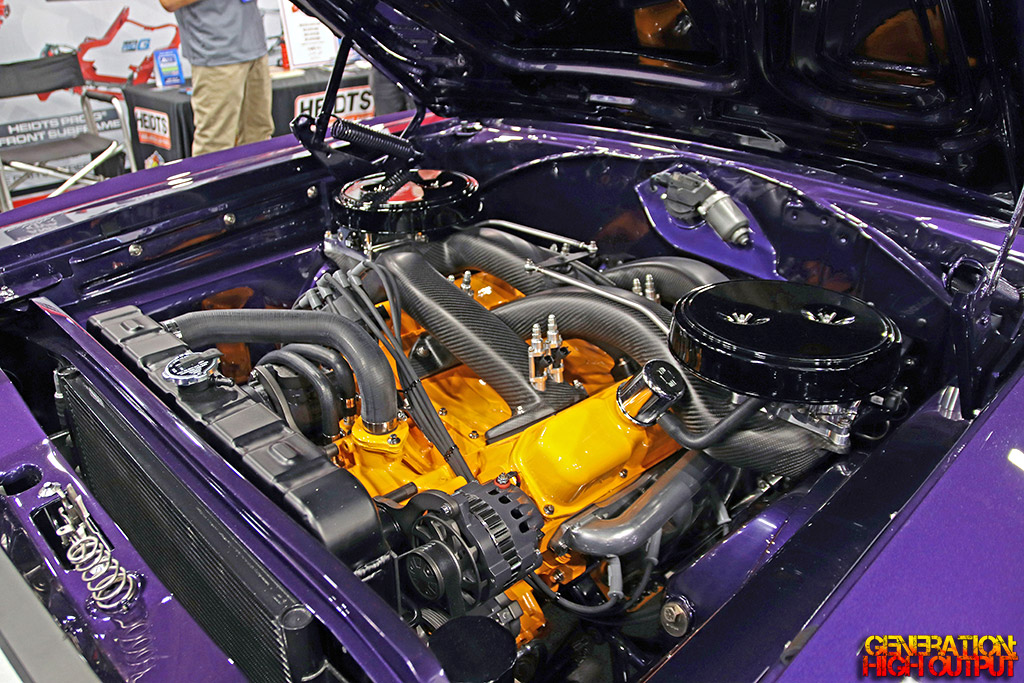
Power comes from a Chrysler 440 V8 that has been stroked to 494 cubic inches. The engine is equipped with Edelbrock cylinder heads and a performance camshaft, producing an estimated 550 to 600 horsepower. The block is painted in Hemi Orange, which absolutely pops beneath the one-off carbon fiber cross-ram intake manifold. This custom piece really sets this car apart from other custom builds.

The engine is managed by a MoTeC ECU. Power is sent to the rear wheels through a Tremec TKX five-speed manual transmission paired with an American Powertrain bellhousing.

A custom fuel tank from Rick’s Tanks houses a late-model Chevrolet Camaro Z28 fuel pump, helping supply the fuel demands of the modernized big-block engine.

“Haraka” is the first street-legal vehicle to feature a comprehensive, header-back carbon fiber exhaust system, including fully integrated carbon fiber mufflers.

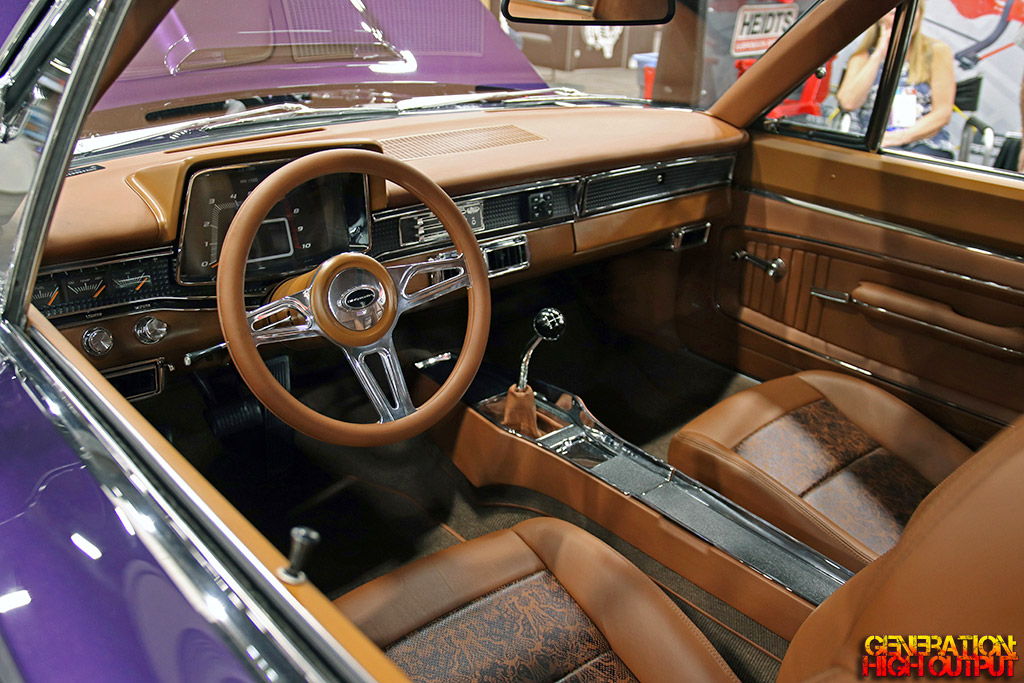
While the exterior and drivetrain are impressive, the interior may be the most interesting part of the build. Rather than creating an entirely new interior, Pure Vision incorporated components from several different Chrysler vehicles. The dashboard was sourced from a 1966 Plymouth Fury II, while the center console comes from a 1972 Plymouth Duster. An overhead console from a 1973 Plymouth Barracuda Gran Coupe completes the collection of vintage Mopar parts.

The full custom interior is trimmed in brown leather and features 18-way power seats from a Porsche Panamera with both heating and cooling functions. Modern conveniences include Vintage Air climate control, Dakota Digital gauges, and a Kicker audio system with Bluetooth connectivity.

The Haraka Road Runner is an excellent example of how a builder can combine components from different eras to create something unique. From its modern suspension and fuel-injected big-block engine to its carefully curated interior, this is a car that respects its Mopar heritage while embracing modern performance and comfort. It was one of the more memorable custom builds I encountered at the 2025 SEMA Show.

Follow Pure Vision Design:

https://www.purevisiondesign.com/
https://www.facebook.com/PureVisionDesign
https://www.instagram.com/purevisiondesign/

SEMA Show Announces Expanded Format for 2023

At the 2022 SEMA Show in Las Vegas, show organizers made one of the biggest announcements in the history of the show. Beginning in 2023, the SEMA Show will be expanded into a new format. Read the full press release below.

DIAMOND BAR, Calif. (Nov. 4, 2022) – SEMA (Specialty Equipment Market Association) announces a five-year vision to expand the SEMA Show into an “all-city” experience. Officially called SEMA Week, the expansion’s goal is to create the most passionate and exciting automotive event in the world. SEMA Week will kick off in 2023 with new concepts, activities, and events introduced over the five-year roll-out period.

SEMA Week will be headlined by the SEMA Show, which will remain a trade-only event Monday through Friday. On Friday, the final day of the SEMA Show, a limited number of enthusiasts will be able to attend the SEMA Show through the Friday Experience program, which launched at the 2021 SEMA Show. Beginning on Friday evening of SEMA Week, SEMA will take over the Las Vegas Festival Grounds through Saturday Night with an all-new SEMA Fest.

“We have been watching the connection between enthusiasts and our industry grow for more than a decade and, as the industry’s trade association, I have a responsibility to help facilitate that connection in new and meaningful ways,” said James Lawrence, SEMA Chairman of the Board. “By creating SEMA Week and SEMA Fest, we will be able to maintain the integrity of the trade show that makes it a must-attend event for automotive professionals while introducing a new platform for enthusiasts and the industry to engage with one another.”

For 2023, SEMA Fest will take place at the Las Vegas Festival Grounds and be open to everyone, bringing together automotive enthusiasts with the aftermarket industry in a high-octane and immersive festival-like celebration of car culture. SEMA Fest will feature top music and entertainment, car show and cruise, VIP experiences, craft food, automotive celebrities, and motorsports. It will run alongside the popular SEMA Ignited Cruise and SEMA Show after-party, which draws thousands of enthusiasts on Friday night.

SEMA Week is also scheduled to include a SEMA Auction, featuring some of the best builds from SEMA and many more amazing vehicles to headline the festivities. SEMA will continue to expand and refine SEMA Week over the next five years, rolling out new events and activities throughout the city of Las Vegas. The evolution of SEMA Week preserves the trade aspects of the industry and business components of the SEMA Show, while enabling enthusiasts from all over to join in the festivities and enjoy car culture-focused events throughout the SEMA Week experience.

Additional details for the 2023 SEMA Show, SEMA Week, and SEMA Fest will be announced in the coming months.

About SEMA

SEMA, the Specialty Equipment Market Association founded in 1963, represents the $50.9 billion specialty-automotive industry. The industry provides appearance, performance, comfort, convenience and technology products for passenger and recreational vehicles. Association resources include market research, legislative advocacy, training and product development support, as well as leading trade shows such as the SEMA Show in Las Vegas, Nevada and the Performance Racing Industry (PRI) Trade Show in Indianapolis, Indiana. For more information, visit www.sema.org, www.semashow.com or www.performanceracing.com.

2021 SEMA Show Returns Bigger and Better Than Ever

LVCC West Hall Construction

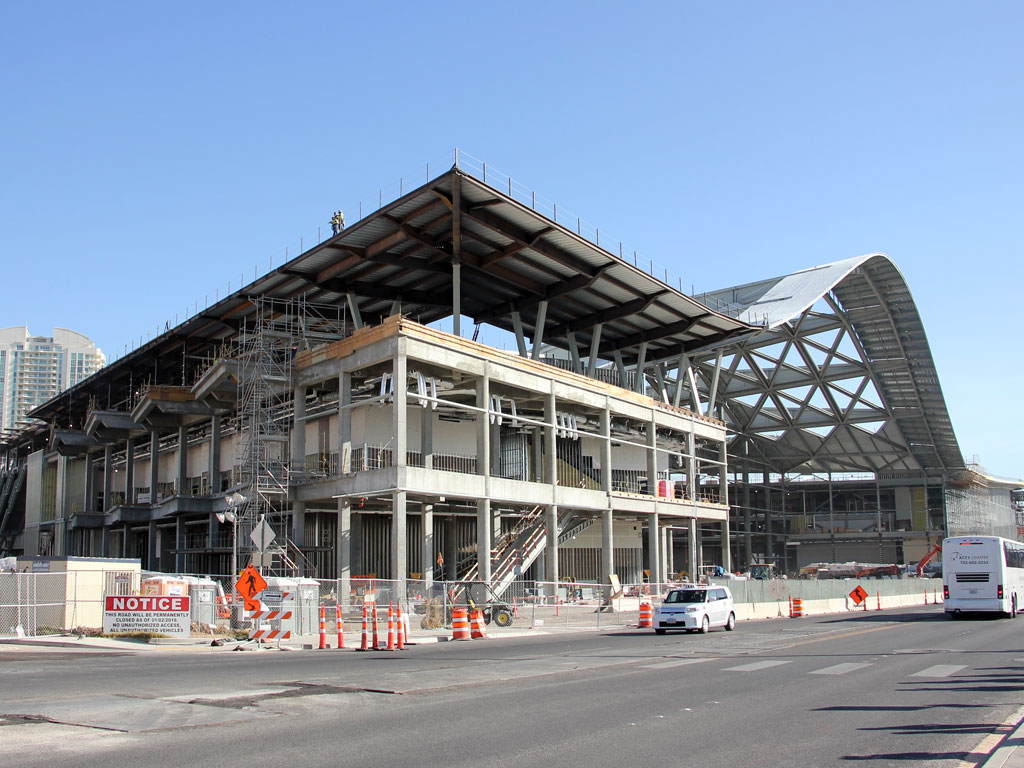
LVCC West Hall under construction in 2019. Photo by: Trevor Freeman

Here at Generation High Output, we don’t just write about cars – we are car enthusiasts. We like bringing you news and information about what’s happening in the automotive world. We like seeing cars up close and in person.

Because of the pandemic, the Specialty Equipment Market Association decided to make SEMA a virtual event for 2020. We completely understand why, but it definitely did not provide the same experience as walking the convention center, talking to builders, meeting people, and discovering amazing new booths and vendors.

Joyfully, the SEMA Show will be back to an in-person event for 2021! The automotive aftermarket expo returns to the Las Vegas Convention Center November 2-5, 2021. But wait, there’s more!

The Las Vegas Convention Center has completed its latest expansion, and the new West Hall adds an incredible 1.2 million square feet of floor space. And SEMA will be using all of it! That’s right, the 2021 SEMA Show will be the largest event yet!

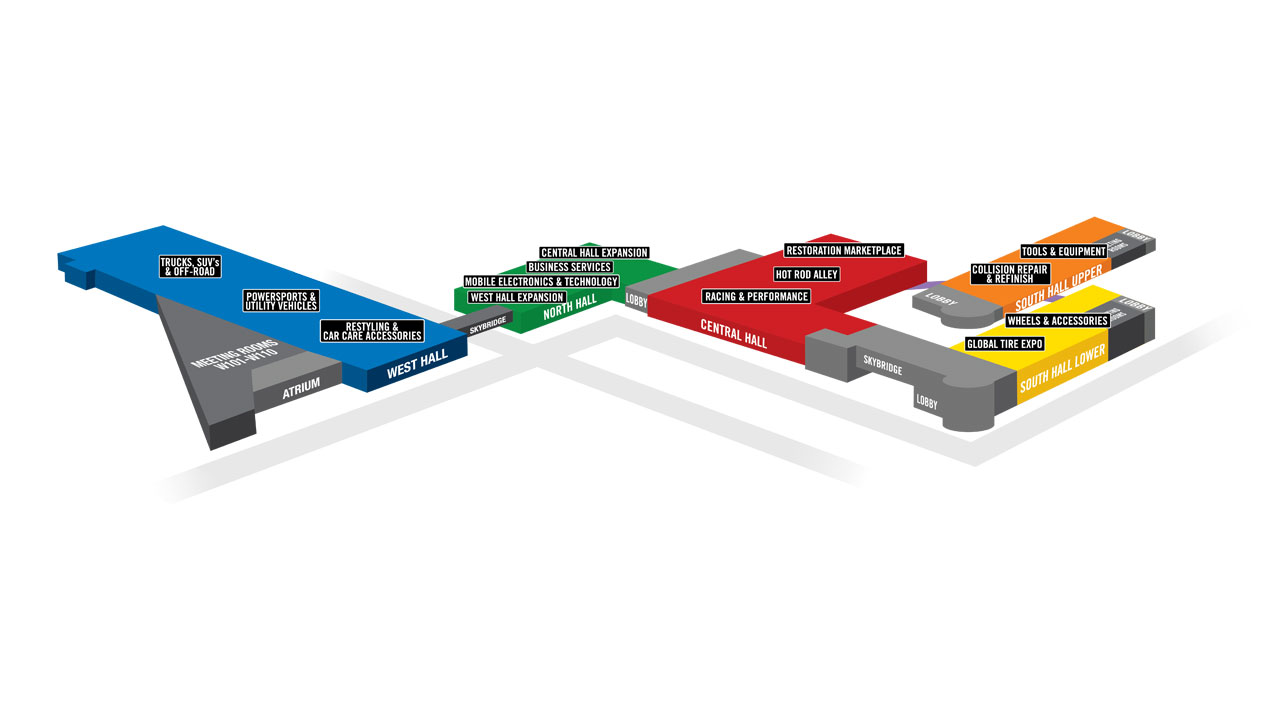
A sky bridge connects the new West Hall to the North Hall, crossing over Paradise Road. This expansion will host the Trucks, SUVs, and Off Road exhibitors, Powersports and Utility Vehicle exhibitors, and Restyling and Car Care Accessories exhibitors. This means changes to the layout of the South Hall exhibitors. The South Hall Lower Level will feature wheel and tire exhibitors as usual, but the South Hall Upper Level will feature booths and exhibits related to Collision Repair, Tools, and Equipment.

There will be a lot to see at the 2021 SEMA Show, and we plan to be there to bring you the most updated information on trends in the auto industry, the aftermarket, and some cool custom cars as well! For more information, visit www.semashow.com NOTE: The SEMA Show is a trade-only event and not open to the general public.