We had a great time at the SEMA Show in Las Vegas this year. It was great to be back in person, after the virtual event in 2020. Check out this short clip showcasing some of the highlights of this year’s event, as well as a quick update on the recent changes to the Las Vegas Convention Center.
Iso was an Italian automobile manufacturer that dates back to 1939. They began as an appliance manufacturer, and in 1948 began building motorcycles. In 1953 the company unveiled its first car: the Isetta, famously known as the “bubble car.” They licensed the design to several manufacturers including BMW, who went on to mass produce the car to worldwide fame.
In the early 1960s, Iso entered the sports car market with their first model, the Rivolta. They would later produce the Grifo, Fidia, and Lele models. All of these were low volume production cars, with just a few hundred examples built of each model.
Approximate Production Numbers:
Iso Rivolta: 797 units
Iso Grifo: 413 units
Iso Fidia: 192 units
Iso Lele: 285 units
Iso automobiles combined beautiful Italian design with powerful American engines from Chevrolet and Ford. They were expensive and luxurious models for the rich and famous. The Fidia S4 sedan briefly held the title of World’s Fastest Sedan in the late 1960s. Unfortunately, the market for gas guzzling luxury automobiles evaporated after the 1973 oil crisis, and the company ceased operations permanently in 1974.
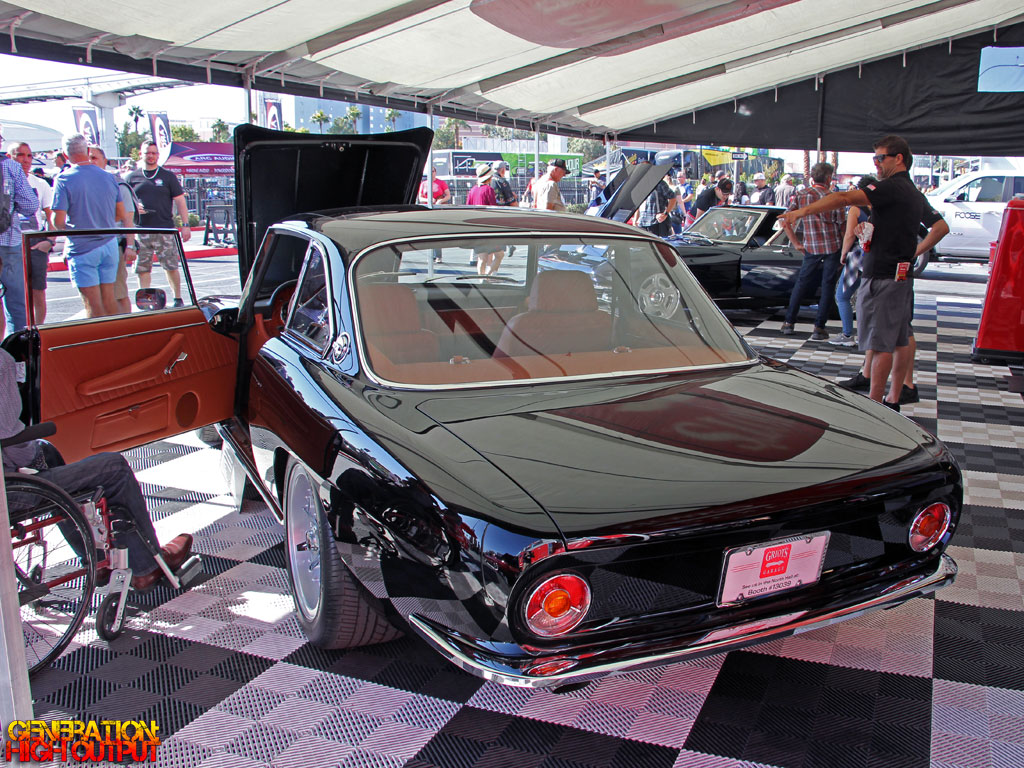
I have something of a soft spot for these niche Italian cars, which are much less known than brands like Lamborghini, Ferrari, and Fiat. Regular readers of this site may have even seen my previous posts about the Iso Lele and Iso Fidia S4 in the past. You can imagine my surprise when I walked into the Griot’s Garage booth at the 2019 SEMA Show and saw this gorgeous Iso Rivolta IR 300 coupe. It was a rare sight at an event that is dominated by American muscle cars like the Chevrolet Camaro and Ford Mustang.
This particular car belongs to Richard Griot, who founded Griot’s Garage in his home garage in 1988. Griot’s Garage has grown to become a powerhouse brand that offers wash, polish, wax, and other automotive detailing products. This 1967 Iso Rivolta has received a full restoration by J&L Fabricating of Puyallup, WA.
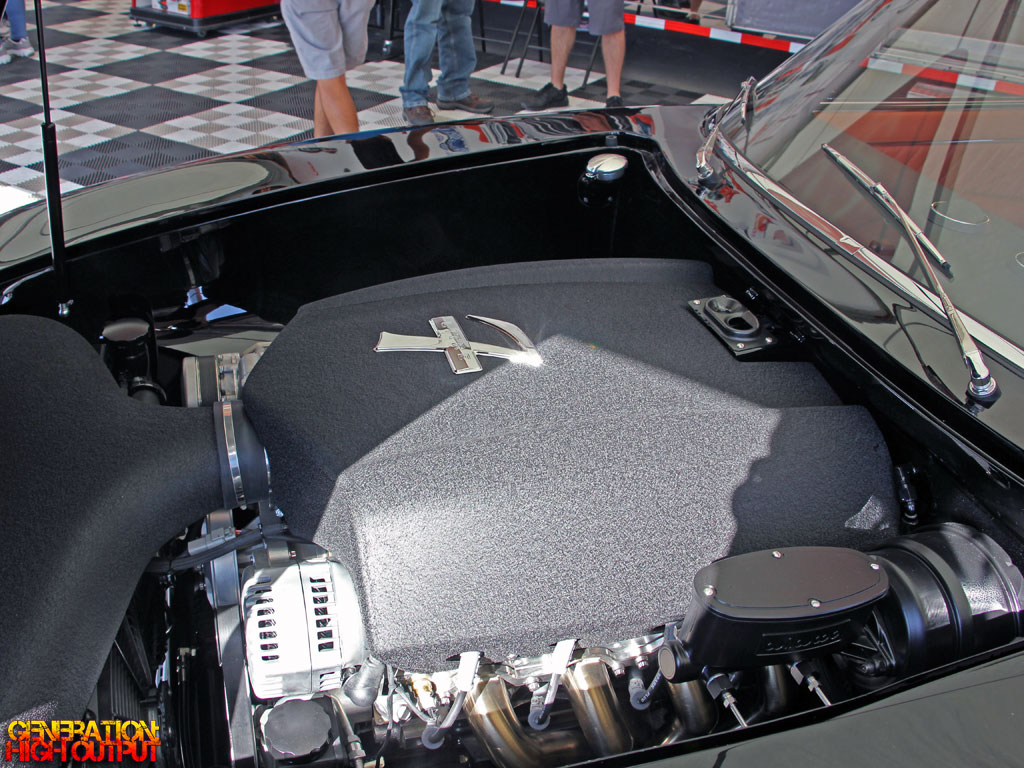
Back in 1967, the Rivolta coupe was offered with two engine choices: a Chevrolet small block V8 making either 300 or 340 horsepower. This car has been upgraded with a GM Connect and Cruise LS7 7.0L V8 engine, which produces 505 horsepower. It is coupled to a Tremec T-56 Magnum 6-speed manual gearbox.
The car has been given a full resto-mod treatment, which means that it does more than just go fast in a straight line. It can also handle corners like a modern car, thanks to an Art Morrison suspension and rear subframe with Camaro rear end. Brakes have also been upgraded to Wilwood 13-inch disc brakes.
The car rides on a set of EVOD Industries 17-inch custom wheels wrapped in Pirelli P-Zero tires, which measure 235/50-17 up front and 285/40-17 in the rear. Other upgrades include a Borla custom exhaust, a gorgeous interior, and a PPG Black paint job done by Jon Beyers Customs.
While it may have looked unfamiliar to the Chevy and Ford guys, this car is essentially an American muscle car in an Italian suit. I really enjoyed seeing this car at the SEMA Show and applaud the owner for building something different than yet another Camaro or Corvette.
1967 Iso Rivolta IR 300 Coupe Specs:
Builder: J&L Fabricating, Puyallup, WA
Owner: Richard Griot
Paint: Jon Beyers Customs – PPG Black
Body and Assembly: J&L Fabricating
Engine and Transmission: GM Connect & Cruise LS7 V8 Engine, Tremec T56 Magnum 6-speed Manual
Suspension: Art Morrison suspension and rear subframe with Camaro rear end
Brakes: Wilwood 13-inch disc brakes
Wheels: EVOD Industries 17-inch custom wheels
Tires: Pirelli P-Zero tires, 235/50-17 front, 285/40-17 rear
Exhaust: Borla exhaust
What comes to mind when you think of Volvo? Probably words like safe, practical, boring. None of those are words that would describe Sean Fogli’s 1983 Volvo 242 coupe. The resto-modded car was featured in the Optima Ultimate Street Car area at the 2019 SEMA Show in Las Vegas. I stopped in for a closer look at this amazing build.
What looks like a dull, early 80s Swedish car is actually a highly capable, tire-smoking, track-ready race car in sheep’s clothing. The car’s original 4-cylinder engine has been swapped for a GenIV 6.0L V8 LS engine mated to a T-56 manual gearbox. The cherry on top is an LSA supercharger from a Cadillac CTS-V, and an LS9 fuel rail and injectors.
Peering in the windows, the roll cage, Racepak display, and Recaro seats with Schruth harnesses are more clues that this is no ordinary car. This Volvo is set up to handle the twists and turns of a road course, which was definitely not in its original design requirements.
The car has a great stance and rides on CCW Wheels with Bridgestone tires. It competed in the 2019 Optima Ultimate Street Car Invitational, an annual track event that is open to street legal cars and trucks. The LSX badge on the rear of the car is one of a few subtle hints that this Volvo is definitely not stock. This is a super cool build and one of the standout cars of the Optima Ultimate Street Car Challenge. I was privileged to see this car at SEMA 2019, and really enjoy featuring these types of custom cars for our readers. The car participated in the end of show SEMA Cruise on November 8, 2019.
The Specialty Equipment Market Association is the governing body that organizes the SEMA Show, a trade show and exposition for the automotive aftermarket industry. On August 6th, 2020, the association announced that the 2020 SEMA Show will not take place as planned. Originally scheduled to take place November 3-6, 2020, the annual event has been rescheduled as a virtual event.
First held in 1967, the SEMA Show moved to Las Vegas in 1977 where it has remained for the past 42 years. The massive trade show is one of the largest in the country, drawing more than 165,000 attendees in 2017. 25% of the attendees traveled from outside of the U.S. to attend the week-long event. The economic impact of the show is also significant, even in a city known for large trade shows and industry events. The flights, hotels, meals, and convention services have a total economic impact of $315 million, according to a 2017 article by the Las Vegas Review-Journal.
The SEMA Show covers all corners of the automotive industry, from performance and aftermarket companies, to wheel and tire manufacturers, off-road, high end stereos and equipment, tooling and equipment, and auto body and restoration shops.
SEMA typically begins weeks ahead of time, with show services staff and exhibitors setting up their booths in the massive convention center, which has more than 3.2 million square feet of exhibit space (and still growing!). The week of the show, Monday is open to members of the press. Tuesday through Friday are open to registered attendees, including buyers, exhibitors, and other attendees. The show ends with the SEMA Cruise – a parade of hundreds of show cars leaving the convention center. A new event called SEMA Ignited gives the public a chance to see some of the custom cars from the show in an evening event, held close to the convention center.
The details of how the show will transition to a virtual format have not yet been disclosed. The New Products Showcase and Education Sessions will likely be webinars or video presentations, and the networking and happy hour events could be held as virtual meetings. But for many attendees, the big feature of SEMA is the cars: more than 2,000 customized cars, trucks, vans, SUVs, and other vehicles take over the convention center are a huge draw for companies showcasing their products.
Generation: High Output has covered the SEMA show since 2012, and we look forward to bringing you coverage of the automotive aftermarket industry again this year.
One of the most iconic cars ever created is the Mercedes-Benz S-Series. Produced between 1927 and 1933, these cars were the top performers of their time. The legacy of the Mercedes S, SS, and SSK cars lives on today, many decades after production ended.
In the 1970s and 1980s, a number of companies sprouted up to produce replicas of these famed automobiles. Excalibur, Classic Tiffany, Gatsby, Clenet, Besasie, and many others each took a turn at creating their modernized version of the classic Mercedes roadster.
In 1980, Charles W. Phillips of Pompano Beach, Florida decided to set about producing a replica of the 1934-36 Mercedes 540K Roadster, which was the follow-up to the famous S-Series cars. Neoclassic automobiles often use the chassis and powertrain of a mass-produced car, combined with custom bodywork. The Phillips Berlina is no exception. It has a fiberglass body riding on top of a stretched Chevrolet Corvette C3 chassis. This car, a 1981 model, wears a lovely shade of red with a white vinyl top.
Though it had a Chevrolet V8 engine under the hood, the Berlina Coupe produced just 190-200 horsepower. Factoring in the additional weight of the body and chassis, this is probably one of the slowest Corvettes around. But this is not a car to be driven swiftly or aggressively, this car is all about style.
The round headlamps, oversize horns, running boards, and spare wheels mounted on the fenders hearken back to the pre-war motoring era, when automobile ownership was reserved for the wealthy elite. With the long hood and short deck, it definitely resembles the Mercedes-Benz 540K. Look closely though and you can see the doors, windshield, and interior are unmistakably Corvette.
The stretched wheelbase really throws off the proportions of the car. It must have an absolutely terrible turning radius! Look at how ridiculous it looks from the side. The car’s 185/65R14 tires up front look especially small beneath the large wheel arches.
It does not appear as though there is a trunk or any kind of access through the rear bodywork. Not that Corvettes are particularly spacious cars to begin with, but from the looks of it, it wouldn’t have been that hard to make an opening rear hatch.
From what I can tell, the company wasn’t in business very long. Only 78 of these cars were produced between 1980 and 1983. If you have any more details about the Phillips Berlina Coupe, please post a comment below!
2022 Update
Another 1981 Phillips Berlina popped up for sale at the Barrett-Jackson Scottsdale 2022 collector car auction! Lot #646 is a 1981 Berlina Custom Coupe painted a gold/tan color over tan interior and showing 16,228 miles on the odometer. The car sold for $22,000 (including buyer’s premium). Interestingly, some of the words I wrote about this car in my 2020 post made it onto the vehicle description in the auction catalog!
The Ford GT was designed from day one to be a special car. The car was built to celebrate the 100th anniversary of the Ford Motor Company. It was a showcase of the company’s design and engineering muscle, a “halo car” showing what the brand was truly capable of. The mid-engine, supercharged car with a six-figure price tag joined a very short list of “American supercars.” Suffice to say, every one of the 4,038 Ford GTs produced between 2005 and 2006 is a special car. But within that group are some cars that I would say are “extra special.” In this post, I am going to highlight some of these special edition Ford GT cars.
2005 Ford GT VIN 003
This 2005 Ford GT is the third car completed by VIN (suffix 00003) and the lowest-production VIN ever offered to the public for sale. It was was consigned to auction at Barrett-Jackson’s Scottsdale 2020 event. The car sold for $440,000 USD (including auction fees).
The lowest VIN ever offered to the public for sale is VIN 003, which sold at Barrett-Jackson’s Scottsdale 2020 auction for $440,000. Photo by: Barrett-Jackson.com
From the auction listing:
Car #00003 was equipped with three of the four factory-available options, including BBS lightweight forged aluminum wheels, painted brake calipers and the audiophile-quality McIntosh stereo system; only the painted upper racing stripes were omitted. The car remained in Ford’s ownership until this very special Ford GT was acquired by renowned collector Ron Pratte prior to joining the Scott Thomas Collection in 2015.