SEMA 2018: Dodge Introduces 1,000 Horsepower “Hellephant” Crate Engine

From the time the Dodge Challenger revival was confirmed in 2006, Dodge has been on a roll with their high-performance enthusiast vehicles. When the third-generation Challenger made its debut in 2008, the 6.1L (372) SRT8 model put out a healthy 425 horsepower.

Dodge bumped it up again in 2011, when the Challenger SRT8 received a new 6.4L (392) HEMI V8 making 470 horses. In 2014, Dodge stunned the automotive world when they introduced the Hellcat with its 6.2L (376) HEMI making a staggering 707 horsepower – the most powerful production engine in a muscle car at that time. In 2017, the bar was raised yet again with the announcement of the SRT Demon, a supercharged version featuring an eye-popping 808 horsepower on 91 octane gas, or 840 horsepower on 100-octane.

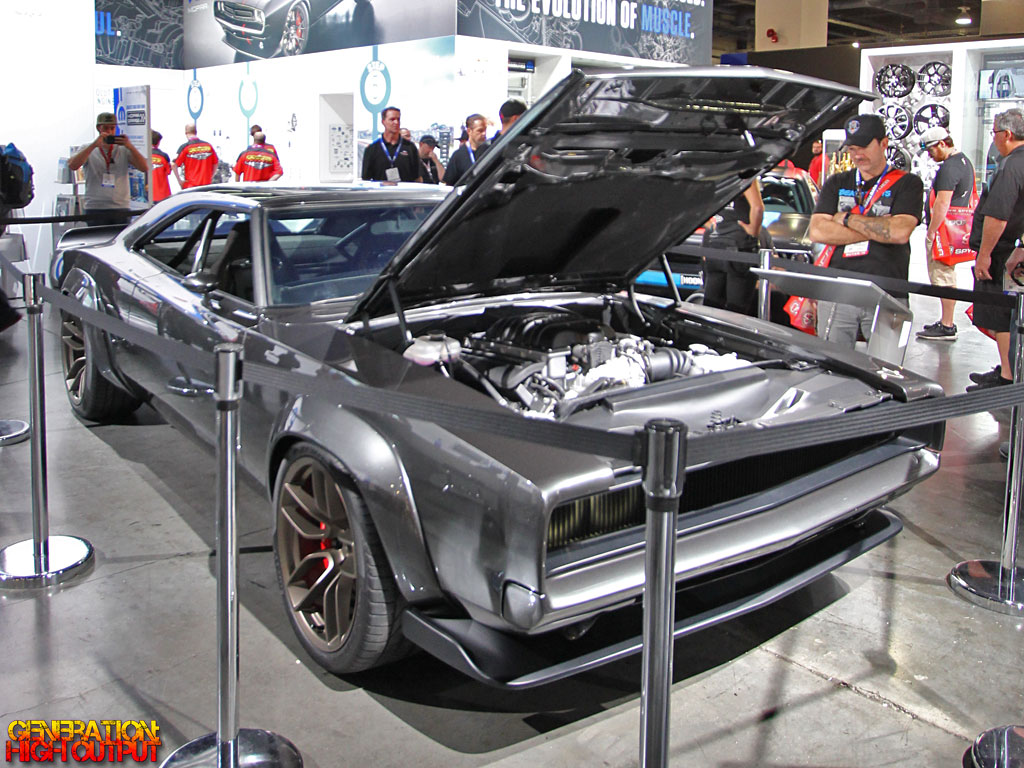
How much further can they go? Well at SEMA 2018, we got an answer. Mopar fans were delighted to hear about Chrysler’s latest creation: a supercharged, all aluminum 7.0-liter (426 cubic inch) HEMI crate engine. The “Hellephant” as it is nicknamed, will produce 1,000 horsepower and 950 lb-ft of torque. It is far and away the most powerful crate engine ever offered by an OEM.

To promote the new engine, Chrysler’s Product Design Office (PDO) came up with the idea of installing the engine into a classic 1968 Dodge Charger. The “Super Charger” is equipped with a stock T-6060 six-speed manual transmission, along with a number of custom touches.

  • “De Grigio” Grey Metallic paint
  • Brembo six-piston disc brakes
  • Side mirrors from a 1971 Duster
  • 5-inch exhaust tips borrowed from the Alfa Romeo Stelvio
  • Dodge Viper steering wheel
  • Dodge Viper seats, wrapped in Alcantara with red stitching
  • Sabelt four-point racing harnesses
  • Custom roll cage with 2-inch diameter tube
  • Rear seat delete
  • LED brake lights
  • 20×11″ front wheels, 21×12″ custom rear wheels
  • lowered 3.5 inches in front, 2.5 inches in rear
  • shaved door handles, drip rails, trunk lock

Pricing for the Hellephant engine was not announced, though it will likely be more than the $19,530 price tag for the Hellcat crate engine. It is expected to be available for sale in early 2019.

Part Number Reference:

Interior
Fuel Level, Full Sweep, Electronic 2 1/16″, Black Dial – 77060043
Oil Pressure, Short Sweep, Electronic 2 1/16″, Range 0-100 psi, Black Dial – 77060045
Speedometer, In-Dash, Full Sweep, Electronic 3 3/8″, Range 0-160 mph, Black Dial – 77060055
Voltmeter, Short Sweep, Electronic, 2 1/16″, Range 8-18 volts, White Dial – 77060050
Tachometer, In-Dash, Full Sweep, Electronic 3 3/8″, Range 0-10,000 rpm, Black Dial – 77060057
Water Temperature

Performance/Engine
426 Supercharged Crate HEMI Engine Kit: 77072500
Hellephant 426 Supercharged Crate HEMI Engine: P5160194
6.2L EO Air Filter Element – 77072491
6.2L Supercharged Crate HEMI Engine FEAD Basics Kit (includes alternator, power steering pump, pulleys, and hardware) – 77072492

 

SEMA 2015: 1970 Dodge Charger Tantrum by Speedkore

1970-charger-tantrum-profileGone are the days when building a hot rod meant swapping in a junkyard motor and some bolt-ons to any old jalopy. The collector car market is now dominated by elite restoration shops that completely deconstruct and reassemble the classics of yesterday as modern hot rods. These cars are adorned with precision machined parts, exotic materials like titanium and carbon fiber, and one-off fabricated parts. In many cases, these frame-off resto-mods may take one to three years to build and cost upwards of $150,000 or more!

Hot rodding has become an over-the-top, “mine’s-bigger-than-yours” competition of insane proportions. The latest example of this comes from SpeedKore Performance in Grafton, Wisconsin. Their 1970 Dodge Charger “Tantrum” is one of the wildest custom car builds I have ever seen.

In 1970, the only people working with carbon fiber would have been the aviation industry and NASA. This space-age material is incredibly lightweight and strong. At the time this car rolled off the production line, it would have been unthinkable to have such materials in a passenger car. But that’s exactly what Speedkore have done: carbon fiber hood, front fenders, and bumpers.

Continue reading

SEMA 2015: 1970 Cuda by The 401k Club

1971-cuda-401k-club-frontMuch has been written about the growing popularity of classic cars as investments. As demand among collectors and baby boomers continues to increase, the values of classic cars are being pushed ever higher at auction events nationwide.

While having a cushion of money in their portfolio is comforting to many retirees, some people look to enjoy the things they dreamed of in their younger days. For many people, a 1960’s muscle car is the physical manifestation of that dream. That’s how The 401k Club got started. From their website:

In 2006 a group of car club buddies decided to lease a warehouse for a place to work on their own vintage cars and Hot Rods. With Dana at the helm The 401K Club was born. Fast forward nine years and what started as merely a place for passionate car enthusiasts to tinker on their own projects, has transformed into a globally recognized Custom Hot Rod Shop with one of the best teams in the business.

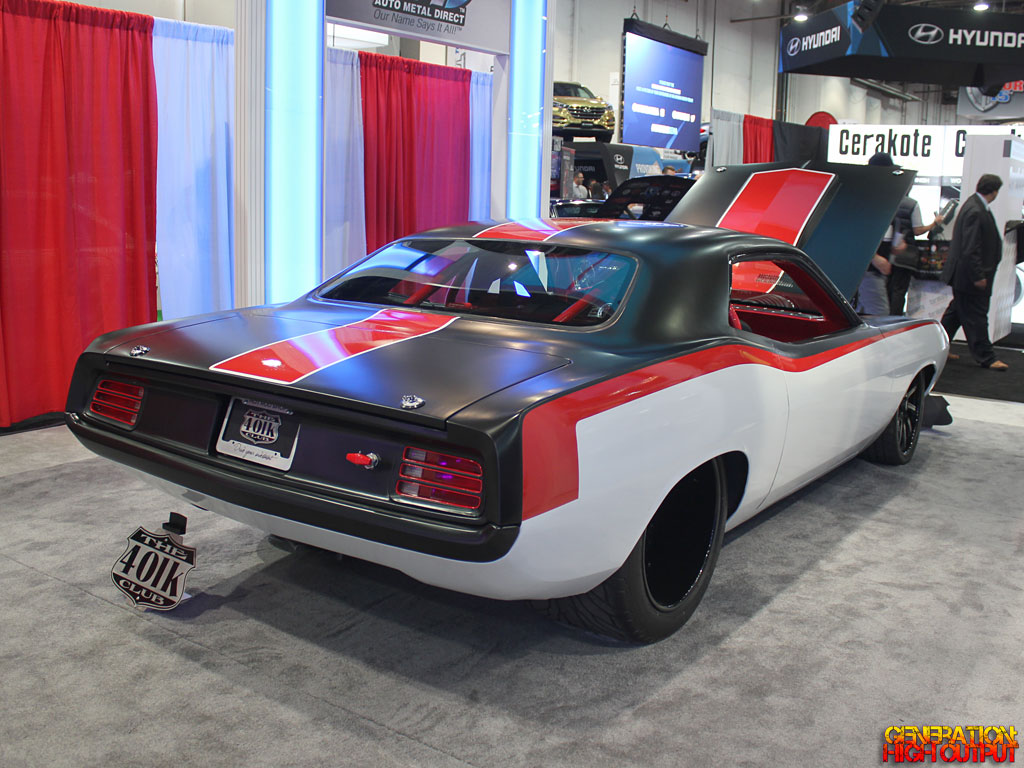
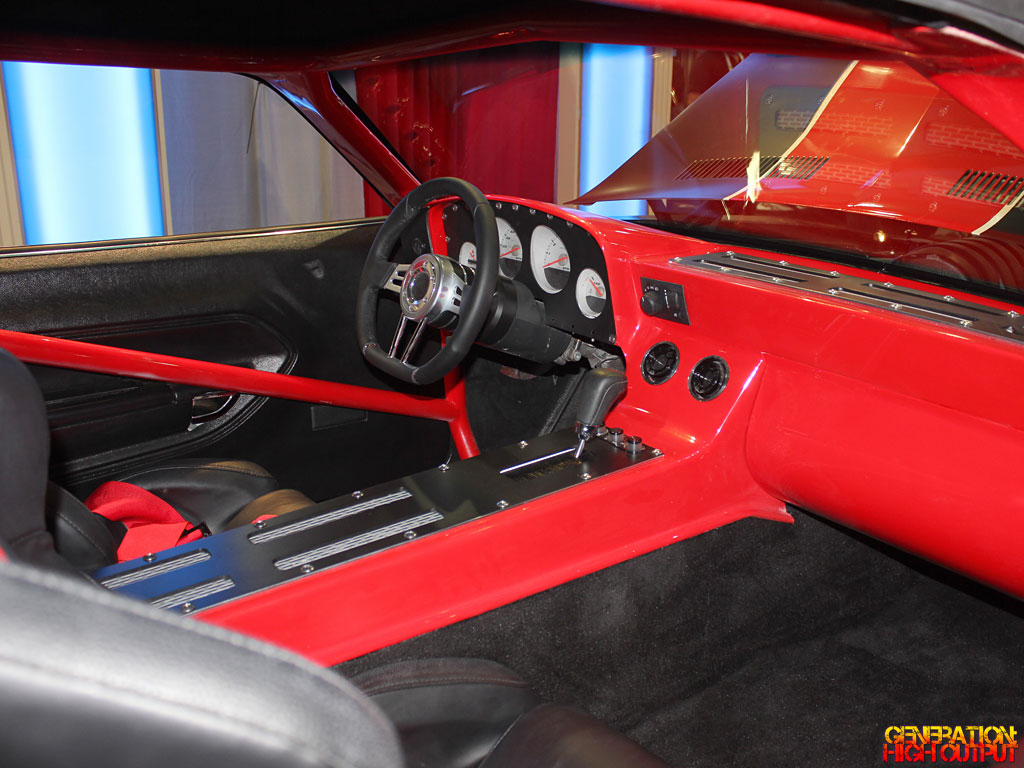
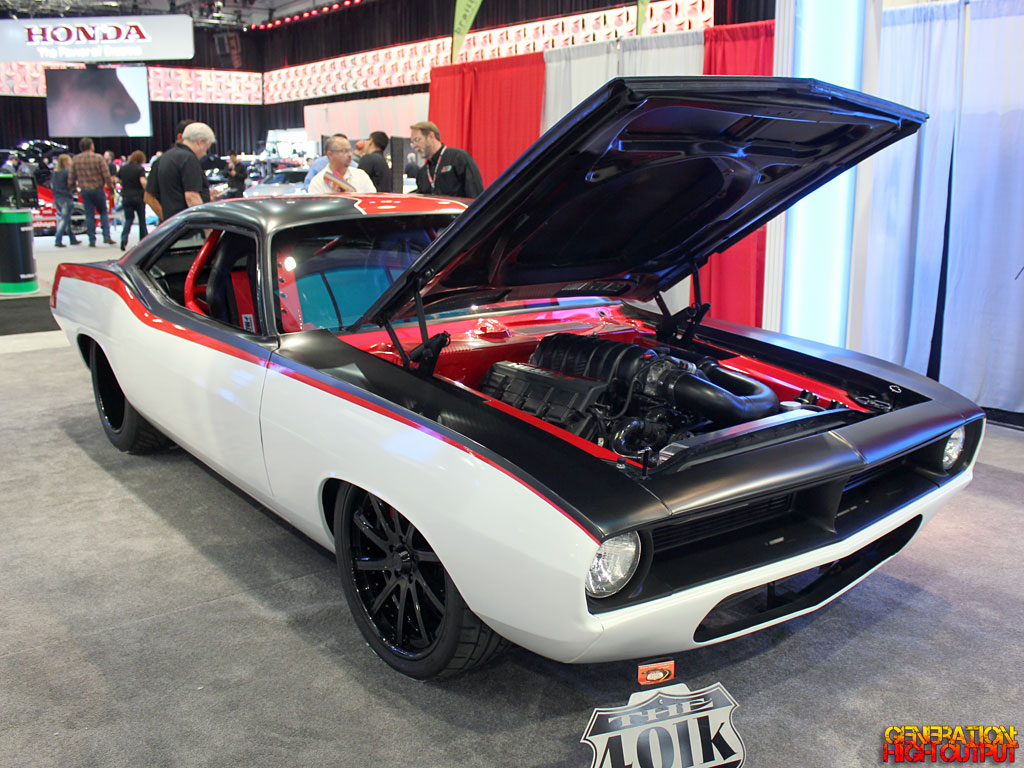
At the 2015 SEMA Show in Las Vegas, I saw this 1970 Plymouth Cuda that was built by The 401k Club of Huntington Beach, CA. You have to laugh at the tongue-in-cheek humor of their name!

The car features a Gen3 HEMI V8 swap and a wild vinyl-wrapped body that was done live at the show! The multi-color wrap shines like paint and really pushes the limit of what today’s high-tech vinyl wraps can do.

Unfortunately, I could not find many specifics about the car and there was no sign at the booth to reveal any further details about the build. I will let the pictures do the talking as you check out this resto-modded gem for yourself!

The Roadster Shop’s 1970 Plymouth Cuda ‘HellFish’

roadster-shop-1970-plymouth-cuda-hellfish-rearYou may be familiar with the expression “like a bat out of hell” to refer to something moving wildly and out of control. In this case, this 1970 Plymouth Cuda moves like a “fish out of hell!”

We spotted this 1970 Plymouth Cuda nicknamed “Hellfish” on display at SEMA 2014, mere steps away from its cousin, the 1968 Charger. Like the Charger, this car was also built by The Roadster Shop, who seem to be up to their ears in vintage Mopars lately.

Continue reading

Rutledge Wood’s 1953 Plymouth Suburban

plymouth-suburban-odyssey-sema-2014-profileThis 1953 Plymouth Suburban was looking minty fresh at the Odyssey Batteries booth at SEMA 2014. It belongs to Rutledge Wood of Top Gear (USA) fame and was built in partnership with Summit Racing. The build was done at Kenwood Rod Shop in Sharpsburg, GA.

Although it looks showroom new, this classic Mopar is anything but stock. Under the hood is a 408 cid V8 from BluePrint Engines with FAST electronic fuel injection and Summit block hugger headers. It is coupled to a T56 six-speed transmission with a McLeod clutch and a Quick Time conversion bellhousing. The whole thing is wired up with a Painless Performance wiring harness.

Continue reading

SEMA 2014: Dodge Challenger ‘Rapture’

pfaff-designs-dodge-challenger-rapture-front

UPDATE: This car was auctioned off at the Barrett-Jackson Scottsdale 2020 auction (Lot. #750.2) where it sold for $33,000 with 12,173 miles on the odometer.

One of the first cars I ran into at SEMA 2014 was this customized 2015 Dodge Challenger Scat Pack called “Rapture” at the AMSOIL booth.

This eye-catching car was a collaboration between Pfaff Designs and Downforce Motorsports, and was built by RM Motorsports in Wixom, Michigan. It features a number of custom touches that really set it off from a regular Challenger.

Continue reading