Cyan Racing Volvo P1800

For those rearders not familiar with Cyan Racing, here is a quick background to get you up to speed. The group was founded in 1996 and was originally known as Flash Engineering. From 2005-2015 they were known as Polestar, until Volvo Cars acquired the performance section.

Cyan Racing is based in Sweden and is privately owned and operated. The race team is well known for turning out World Touring Car Cup (WTCR) winning vehicles.

In 2020, the company launched a road-legal restomod car called the Volvo P1800 Cyan. This is their interpretation of the iconic Volvo sports car from the 1960s. Similar to how Singer upgrades vintage Porsche models but is not a manufacturer, Cyan Racing is offering a similar treatment that requires an original P1800 donor car. During the 12-15 month process, the car is completely reborn as a modern performer with vintage style, completely tailored to the owner’s specifications.
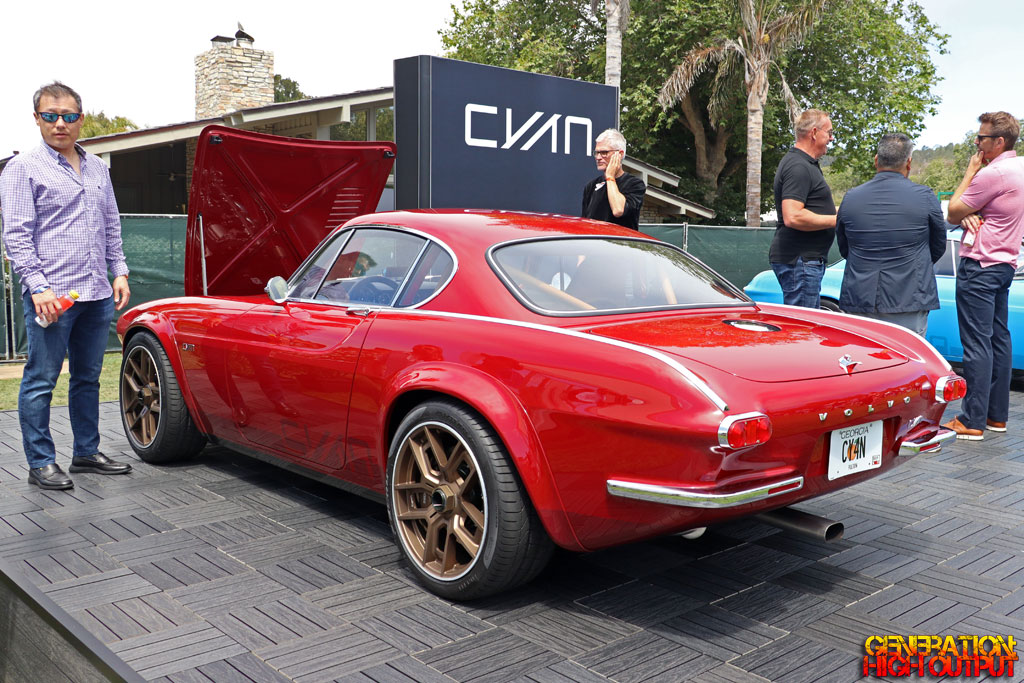
Only a few components from the original car get re-used. The car’s original chassis is upgraded with high strength steel and is then given a multi-layer rust protection treatment. The car is prepared for an in-house designed independent rear suspension and front axle. Everything from instruments and light switches to control arms and steering rack are replaced with custom parts manufactured by Cyan or its suppliers. Most impressive is the replacement carbon fiber body shell, which is bonded to the steel chassis using high strength adhesive.
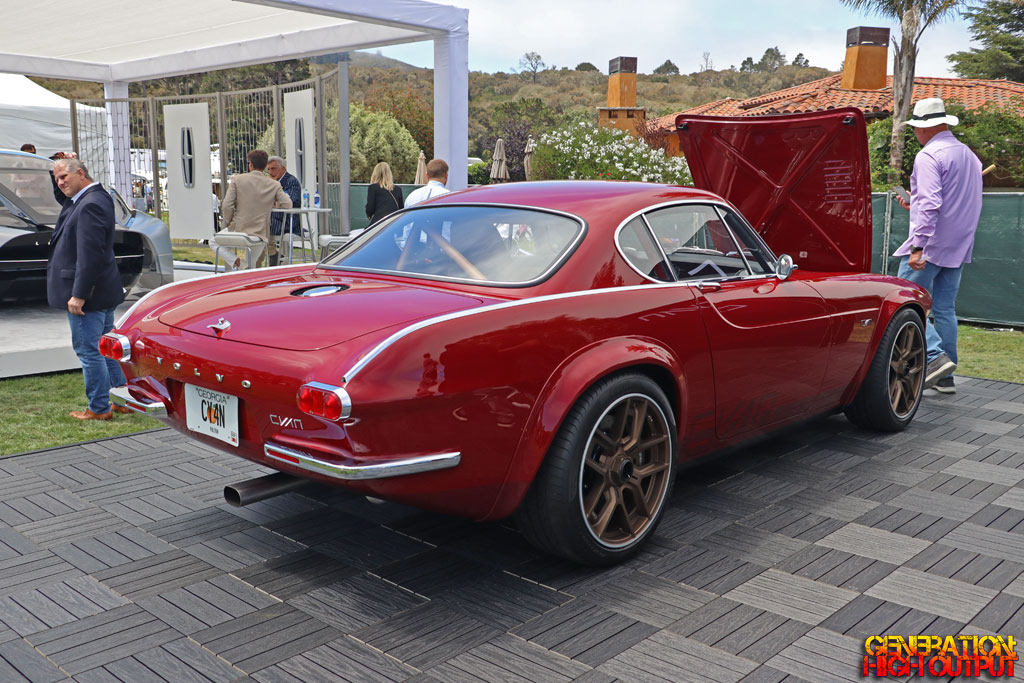
Under the hood is a turbocharged, twin cam 2.0L four-cylinder Volvo engine that produces 420 hp @ 7000 rpm. Coupled to this is a five-speed Holinger manual gearbox and a carbon fiber driveshaft. Every detail has been thoughtfully considered to make this the perfected version of the iconic sixties sports car.

The company had two vehicles on display at The Quail Motorsports Gathering in August 2022. I saw this lovely blue car with a yellow stripe, and a red car with bronze wheels. Both looked absolutely stunning and really showed off the craftsmanship that Cyan Racing is capable of.

Each car is a custom commission, with a base price starting at $700,000 USD. For a one-of-a-kind restomod that is on par with Singer or RML Group, you can be the coolest guy at your local Cars and Coffee in a Volvo P1800 Cyan.

2021 Hispano Suiza Carmen Boulogne

In recent years, defunct automotive brands such as DeTomaso and Healey have seen a revival as a limited production run of bespoke, high end cars for the ultra-rich.

Following that trend is Hispano-Suiza, the Spanish automotive brand that built luxury cars from 1904-1938. A group of investors sought to revive the brand in 2019 with a new vehicle called the Carmen, which debuted at the Geneva Motor Show. The name comes from the granddaughter of one of the founders of the original company.

The Carmen is an all-electric hypercar that is positioned alongside competitors such as the Lotus Evija and the Rimac Nevera.

Powered by two electric motor producing a combined 1,005 horsepower (750 KW), the Carmen propels from 0-62 mph in under 3.0 seconds. The car has an 80 kilowatt-hour, liquid-cooled battery pack arranged in a T-shape, which also acts as a tuned mass damper to provide stability and reduce vibration. This gives the car a range of 400 km or 248 miles.

The Carmen is limited to 19 units and carries a base price of $1.7 million USD.

In 2021, Hispano-Suiza announced an even more extreme version called the Carmen Boulogne. The Boulogne is limited to just 5 units and carries a base price of $1.9 million USD.

The Boulogne includes two additional electric motors, bumping the power output to 1,114 horsepower (820 KW) and a top speed of 180 mph.

I saw Chassis No. 1 of the Boulogne on display at the Hispano Suiza booth during The Quail Automotive Gathering in Monterey on 19 August 2022.

The car is eye-catching with its purple-tinted carbon fiber bodywork glistening under the California sun. The coupe body tapers back to a boattail shape in the rear, with pronounced front and rear fenders extending outward from the monocoque body.

The Carmen Boulogne seamlessly blends old-world craftsmanship and luxury with the latest in modern technology.

The white leather interior boasts diamond-quilted patterns on the seats and center console with purple accented stitching to match the car’s exterior. Driver information is delivered via two large LCD screens, one behind the wheel and the other in the center console.

For a lucky few owners, the Hispano Suiza Carmen Boulogne would be the centerpiece of any automotive collection.

1963 Volvo P1800 Restomod Ford V8 Swapped

The Volvo P1800 is a beautiful example of Swedish design and aesthetic. The car’s lines look as graceful and elegant today as they did when the car debuted in 1961.

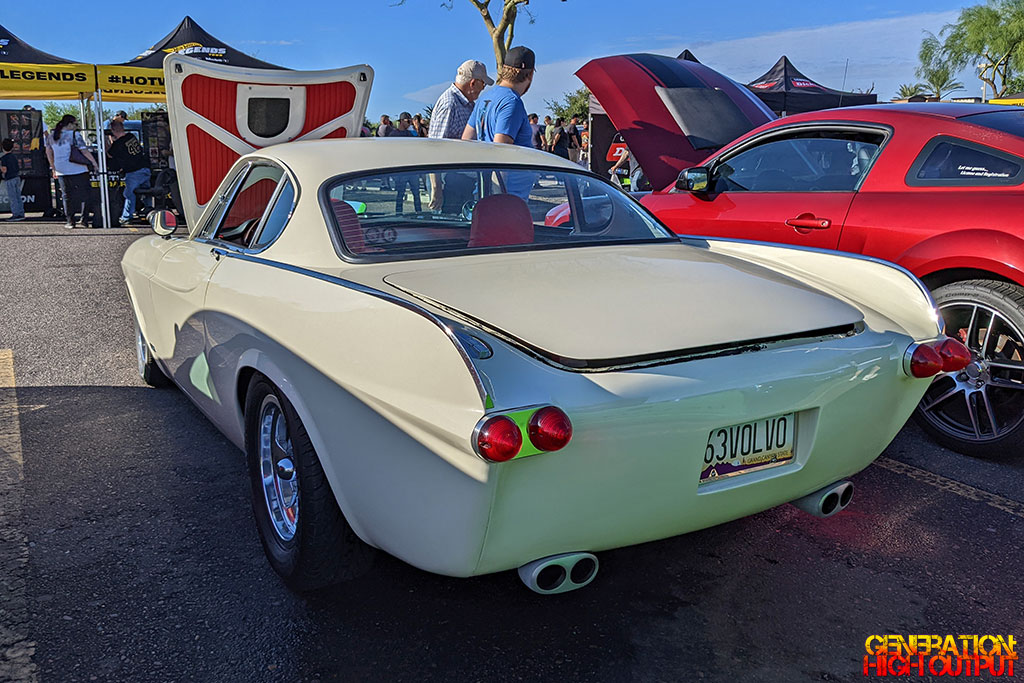
This P1800 located in Arizona has been given the full restomod treatment.

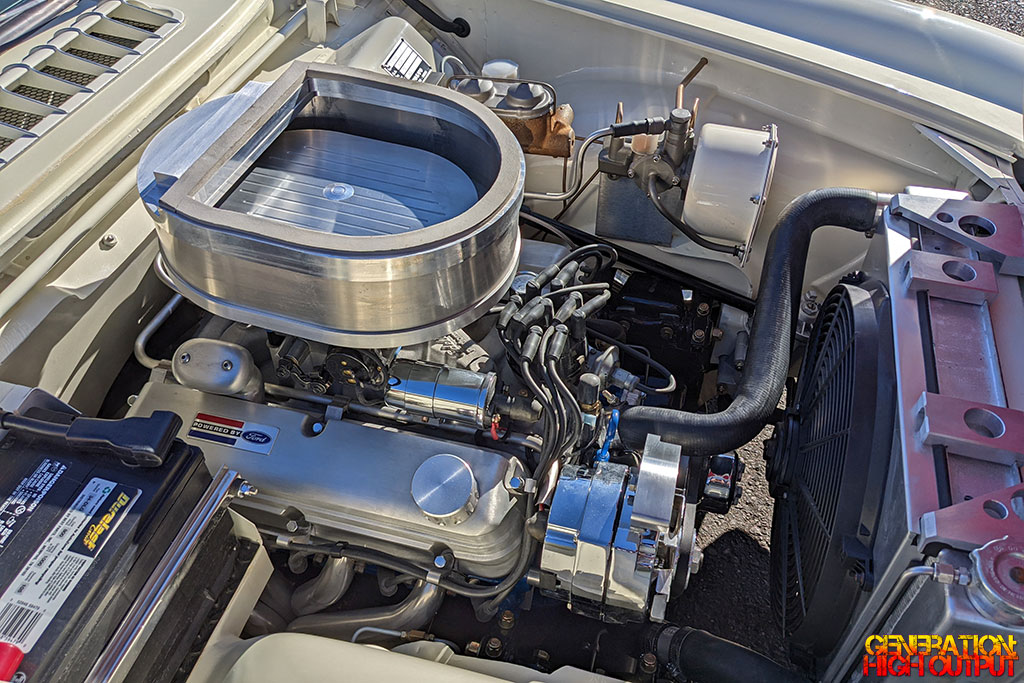
The original 1.8L engine has been replaced by a small block Ford V8 engine under the hood. A set of stainless headers and an Edelbrock intake adorn the engine, which sits beneath a custom air intake. An oversize aluminum radiator and electric fan help keep this thing running cool. Power is delivered to the rear wheels via a manual gearbox.

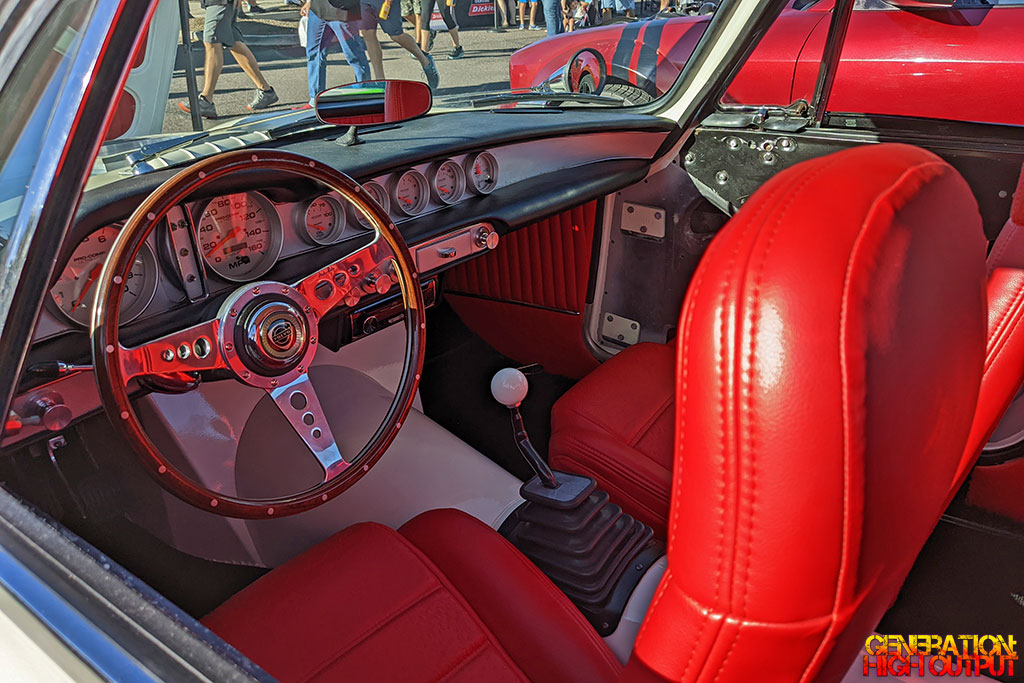
The exterior is a light gray-ish color over a vibrant red interior. A full set of Auto Meter Pro Comp gauges are beautifully integrated into the original dashboard, which sits behind the wooden steering wheel.

The seats, carpet, and door cards are upholstered in red, which contrasts nicely with the body colored transmission tunnel. There is no center console or cup holder at all.

I reckon this car is an absolute blast to drive. It has good power and great styling in a light weight, 2 door coupe body. Seriously, what more do you need in a car?


1937 Jaguar Custom Roadster

As a car guy, I can spot a Porsche 911, a Lamborghini or a ’69 Camaro from a mile away. What gives me pause at a car show is when there is a shape or form that I do not recognize. This was the case at Highline Autos Cars and Coffee in Phoenix, where I saw a very unique vehicle that drew me in for a closer look.

The car rides on a 1937 Jaguar chassis, however the front clip of the car (fenders, headlights, and grille) are from a Bugatti. It has big ponton fenders that evoke the streamline style of the 1930s, with covers over the rear wheels. The V-shaped frameless windshield is pure hot rod, with no roll bar to disrupt the body lines.

Entry is through a pair of windowless, low-cut doors with rear hinges. The rear of the car tapers to a boattail shape, similar to a Duesenberg or Auburn of the day.

Under the hood is a 2.6L V6 engine sourced from a 1973 Mercury Capri, coupled to an automatic transmission. A set of Stewart Warner gauges mounted in the dashboard provides vital information to the driver.

The interior is a caramel shade of leather with diamond quilted pattern on the seats and door cards. A large, wooden rimmed steering wheel looks the part of a vintage racer. The gauges and center console are accented with engine turned aluminum panels, reminiscient of the early days of aviation.

I don’t have a lot of details about the car, but it sure looked cool and drew a good amount of attention from folks at the car show.


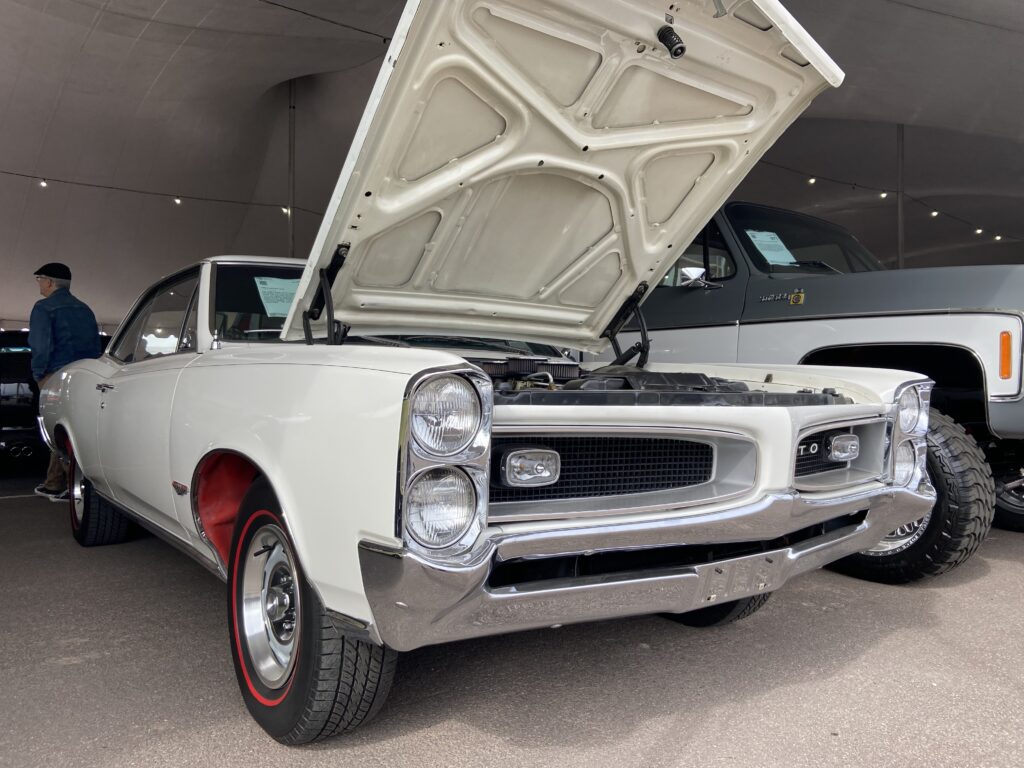
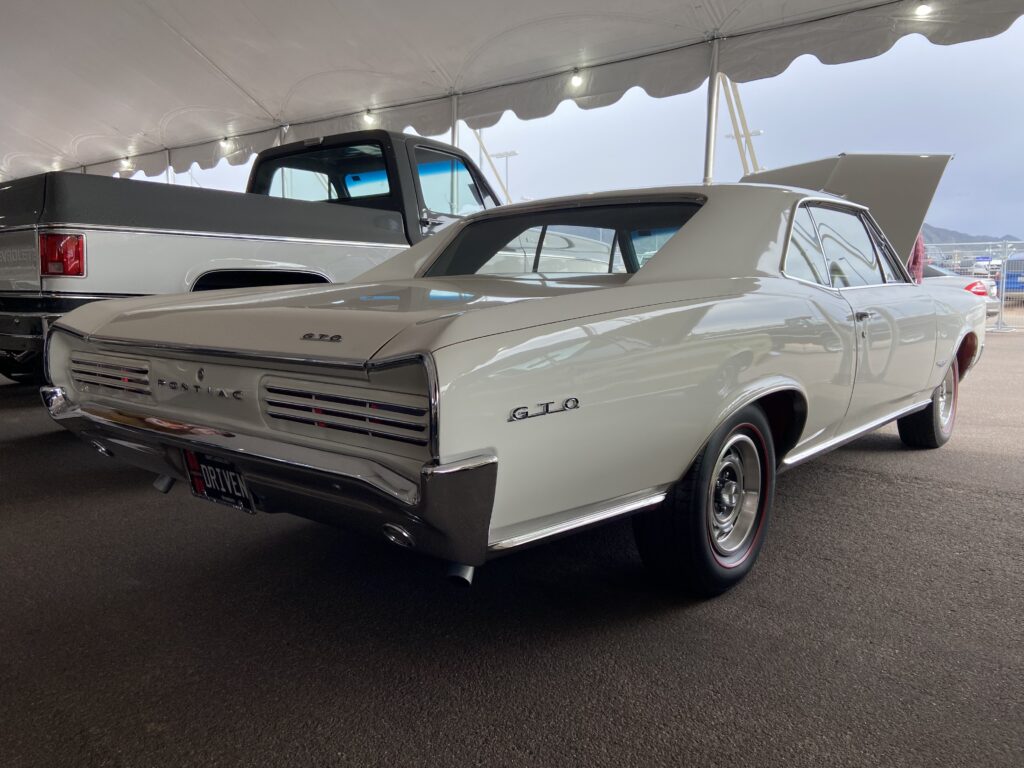
1966 Pontiac GTO – Barrett-Jackson 2023

Being an Oldsmobile fanatic, I subscribe to the theory that the 1949 Rocket 88 with it’s 135hp, 303 cubic inch OHV V8 is the original muscle car. To many others the original muscle car is the Pontiac GTO, and I can’t say that I have a good reason to disagree. The formula is simple: Take a mid-sized car and stick the larger engine from the full-size car in it. Add a couple extra go fast parts and a stick shift and you’re literally off to the races.

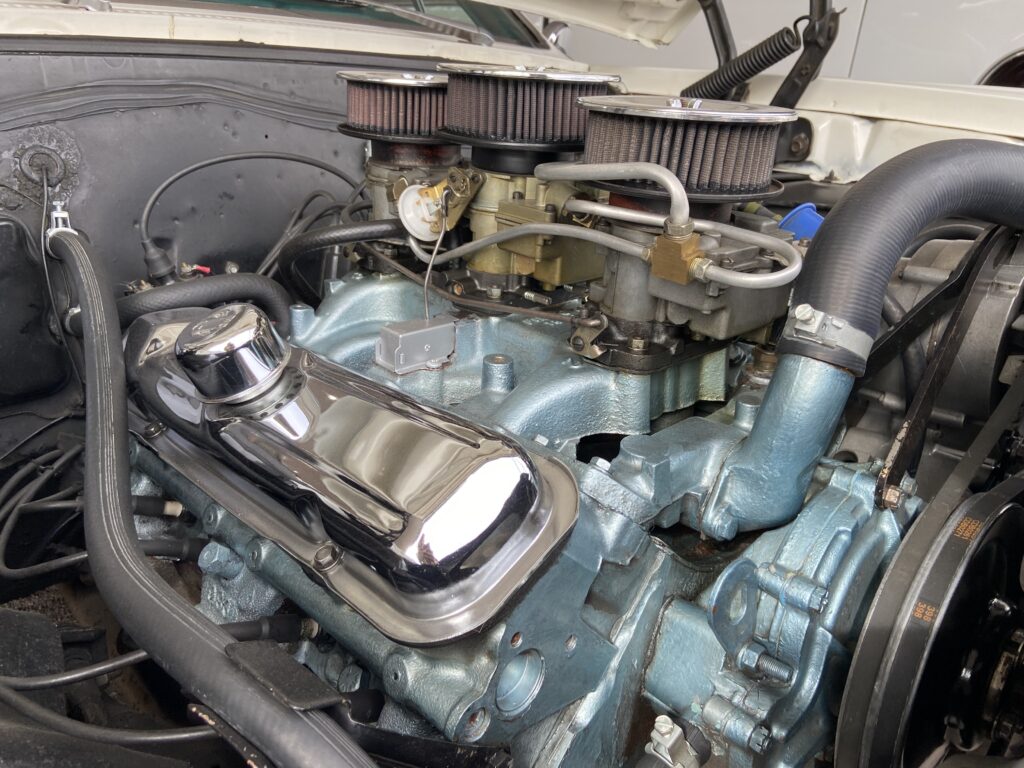
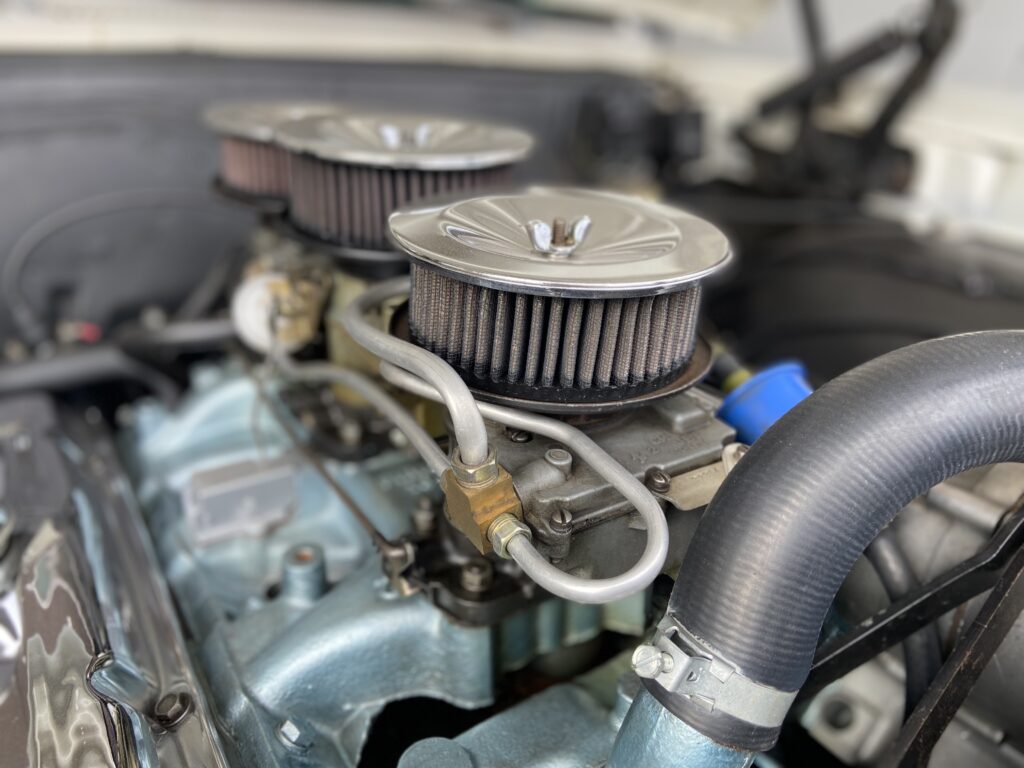
The Pontiac GTO began life in the early 60’s as a trim model of the Pontiac LeMans/Tempest. Using a creative loophole that circumvented the rule GM had about maximum displacement in midsized cars, Pontiac utilized the 389 V8 and offered it as the GTO option. I think that the Hurst 4-speed manual and tri-power carburetor setup on the 389 is the epitome of factory muscle car, and this 1966 model is the last year you could get this pairing. It was good for a gross rating of 360hp, and that could get you to the end of the 1/4 mile in 14 seconds flat.

Speaking of options, the ’66 GTO was also the first production car with a plastic grill, and this particular model came optioned with a 3.55:1 limited slip differential as well as the “Ride and Handling” package.

The GTO peaked in 1970 with the 455HO model and performance would be downhill until the GTO was relegated to a trim package on what was a badge-engineered Chevy Nova. The X-body platform Ventura took on the GTO name in 1974. An unceremonious end to the spark that ignited the muscle craze, this model would option the car with a 3-speed manual and 200hp V8.

Pontiac would then shelve the name, reviving it decades later for the Holden Monaro imports that lasted a couple years. Say what you will about the exterior styling, even the lesser 350hp 2004 GTO would lay waste to any prior car to bear the namesake. However it only remained in production in the US market until MY2006. Pontiac itself was retired not too long after in 2010.

This particular Goat was retired from the auction block at $66,000.

1969 Chevrolet Camaro ‘Strode’ by Ringbrothers Debuts at SEMA 2022

As a seasoned attendee of the SEMA Show for the past 10 years, I have seen dozens of different custom car builders put their own spin on the first-generation Chevrolet Camaro. The 67-69 F-body has been chopped up, remixed, and reinterpreted as a resto-mod, g-machine, pro touring car, and everything else. It would seem that there is nothing left to do with the F-body platform, or is there?

This 1969 Chevrolet Camaro “Strode” from Ringbrothers debuted at the Keystone booth at the 2022 SEMA Show in Las Vegas, along with three other Ringbrothers builds at the show. Like all Ringbrothers builds, the car has a one-word name, which is “Strode” for this car.

The name is a reference to the 1978 slasher movie “Halloween” which stars Jamie Lee Curtis as Laurie Strode. A butcher knife emblem with the word “Strode” on it appears throughout the car and is one of many custom touches throughout this build.

The car is much more than a simple restomod, where your local garage drops a crate engine into an old body. This car is a complete reimagination of what a Camaro could be. A staggering 6,500 man hours went into building this one-off car that retains only two parts from the original car – two pieces of side glass.

Though it looks like a Camaro, the car’s body is made of 100% carbon fiber. The Ringbrothers have done full carbon fiber cars before, such as their 2015 build of a 1965 Ford Mustang “Espionage.” The Strode Camaro is the latest high-end build from the brothers to use the extremely strong and light weight material.

Furthermore, the car’s proportions have been stretched and pulled – the body is five inches wider in the rear and three inches wider up front. The rocker panels were lowered, the center of the roof has been recessed, and the hood is longer and reshaped. The front and rear bumpers, diffusers, valences, and spoiler are also made from carbon fiber. The car is painted with BASF Glasurit Ghost White paint, except for the hood, roof, and A-pillars which are black. It’s an insane build from tip to tail, and that’s just the body of the car!

Under the hood is a Wegner Motorsports LS3 V8 engine with a Whipple supercharger that produces a healthy 1,010 horsepower. The engine is painted orange and really pops in the all-white engine bay, where all of the wires and hoses have been concealed. a Holley Dominator EFI system delivers fuel to the thirsty beast of a motor.

Power is routed through a Bowler Tremec T-56 six speed manual gearbox and into a 9-inch rear end from John’s Industries. A carbon fiber driveshaft from QA1 is another modern touch on this muscle car.

A custom Ringbrothers exhaust with Flowmaster Super 44 mufflers ensures the proper sound when the accelerator pedal is mashed.
The car’s handling has been vastly improved with a hydroformed subframe from Detroit Speed Engineering. A Fast Track front suspension and independent rear suspension from Roadster Shop bring modern handling and driveability to the Camaro, while QA1 Mod series coilovers absorb the bumps.

The car rides on Ringbrothers’ signature five-spoke G-CODE wheels, which they developed with HRE Wheels. They measure 19×11 in the front and 20×12.5 in the rear and are wrapped in a set of Michelin Pilot Sport 4S high-performance tires.

Bringing everything to a stop is a Baer Brakes 6-piston disc brake system, with an E-Stopp emergency brake.
The car has a full custom interior and dashboard by Steve Pearson at Upholstery Unlimited in Clinton, IA. The custom dashboard, center console, bucket seats, and door panels are all done in saddle tan with custom stitching. The rear seat has been deleted, reducing the car’s overall weight.

Driver comforts include Dakota Digital gauges, a Vintage Air Gen IV HVAC system, and a Kenwood stereo with JL Audio sound system.

The car is full of custom touches including many billet machined and 3D printed parts. A careful eye will observe the knife-shaped recess in the front fenders, the trick custom taillights, the trunk-mounted fuel door, custom center-exit exhaust, and many other changes from the original Camaro.

While I thought I had seen it all when it comes to early Camaros, the Ringbrothers from Wisconsin have shown that there is still plenty of imagination left in the world with their customized 1969 Chevrolet Camaro.