1984 Chevrolet Corvette – Barrett-Jackson 2023

The transition from the C3 Corvette of 1968-1982 to the C4 Corvette of 1984-1996 was a bit of a production palpitation for Chevrolet’s flagship sportscar. Model year 1983 essentially didn’t exist and when the 1984 model finally came out it had a modern exterior and interior, new chassis and a novel 4+3 computer-controlled manual transmission with automatic overdrive.

…and also the pathetic Crossfire 350 engine carried over from the C3 Corvette. This 5.7L housed a camshaft that would soon make the 5.0L a serious performer in the third generation F-bodies. It was also topped off with a combined 750 CFM from the TBI units. By 1980’s standards this should have been a recipe for decent power. Instead RPO L83 with it’s convoluted dual-TBI cross-ram was the impetus of the bad reputation that the fourth generation Corvette received.

So how did we end up with just 205hp at 4,300 RPM? Many blame the flow potential of the intake itself, with obstructed peanut ports limiting the airflow to less than 500 CFM before it hit the heads. I would also speculate that the factory 624 heads with their low-velocity ports and primitive chamber design play a large factor in the motors gutless reputation.

That being said I have slowly come to appreciate the idiosyncrasies of the Crossfire 5.7L, even if only for it’s unique intake design and boxy cover. For performance purposes we can be thankful it was only available in the C4 for 1984. From 1985 to 1996 the TPI, LT1, LT4 and LT5 variants would emerge: Engines that would restore the Corvette’s reputation as the ultimate American sportscar. This was the generation of the naturally aspirated, all aluminum, 32-valve 405hp V8. The King of the Hill.

A hill that started as a mound back in 1984 with a paltry 205hp.

This particular 1984 C4 Corvette with it’s 700r4 automatic overdrive and 16,000 original miles finished it’s auction run at Barrett Jackson Scottsdale topping out at $13,200.

1969 Mustang Mach 1 ‘Patriarc’ by Ringbrothers Debuts at SEMA 2022

One of my favorite custom car shops is the Wisconsin-based duo of Mike and Jim Ring, and their shop Ringbrothers.

The brothers made their debut at the 2005 SEMA Show, and in 2006 captured the Mothers’ Polish award for their customized 1967 Mustang nicknamed “Reactor.” In 2014 they won a Chevrolet Best of Show award for their 1966 Chevelle “Recoil.”

The shop builds one to two cars per year, which are highly customized with one-off parts. What sets them apart from other builders is their attention to detail, and their impressive ability to manufacture custom parts using everything from carbon fiber to 3D printing to CNC machining.

Since 2005, their custom car shop has expanded as a parts supplier of high quality hood hinges, door handles, hinges, and other hardware.After sitting out the 2020 and 2021 SEMA shows, the Ringbrothers returned to SEMA 2022 in a big way, with four full custom builds on display throughout the show.

One project that caught my eye was the 1969 Ford Mustang Mach 1 “Patriarc” which was on display at the Centerforce booth. The car starts with the 580-horsepower 5.2L V8 “Aluminator” crate engine from Ford Performance, coupled to a Bowler Tremec T-56 Magnum six-speed manual gearbox and a Strange Engineering 9-inch rear end.

The car rides on a set of Ringbrothers signature G-Code wheels that were developed with HRE for the G-Code Camaro in 2016. The wheels are wrapped in Michelin Pilot Sport 4S tires. Handling is vastly improved thanks to an independent front and rear suspension using Roadster Shop Fast Track components with Penske Racing RS Edition coilovers. A Baer disc brake system with six-pison calipers and massive 14-inch rotors provides serious braking force.

Build time on the Patriarc Mustang is over 5,000 man hours. The body was widened two inches in every direction, and the rear quarter panels have been lowered. This required fabricating a new floor pan and transmission tunnel from sheet metal. While they were in there, they added a roll cage, too.The list of carbon fiber parts includes the air scoops, hood, and rear diffuser.

It is impressive that after building more than a dozen different one-off Mustangs, the Ringbrothers continue to push the boundaries of the resto-mod world with their creations. The Patriarc Mustang Mach 1 is a remarkable car from every angle.

1993 Porsche 968 – Barrett-Jackson 2023

In the US market the Porsche 968 has much less notoriety than it’s other front-engine/rear-drive, water-cooled brethren. It is essentially a final hurrah to the 924/944 platform, but with an updated exterior sharing a lot of design cues from the 928.

The 968’s naturally-aspirated 3.0L inline four was good for an impressive 237hp thanks to a variable cam timing system and some tuning, a 30hp increase over the 944 S2. Keep in mind you were still paying for a Porsche and this car would set you back nearly $40k in the economy of the early 90s, about 3x the cost of a Ford Mustang Cobra.

This particular example seen at BJA Scottsdale came with the desirable 6-speed manual, good for a 0-60 of 6.5 seconds. It was also equipped with power driver’s seat, power windows and air conditioning as well as Moton Clubsport adjustable suspension.

What does all of this add up to in 2023 money? This entry level Amazon Green N/A 4-cylinder that could straight-line with the best of it’s era’s pony cars crossed the auction block at $25,850.


Full Walkthrough – WeSERV Veteran’s Car Show (Video)

We attended the 1st annual (as far as I can tell) WeSERV Veteran’s car show in Glendale AZ this weekend, and I have to say, the turnout was better than expected for a show I had never heard of before! Lots of classics, some lowriders, and a little bit of modern stuff throughout. Enjoy the video of the full walkthrough of every car in attendence, and here’s hoping for another great event next year.

2008 Cadillac XLR Custom Godfather Roadster

Palazzi Motorcars in Kingsville, Ontario (Canada) is a custom car shop headed by Tony Palazzi. Over the years, Palazzi has given the “Godfather” treatment to an eclectic mix of late-model automobiles, transforming them to look like a classic car.

Rather than mass-producing a neoclassic style automobile such as Excalibur, Zimmer, and other manufacturers, all of Palazzi’s cars are hand-built one-offs. They have done a Lexus SC430 coupe, a 10th-generation Ford Thunderbird, and a Lincoln Towncar in the past.

One of Palazzi’s most unusual creations is the Godfather Roadster, which began as a 2008 Cadillac XLR roadster and was highly customized to resemble a classic automobile.

The XLR roadster was a one-generation car produced by General Motors between 2004-2009 as a retractable hardtop 2-door sports/luxury car. It was offered as a base model with the 4.6L Northstar V8 producing 320 hp, and as a V-model with a supercharger making 443 hp.

The high cost of the car didn’t make sense to many buyers, who preferred the Corvette and its smaller price tag. Production of the Cadillac XLR ended in 2009 with a little more than 15,000 vehicles produced.

The XLR has distinct, angular body lines with hard edges from the grille to the taillights. While it is an interesting car, it is in my opinion perhaps the worst platform to start with for trying to make a gracious and curving neoclassic automobile.

The wide fender flares, white wall tires, and combination of curved bodywork with the angular roofline really looks bizarre. Confusingly, the car wears the hood ornament from an Excalibur, which is a competing brand of neoclassic automobile.

This car was offered at Barrett-Jackson’s Scottsdale 2023 no-reserve collector car auction. The seller description says that the “Palazzi package cost $79,000” on top of the purchase price of the car. It says the car was built with a retro look that resembles a Mercedes 540K from the late 1930s. The car shows just 10,866 miles on the odometer.

I was surprised to see this car sell for $44,000 at auction! What are your thoughts on the custom “Godfather Roadster?”

SEMA 2022 – 1971 Cheyenne C-10

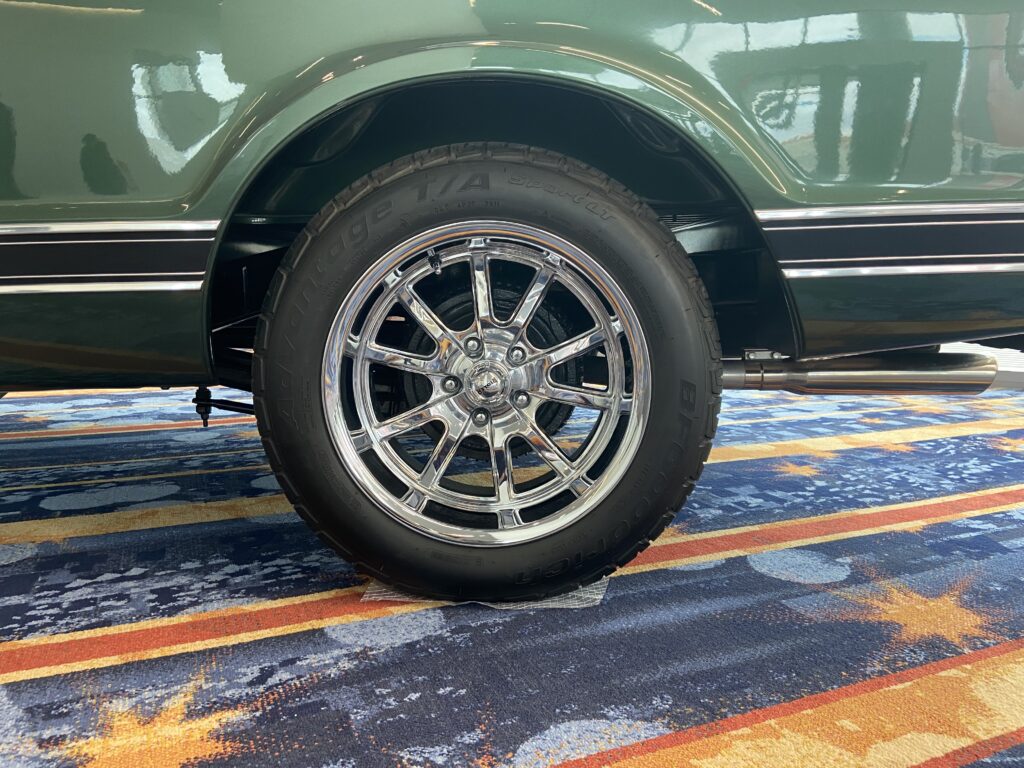
Meticulously designed by Kevin Webb and assembled by Hot Rod & Custom Garage this 1971 C-10 is tribute to Kevin’s father. Already an award-winning truck this vehicle was entered in consideration for the 2022 SEMA “Battle of the Builders”.
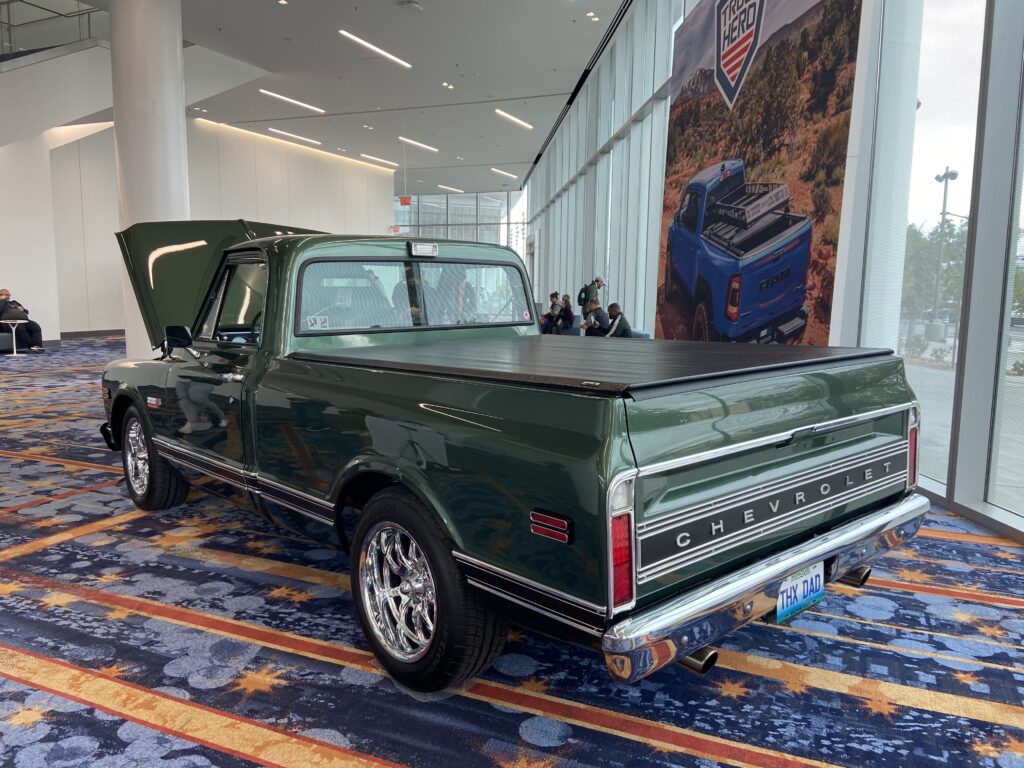
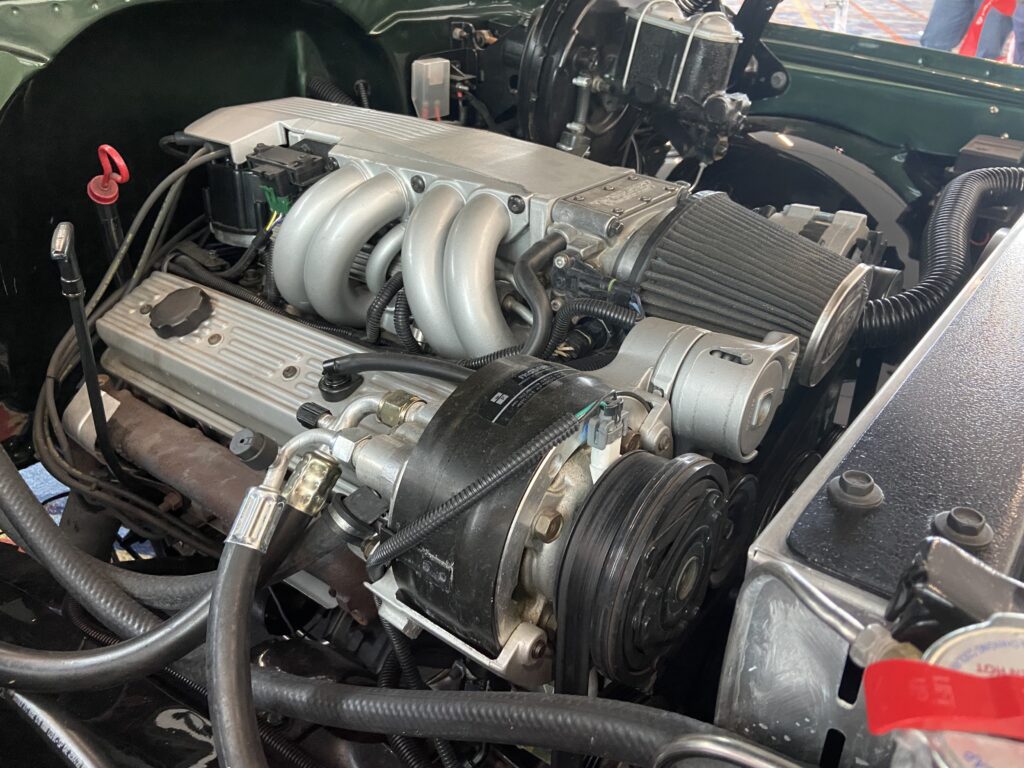
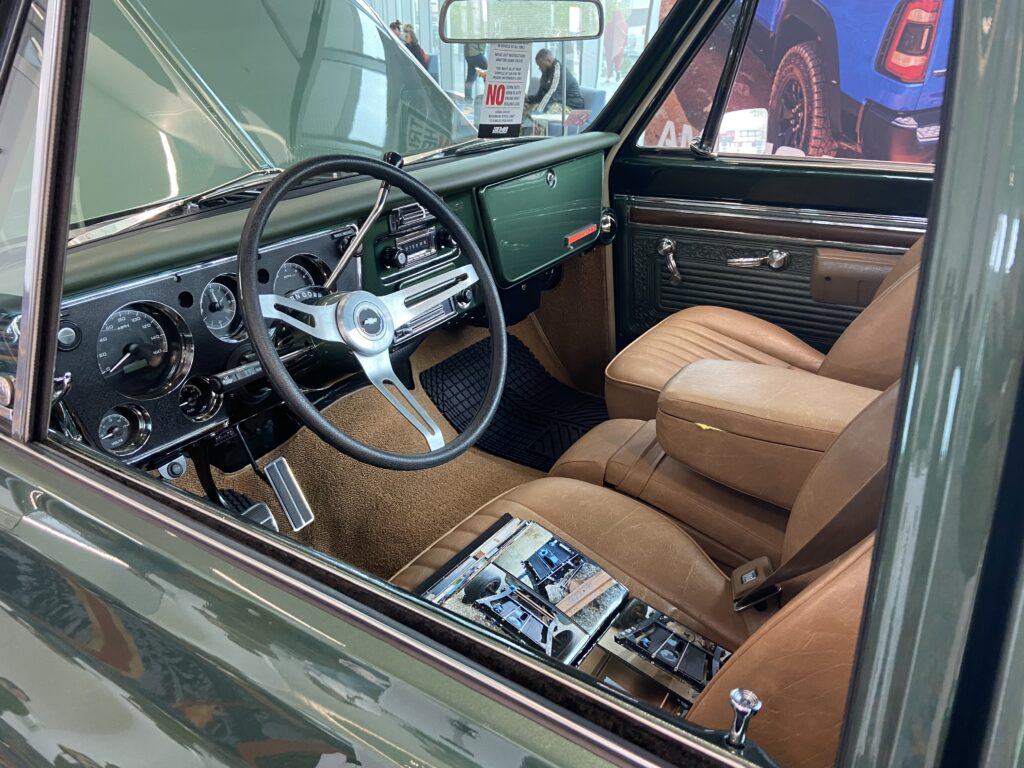
Featuring a Vintage Air system, Dakota Digital dash cluster, CPP suspension and Ridler wheels what really drew me to this truck was the instantly recognizable TPI intake manifold sitting on top the small-block powered pickup.

As a Chevrolet fan nearing his 40’s, there was a time when I remember the TPI as the hot thing. Sure, shortly after there was the LT1, however it’s design was exotic by comparison. It’s non-traditional distributor location and reverse-cooling that required some creative welding skills that were beyond the everyman. The TPI could bolt to any SBC from the 265 to the 400 and would instantly modernize its appearance with it’s namesake tuned port runners and fuel injection system.

There are now so many options for fuel injection for the small block Chevy on the market. That’s also ignoring the fact that even seeing a tradition first generation small block Chevy is becoming more of a rarity these days. That makes this TPI setup in this custom built 1970s pickup truck a nostalgic charmer.