France is famous for a lot of things: fine wine, exquisite art, and cities of great culture and history like Paris, Marseille, and Bordeaux. But when it comes to cars, Italy is definitely the European country in the spotlight.
Still, that doesn’t mean French cars aren’t worth a look. This 1937 Citroen Traction Avant was a highly advanced car for its day, and has more in common with a modern car than you might think. Continue reading →
Back in the 1900s, an Austrian psychotherapist by the name of Alfred Adler came up with an interesting idea. Adler believe that one’s birth order was a major influence on the personality of a person.
For example, Adler believed that in a family with three children, the oldest and youngest children received the most attention from the parents with the middle child often being “forgotten.” Although Adler didn’t have any scientific research to support his theory, the idea of birth order is still well-known today.
So what does all this have to do with cars? Well for a long time, the Ford Motor Company was a family of 3 brands: Ford, Lincoln, and Mercury. Ford was the original and the oldest brand with the largest offering of cars, including entry-level vehicles. Lincoln was positioned as the luxury brand, maker of the finest vehicles that Ford had to offer. Then there was Mercury, the brand caught in the middle. Continue reading →
I was desperately trying to find my way out of the dreaded part of North Phoenix known as “The Square” (look it up) when I came across this Hornet parked on the side of the road.
First introduced in 1964, the Ford Mustang was an instant success that combined style and performance into a compact and affordable package. The car’s long hood, short trunk, and V8 engine captured America’s hearts and launched Ford to the top of the sales charts like a Saturn V rocket. Ford was unstoppable, selling a staggering 600,000 Mustangs in 1966.
As time went on, the initial excitement over the new car began to wear off. By 1972, demand for the Mustang was down to 125,000 cars per year. Then in 1973 the oil crisis hit hard, sending gas prices soaring. It seemed as though the Mustang was going to be a tough sell.
Ford responded by introducing the downsized Mustang II in 1974, an ugly little thing that was based on the Pinto. Although it shared the Mustang name, it didn’t share anything else with the first generation cars. That’s what makes this 1973 Ford Mustang so special – it’s the last year of the original pony cars.
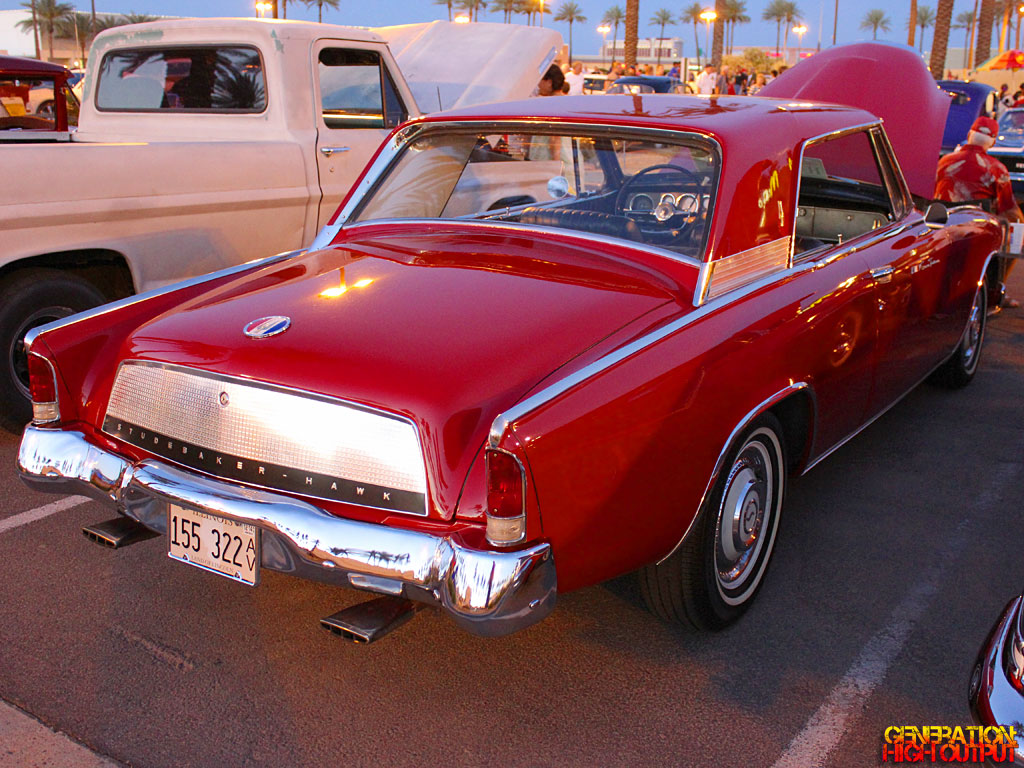
When I visit a classic car show, there is never a shortage of Fords, Chevrolets, Chryslers, and other American muscle cars. However, it’s rare to see a Studebaker at the local cruise-in night. Why is that? The simple answer is that Studebaker just didn’t build a whole lot of cars.
Take this 1963 Studebaker Gran Turismo Hawk for example. It is one of just 4,009 produced in 1963. In that same year, Ford sold 63,313 Thunerbirds and Pontiac sold 72,959 Grand Prixs. As you can tell, this car was definitely not a big seller, which makes it all the more special to have spotted this GT Hawk at the Scottsdale Pavilions.
I’ve spent a few years trying to spot one of these things to no avail.. and wouldn’t you know it, I spotted two in the same week! The first was a completely thrashed black car in Phoenix, this was the second (on the other side of the country). As you can see it’s in excellent condition. Continue reading →


 France is famous for a lot of things: fine wine, exquisite art, and cities of great culture and history like Paris, Marseille, and Bordeaux. But when it comes to cars, Italy is definitely the European country in the spotlight.