One of the highlights of Monterey Car Week 2019 was attending Exotics on Broadway (formerly Exotics on Cannery Row). This event is notable as the most-attended event of Car Week, being that it is both free and open to the public. More than 30,000 people showed up for this year’s event, according to the organizers.
For car enthusiasts, you might delight in seeing an exotic car in your town as you go about your daily life. A Ferrari 458 Italia, a Lamborghini Huracan, an Audi R8, or an AMG Mercedes would be a notable sighting on any other day of the year. But at Exotics on Broadway, these cars are almost as common as Honda Accords.
It’s hard to appreciate these mid-range sports and exotic cars in the presence of so many unicorns – the elite, multi million-dollar, super limited production hypercars cars you’ve read about online, but have never seen in person. Exotics on Broadway brings together the best of the best – Pagani, Koenigsegg, Bugatti, McLaren, Lamborghini, Ferrari, Saleen, Hennessey, and many other top brands. To see so many dream cars all gathered in one place is pretty overwhelming.
I apologize for not being able to include photos of every Porsche GT3RS, Nissan GTR, or Lamborghini Aventador. A quick Google search reveals that as of 2018, Lamborghini has produced more than 8,000 Aventadors since the car’s release in 2011, and more than 11,000 Huracan vehicles. The featured cars at Exotics on Broadway are so rare, that they may number in the low hundreds of examples built. Only 349 examples of the Ferrari F50 were ever made, and there were three of them at this event. Cars from Pagani and Koenigsegg are even rarer, with specific models numbering in the dozens worldwide.
And there wasn’t just one of them. I counted a half-dozen Pagani models, mostly Huayras and one yellow Zonda R. There were several Koenigsegg Ageras, a CCX, and the brand new Jesko on display. Everywhere you looked, there was another amazing car to behold. There was even a beautiful blue Lamborghini Centenario coupe, 1 of just 20 in the world. It it no exaggeration to say that this event was like going to supercar heaven.
I hope you enjoy these photos from the 2019 Exotics on Broadway event in Seaside, California.
Koenigsegg Jesko
Unveiled in early 2019 at the Geneva Motor Show, the Jesko is the latest and greatest creation from Swedish supercar manufacturer Koenigsegg. Designed as the replacement for the Agera, the new Jesko features a more spacious interior, more powerful engine, and improved aerodynamics. The car is currently on a worldwide press tour and also appeared at The Quail Motorsports Gathering during Car Week. The approximate price is $2.8 million.
Every year in August, thousands of automotive enthusiasts congregate on the Monterey Peninsula for an event that has come to be known as Monterey Car Week. It’s not just ONE car show – it is numerous car events. There are multiple classic car auctions, vintage racing at Laguna Seca, casual car shows, tour d’elegance events, all culminating with the Pebble Beach Concours d’Elegance on Sunday.
The underlying theme of all of these events is: wealth. Collector cars are not cheap to own or maintain, and certainly not cheap to restore. Even traveling to Monterey to admire them as a spectator is no small expense. The Monterey airport is small and flights are comparatively expensive. Lodging and other accommodations skyrocket during Car Week. Many of the shows themselves have admission fees, and that’s if you can even get in (I have been denied twice by a certain Motorsports Gathering).
Many of the cars on the lawn at Pebble Beach – Packards, Duesenbergs, Rolls Royce, and others, are cars that were owned by wealthy families during the first half of the 20th century. Today, these cars are being cared for and looked after by other wealthy families. The cost of owning, repairing, or restoring a pre-war classic car is well beyond the reach of the average middle-class American, and these events are a constant reminder of wealth – those who have it, and those who do not.
But in all of the formality of Monterey Car Week, an event emerged that bucks tradition. This event also celebrates a love of automobiles – the oddball, mundane, and the truly awful of the automotive world. It is free to everyone, and showcases cars that truly, anyone could afford. This event is the Concours d’Lemons, a light-hearted, tongue-in-cheek event that showcases the weird and wonderful cars of the world. Instead of droning on, I think it would be better to share some pictures of the 2019 event, which demonstrates the camaraderie and spirit of fun that this event was founded upon.
1972 Volkswagen Karmann Ghia
This 1972 Karmann Ghia is so rusted out that the tow straps are actually necessary to hold the car together. At the time of writing, this car is currently offered for sale by Dodi Auto Sales of Monterey, CA for $1,200. This car would be unwelcome at any other car show, but fits in perfectly at the Concours d’Lemons.
One of my destinations during Monterey Car Week 2019 was the RM Sotheby’s auction, which was held at the Monterey Conference Center. I paid $40 dollars admission to view the auction cars during the preview hours.
While I couldn’t document every car in the catalog, here are some highlights from the Monterey 2019 auction:
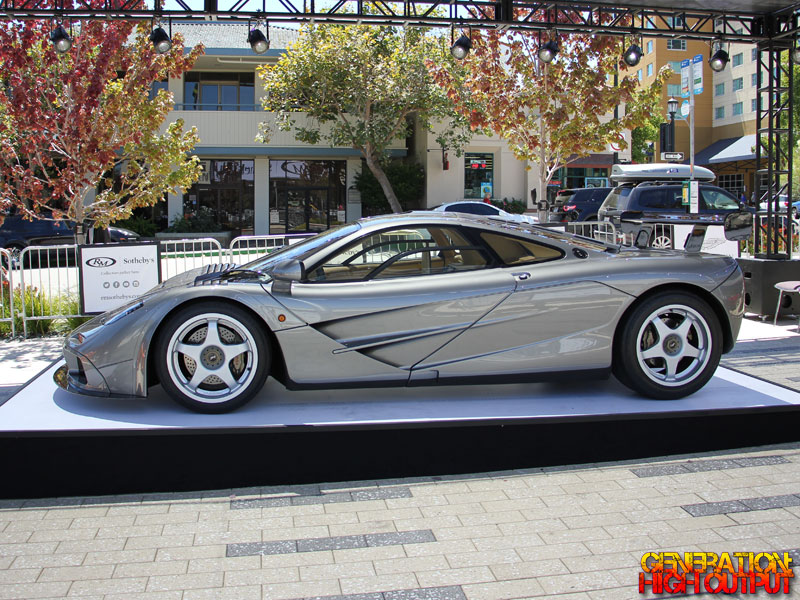
1994 McLaren F1 LM
The McLaren F1 is considered by many to be the “Greatest of All Time” of the supercar world. Just 106 of these amazing vehicles were built between 1992-1998. Of those, only 64 were road legal, and of those, only two were upgraded by the factory to “LeMans specifications.” This is one of those cars. As if the regular F1 weren’t special enough, the LeMans spec gets an unrestricted 680 hp engine (up from 618 hp in the standard F1), and a High Downforce Kit (HDK) with a revised nose with front fender vents and a huge rear wing.
For a car spotter like myself, seeing this car in person was the equivalent of finding the Holy Grail. It was an absolutely stunning example and perhaps the most outstanding vehicle of Monterey Car Week 2019. On the auction block, the car’s high bid was $18 million, slightly below the estimate of $20 to $25 million. With the buyer’s premium, the final sale price was $19,805,000. Congratulations to RM Sotheby’s and to the new owner!
2019 McLaren Senna (Serial No. 434/500)
McLaren’s latest hypercar, the Senna, is the latest and greatest in its lineage of “Ultimate Series” cars, which include the P1 and the F1. The Senna is limited to just 500 units worldwide. This one, car #434, is painted in Victory Grey with Papaya Spark accents. The car’s twin turbocharged 4.0L V8 engine produces 789 horsepower and was designed as a track-focused design with minimal comforts and amenities. The car did not meet its reserve price at the auction. Continue reading →
You may have noticed that today’s largest automotive events like Barrett-Jackson and SEMA are focused entirely on American muscle cars. Demand for restoring, modifying and owning these cars is increasing year after year, fueled by retirees seeking to re-live the days of their first car, or the one they always wanted. The popularity of these cars has even affected events like the prestigious Pebble Beach Concours d’Elegance, where fully half of the cars on the show field in 2019 were post-war.
But, one has to wonder: which cars of today will be desired by collectors fifty years from now? Well, attendees at the 2019 Pebble Beach Concours d’Elegance got some insight into the future of the collector car market at the second annual Japanese Automotive Invitational, sponsored by Infiniti and Motor Trend.
Located at the top of Peter Hay Hill at the Infiniti manufacturer’s booth, the Japanese Automotive Invitational brought together a collection of significant and historic automobiles from Japan. It was a car show within a car show as part of Monterey Car Week.
The exhibit featured an all-star cast of vehicles from Mazda, Toyota, Honda, Nissan, Isuzu, Mitsubishi, Subaru, and Suzuki. Also present were some Japanese makes that are lesser-known in the U.S. such as Hino and Prince. While I didn’t have time to capture every car that was present, here are some highlights:
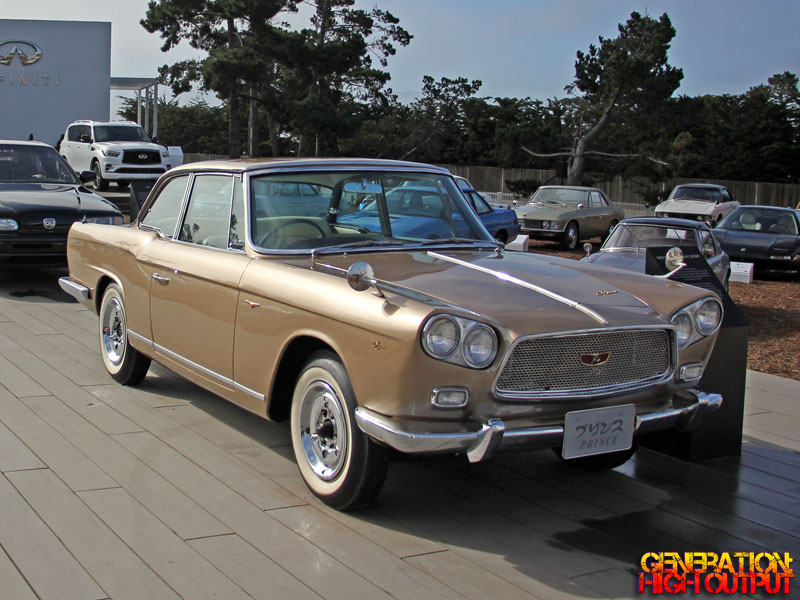
1963 Prince Skyline Sport at the Japanese Automotive Invitational during Monterey Car Week. Photo by: Trevor Freeman.
1967 Toyota 2000GT, one of several cars on display from notable Japanese car collector Michael Malamut. Photo by: Trevor Freeman.
1969 Nissan R382 Group 7 Race Car, powered by a 6.0L V12 engine producing 580 hp. Photo by: Trevor Freeman.
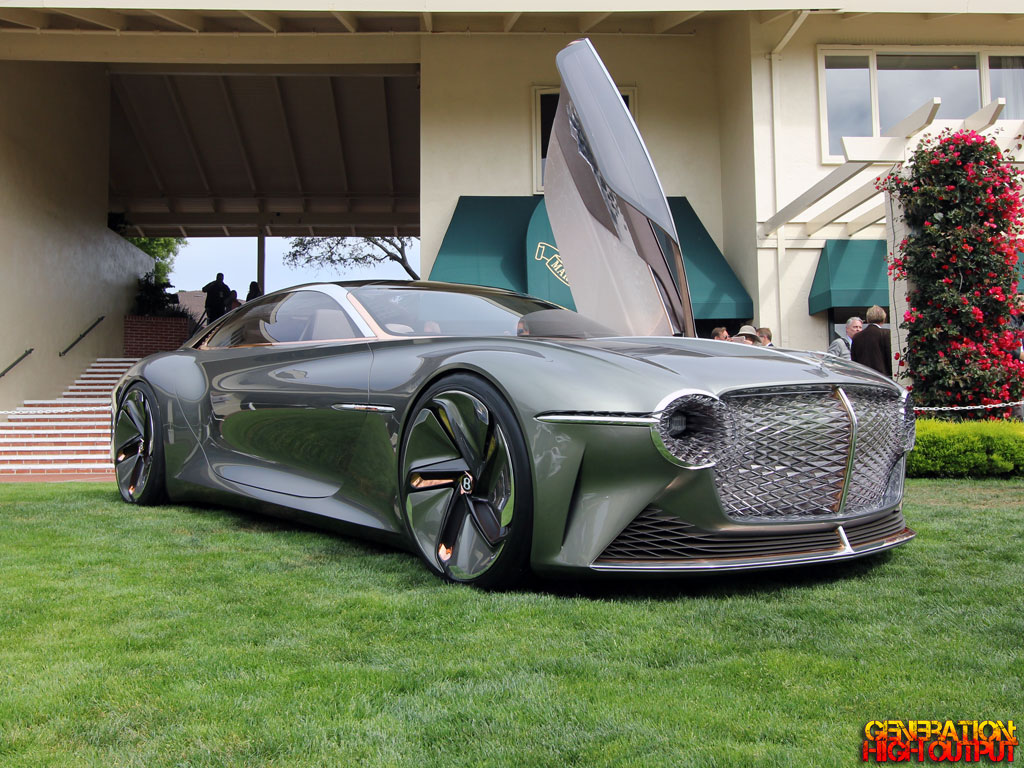
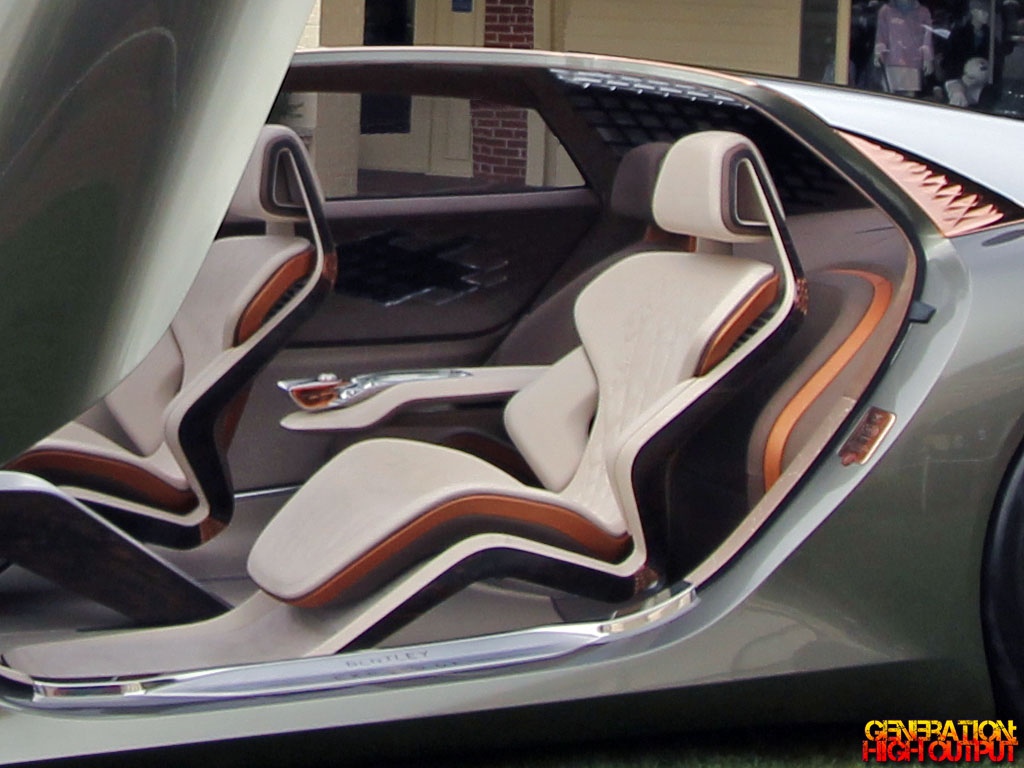
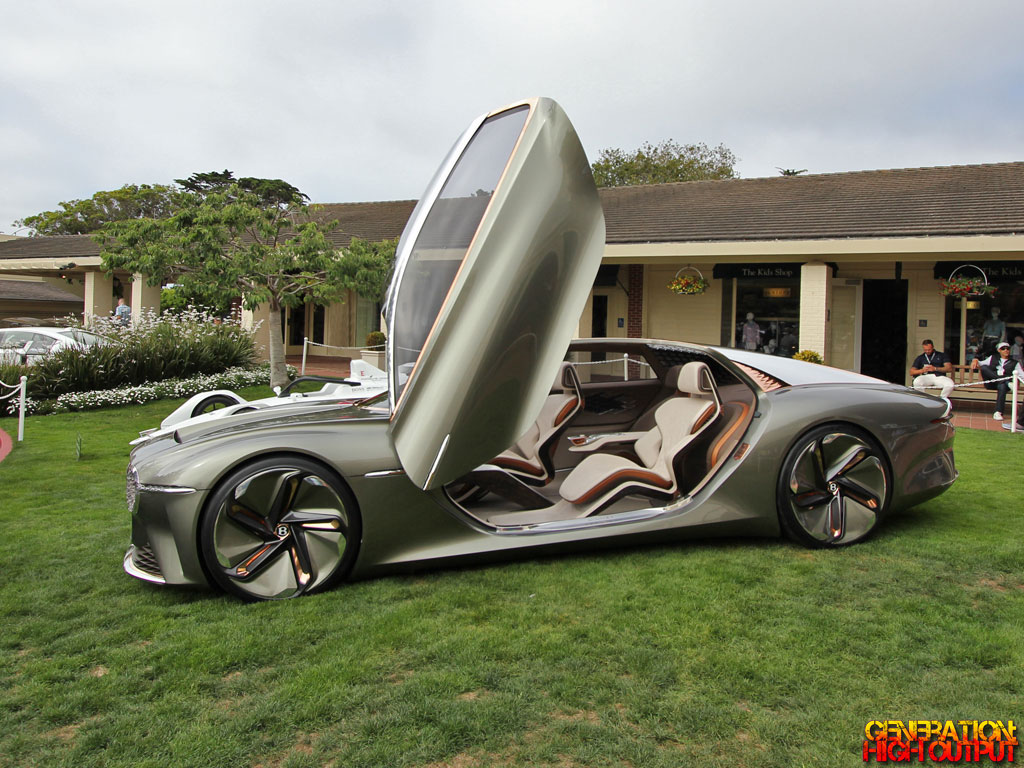
Bentley EXP 100 GT on the concept car lawn at the 2019 Pebble Beach Concours d’Elegance. Photo by: Trevor Freeman.
The Pebble Beach Concours d’Elegance is the cornerstone event around which Monterey Car Week is based. It is the world’s premier automotive event, drawing attendees from all over the world. Now in its 69th year, the Pebble Beach Concours is a true competition of elegance, with honorary judges and class judges awarding points to the finest automobiles in each class. At this year’s event there was one word, one brand, on everyone’s mind: Bentley.
There was a buzz in the air about Bentley as I rode the shuttle bus from the parking area along 17 Mile Drive into the Concours event. I overheard people talking about Bentley as I waited in line to get my wristband. Stepping onto the Concept Car lawn near The Lodge at Pebble Beach, I was greeted with a flurry of activity around the latest and greatest concept car from Bentley: the EXP 100 GT. A constant flow of people were leaning over the barricades, mobile phones in hand, eager to get a snapshot of this exciting new car.
This cutting-edge automobile shows what a Bentley grand touring car might look like in the year 2035. A lot of people think that electric vehicles are the future of motoring, and Bentley is among them. The EXP 100 GT is an all-electric vehicle powered by four electric motors with torque-vectoring that produce a combined 1,400 horsepower and 1,106 lb-ft of torque. This enables the massive coupe to propel itself from 0-60 mph in 2.5 seconds, and reach a top speed of 186 miles per hour. Bentley says the car’s battery pack has a range of 435 miles on a charge.
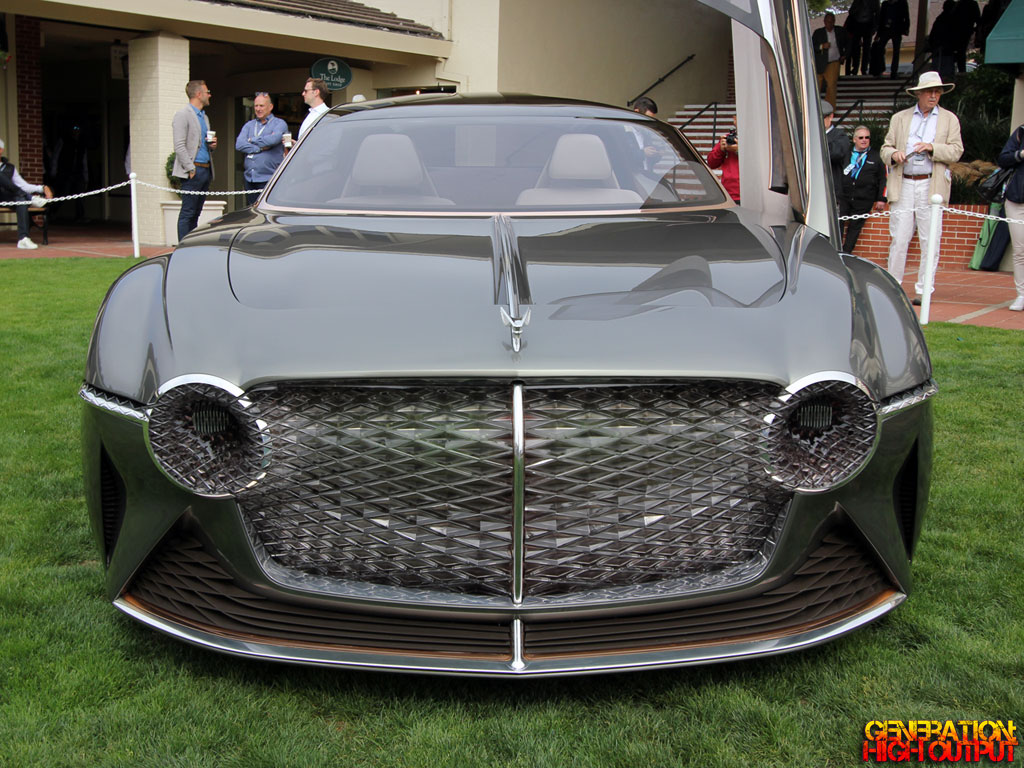
The EXP 100 GT has the stunning road presence one would expect from one of the world’s most prestigious automobile manufacturers. The coupe is nearly 20 feet long and 8 feet wide, with doors that are 6.5 feet long and open outwards and upwards in a butterfly-like way. The car retains the “Flying B” emblem on the hood, a signature design of Bentley going back to the beginning. A new take on Bentley’s design is the car’s front grille, which incorporates more than 6,000 individual LEDs.
But this is more than a pretty concept car designed to showcase a new design language for the brand. The EXP 100 GT is a truly “smart” automobile. An onboard system filters the cabin air, removing pollution and channeling it out to the tear to aid the car’s aerodynamics. The car also makes use of fiber optics to transfer natural light into the cabin, which can be re-played on future journeys.
The car’s interior is a palette of luxurious materials, from reclaimed 5,000 year old oak wood infused with copper, to a completely sustainable textile developed in Italy and stitched with a centuries-old Hand and Lock embroidery, to the Adaptive Biometric Seating that features an integrated temperature sensor and massage function. A Cumbria Crystal centerpiece made by artisan craftsmen in the UK adorns the car’s center console, and is one of the voice-activated AI consoles.
The EXP 100 GT offers fully autonomous driving as well as adaptive wheels that sense the road and adjust the ride quality to ensure a smooth, safe journey. Bentley has certainly packed plenty of 21st century technology into the car, demonstrating the innovation and commitment to quality that the brand has been known for over the past century.
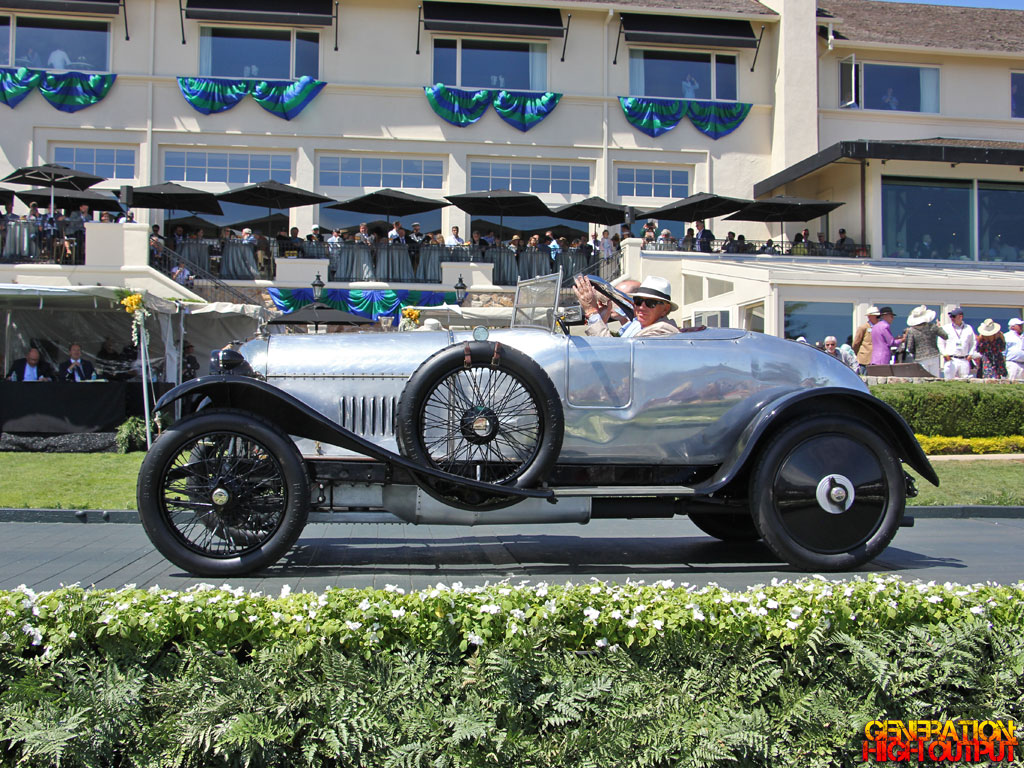
1921 Bentley 3 Litre Harrison Open Two Seater Sports, the oldest known Bentley automobile in existence. Photo by: Trevor Freeman.
Also present at this year’s Pebble Beach Concours was a 1921 Bentley 3 Litre two-seater, which is the oldest original production Bentley in the world, and the first car that founder Walter Owen Bentley sold to a customer. The 98 year old automobile is stunningly original, down to its brass fittings and polished aluminum body. It is a testament to the build quality of these vehicles, many of which were built as competition cars for early motor racing events. The car is shown here on the awards ramp, where it received a special award from the Center for Automotive Research at Stanford (CARS Award), in addition to placing Second in its class.
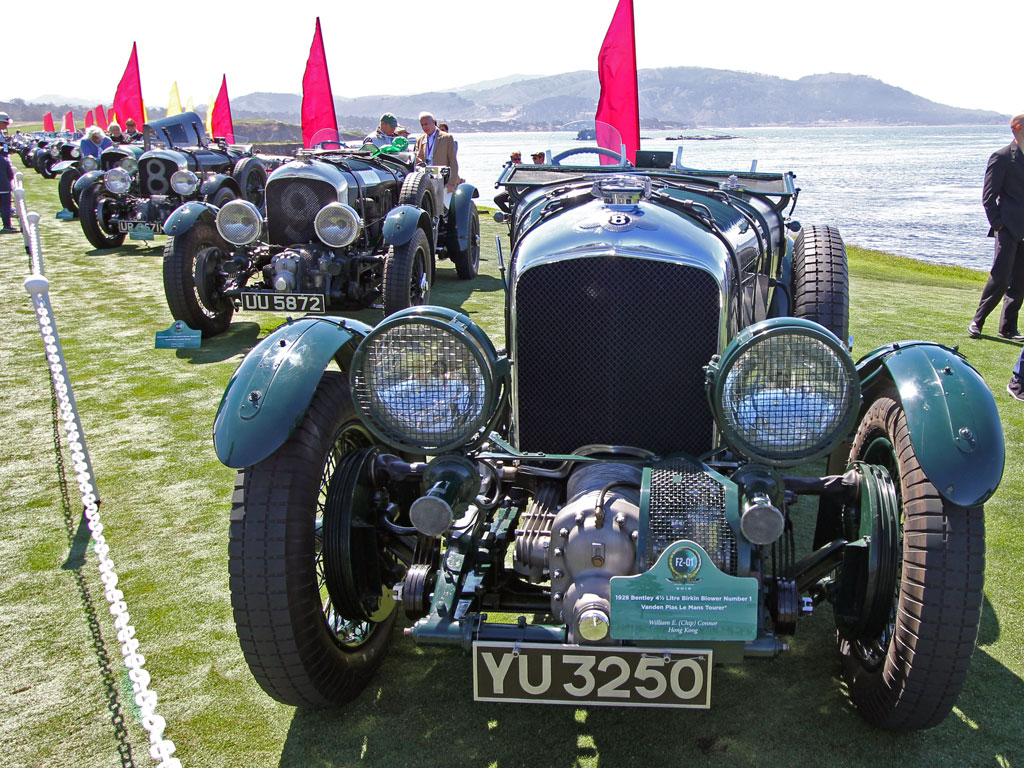
Bentley 4 ½ Litre class at Pebble Beach Concours d’Elegance. Photo by: Trevor Freeman.
The 1921 3 Litre was one of fifty-five classic Bentley vehicles on display in six different classes at the 2019 Pebble Beach Concours d’Elegance. A remarkable collection of Bentley automobiles from the 3 litre, 4 ½ litre, 6 ½ litre, and 8 litre eras were on display from throughout the company’s history. More than 15,000 attendees congregated on the 18th hole of Pebble Beach Golf Course on Concours Sunday to admire these exquisite vehicles.
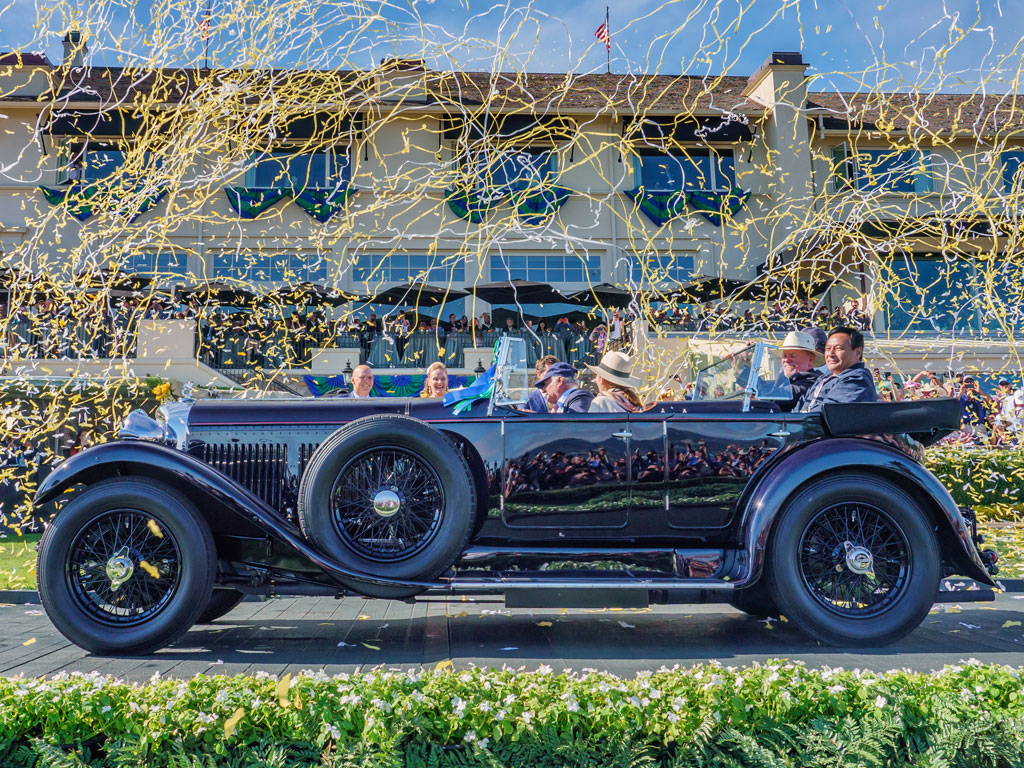
While each vehicle has its own unique story and history, the judges felt that the 1931 Bentley 8 Litre Sports Tourer with Gurney Nutting coachwork deserved the coveted “Best of Show” award. Owned by the Honorable Sir Michael Kadoorie of Hong Kong, the car is the one of two short-chassis 8 Litre cars ever built with this particular body style, and the only one left in existence. The body of the other car was transferred to a Rolls Royce Phantom many years ago, making this car truly one of a kind.
1931 Bentley 8 Litre Gurney Nutting Sports Tourer wins Best of Show at the 2019 Pebble Beach Concours d’Elegance. Photo by Kimball Studios.
The Sports Tourer was guaranteed by W.O. Bentley to achieve a top speed of 100 miles per hour (regardless of what coachwork was fitted). This demonstrates Bentley’s enormous confidence in their 8 Litre, Speed Six engine with a new, lower chassis design.
A centenary celebration is an important milestone for any business, especially one that changes as rapidly as the automobile industry. The Pebble Beach Concours d’Elegance presented an impressive tribute to the engineering, heritage, and legacy of Bentley automobiles at their 2019 event. With such an illustrious history as well as some exciting new concepts for the future, I cannot wait to see what Bentley has in store for the next hundred years.
The market for Neoclassic cars has always been a small corner of the automotive market, going back to the industry’s roots in the 1970s. However, that did not deter former employees of Excalibur from starting their own company in the 1990s.
The Besasie Auto Company, Inc. (or BACI) was formed in Milwaukee, Wisconsin with the purpose of producing a neoclassic automobile. The company produced a total of 14 vehicles between 1993 and 1996. I believe all of them were based on the Ford Thunderbird platform. Most of them used the 5.0L V8 engine with an automatic transmission, though I did find one listing online which said the car had the 4.6L V8, which debuted in 1994. While I could not find much on the history of the company, I suspect they ran into financial troubles. If you know any details about the Besasie family, please post a comment below!
I saw this particular BACI roadster for sale at a collector car dealership in Arizona. One thing that sets this car apart from other neoclassics is the angle of the front grille. While most neoclassics use a waterfall-style grille that is perpendicular to the ground, the BACI’s grille is sharply angled and sort of resembles a 1934 Ford, though less pointy at the bottom.