The iconic Jaguar XJ made its debut in 1968 with the XJ6. The luxury sedan was offered with three engine choices, the 2.8L making 140 hp, the 4.2L making 186 hp, and the 5.3L V12 making 250 hp. The car became an icon with its quad round headlamps and elegant styling.
Just two years later, Italian car maker DeTomaso came out with their own super saloon. The Deauville was introduced in 1970 and was produced through 1985. Keen-eyed viewers will observe the strong resemblance of the Deauville to the Jaguar XJ6. Is it a coincidence that both cars were in production at the same time?
DeTomaso’s car was much more powerful, with a 330 hp Ford 351 V8 engine under the bonnet. The body was hand crafted by Ghia in Italy. DeTomaso’s biggest commercial success was the two-seat Pantera, which saw 7,260 units produced. The Deauville saw just 244 of these cars built during the fifteen year production run. That is not what I would call a commercial success. Still, the Deauville is an interesting car for its rarity. I caught up with this one at the Mecum Collector Car Auction in Glendale, Arizona in March 2023. The car failed to sell at auction and was listed in an after-auction page on Mecum’s website.
To me, the Deauville lacks the style and elegance of the Jaguar. It looks like the imitation version of the Jag that you would buy at the dollar store. The car’s lack of commercial success and obscurity make it an interesting curiosity, but I’d definitely rather have the Pantera.
On the surface, the SEMA Show is where people from all corners of the automotive world converge to do business. But we all know why we are really there: to see amazing custom built cars.
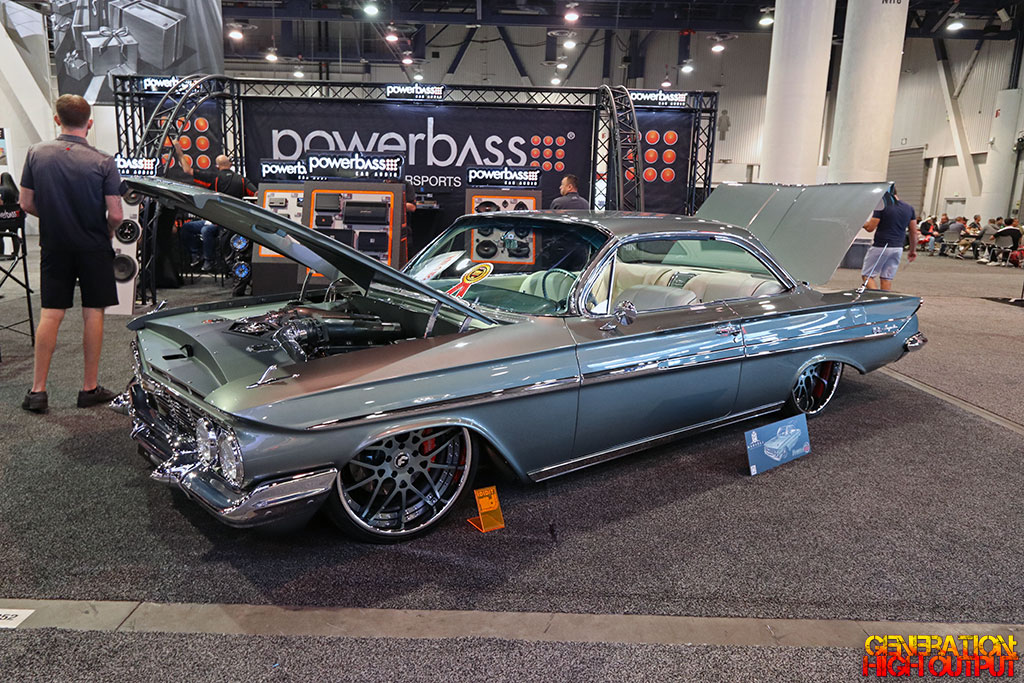
Walking the show floow, I came across this incredible 1961 bubble top Chevrolet Impala in the Powerbass Audio booth. The car, which is nicknamed “TymeleSS” was built by Maharaj Customs with custom metal fab by Nickell’s Customs in Lodi, California. The light minty green custom paint looks fresh and clean, and every inch of chrome was polished to perfection. There are so many custom touches to take in, like the billet hood hinges from Eddie Motorsports.
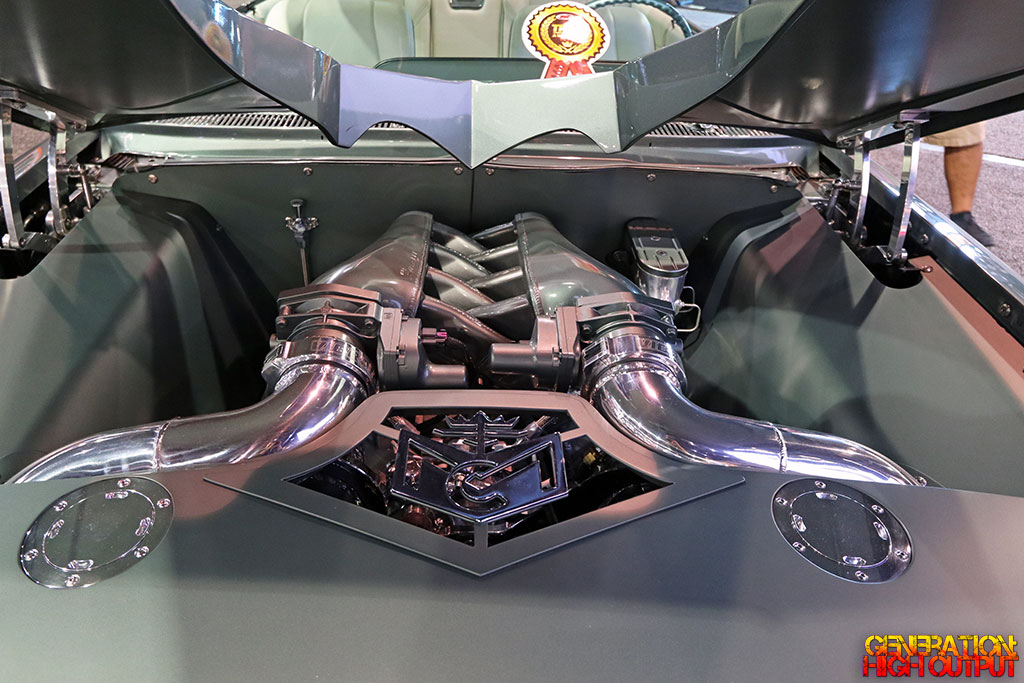
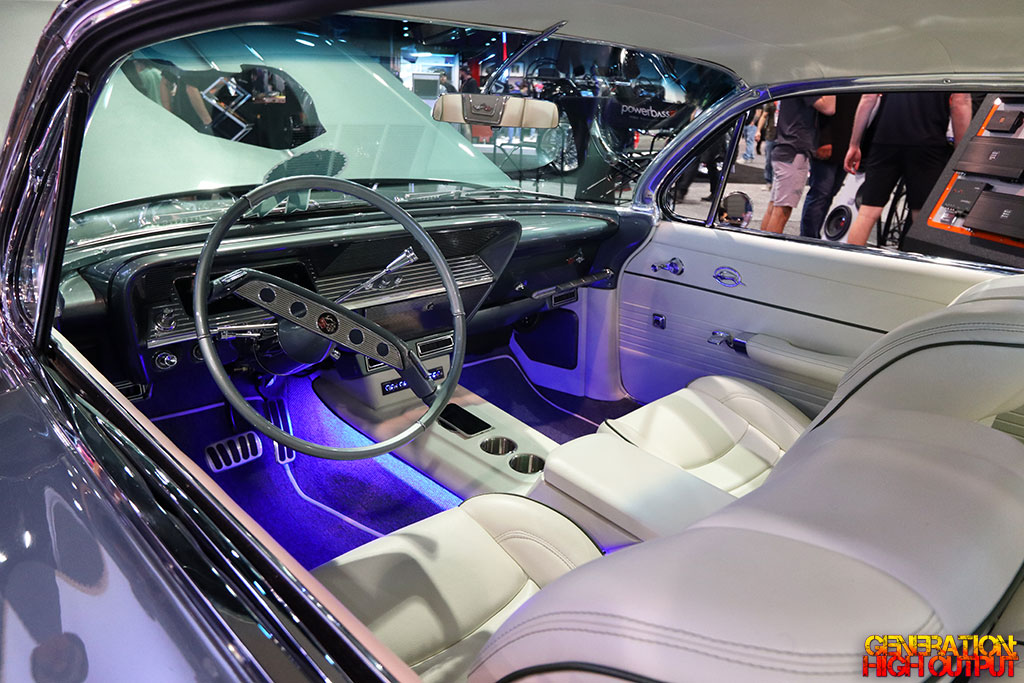
Under the hood is an LS3 engine with a dual intake setup that produces approximately 600 horsepower. It’s visible through a cutout in the hood that looks absolutely crazy. The car rides on a full custom tube chassis that was made from scratch. It does use Ridetech suspension components and rides on a set of Forgiato wheels. The white interior really pops thanks to the upholstery by @davescustoms5441 who did the custom seats and carpet. The front bucket seats are 11-way power seats out of a Lexus that have been restyled for this car. An Ididit steering column and custom center console round out the interior.
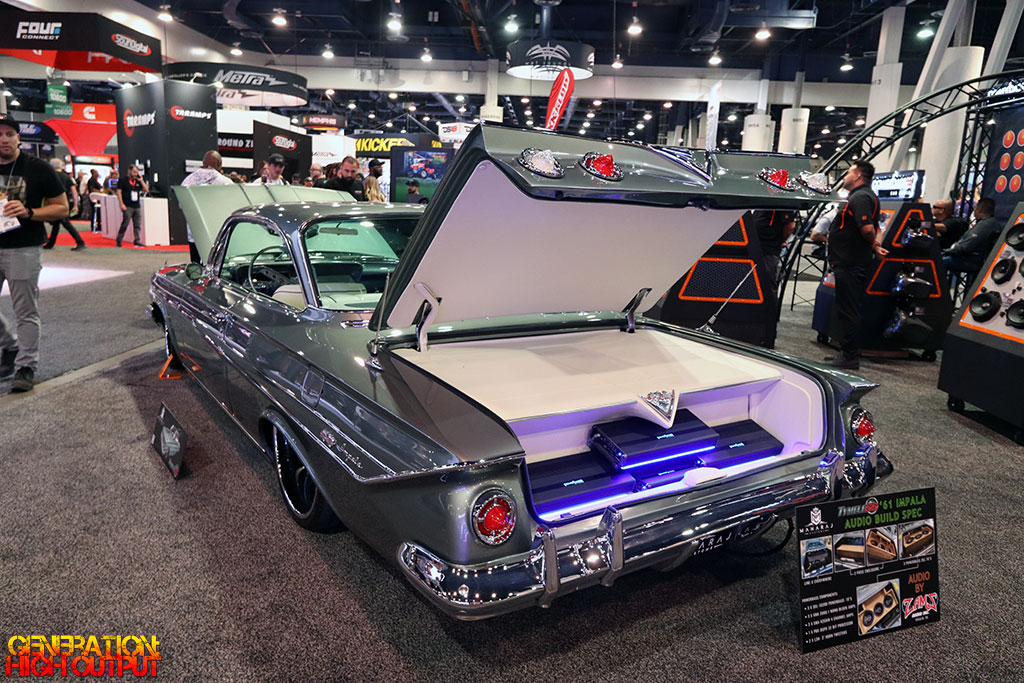
The audio setup in this car is also very impressive. The stereo was done by Zamz Audio in Visalia, CA using all Powerbass components. There are three XMA 4250 IR 4-channel amps running a pair of L3H horn tweeters and speakers, and a PBX-DSP8 32-bit processor. The bass consists of three XMA 2000.1 Monoblock amps driving three 3XL Powerbass 15-inch subwoofers, all mounted in a custom 2-piece enclosure. This thing will be sounding good at cruise night! The owner spent 3 years on this full custom build and restoration. Really impressed with this great car from Maharaj Customs!
I have long been a fan of the GMT400 platform, having owned 1997 Chevrolet and 1988 GMC truck. When I saw this custom C1500 single cab at the 2023 SEMA Show, I could tell it was something special.
The truck was built by Carson Hendershott of Ontario, Canada. At just 26 years old, he was a finalist in the Young Guns category and a Top 12 finalist in the Battle of the Builders competition. As you will see, his customized pickup is anything but stock. The metallic red paint really pops against the Steve Stanford Designs paint scheme that has a “rad minitruck” feel to it. Additional bodywork includes a shaved tailgate, roll pan rear bumper, extended wheel tubs, and a narrowed front bumper.
The showstopper is under the hood – an LSX 376 engine with a Harrop TVS2650 supercharger and titanium intake that is pumping out 1,000 horsepower. Coupled to that is a Tremec T-56 Magnum transmission, so that you can row your own gears.
The rest of the driveline is built to handle the power: a carbon fiber driveshaft, Custom 9″ Moser rear differential, and 6-piston Baer disc brakes at all four corners. The truck rides on Forgeline wheels that measure 19×10 in the front and 20×12.5 in the rear, wrapped in Michelin tires. The front suspension has tubular control arms with drop spindles, QA1 coilovers and a QA1 front swaybar, with a custom 5-link suspension with QA1 coilovers in the rear. The modified box floor of the bed conceals a 20 gallon fuel cell.
The interior looks better than stock, too. A dashboard and door panels from a 1993 C1500 was sourced, then wrapped in black leather. The steering wheel features an OEM design, recreated in Carbon Fiber with black leather accents and contrasting red stitching. The Cobra carbon fiber bucket seats with diamond stitched inserts provide plenty of grip during cornering. A set of Dakota Digital gauges round out the interior. This is an impressive build for anyone, let alone someone who is just 26. Huge congratulations to Carson and his team on making it to Battle of the Builders – what an achievement!
It takes a team of people to restore and build a custom car, and the team at Goolsby Customs in Alabama is one of the best in the business. Regular attendees of the SEMA Show, GoodGuys, and Shades of the Past Rod Run will be familiar with Jonathan Goolsby and his work as a premier custom car builder.
The Goolsby Customs team entered their 1969 Ford Mustang Fastback, nicknamed “Bleu Bayou” in the 2023 Battle of the Builders competition at the SEMA Show, after it debuted at the BASF booth. When people come to SEMA, they expect to see crazy, custom-built cars done to a very high level, and this car certainly fits the bill. The ’69 Fastback has been transplanted onto a Roadster Shop Fast Track chassis, which offers vastly improved handling and cornering over the original frame.
Braking is also improved thanks to the Baer disc brakes at all four corners, which are tucked behind the Forgeline GB3C three-piece forged wheels measuring 19×9.5 up front and 20×12 in the rear, wrapped in Michelin Pilot Sport 4S tires. The wheels have “Anodized Champaign” centers and polished outers. The real excitement is under the hood, where a Roush Performance Coyote supercharged V8 engine sits, making 666 horsepower.
The car has undergone extensive modification to the sheet metal, including a chopped roofline and custom rear end treatment that blends a lip spoiler into the trunk lid. New wheel wells, floor pans, trunk flooring and a new firewall were all custom fabricated for the car. Extensive work was also done to the hood when shaping the custom scoop. Rocker panels were extended and integrated to match the bodywork. A front chin spoiler was also custom made for the car.
Machined parts include custom door handles, taillight trim rings, and much more. The car is finished in a beautiful shade of BASF blue paint. This build really shows off the skill and expertise for which Goolsby Customs is known. The car has so many custom touches, it’s hard to list them all! This car really caught my eye at the SEMA Show, and I am proud to feature it here on Generation High Output.
Like many readers of this site, I consider myself a “truck guy.” I previously owned a 1965 Chevrolet C10 pickup and a 1997 C2500 pickup, and currently drive a 1988 GMC 3500 Extended Cab long bed dually.
One of my least favorite things about the SEMA Show are the mega-lifted show trucks. The ones with painted driveshafts, LED underbody lights, train horns, and light bars that will never see so much as a spot of dirt because they are strictly for show. Unfortunately, this formula is repeated many times over at SEMA, and I just have no interest in these vehicles.
However, I did come across a truck at the 2023 SEMA Show that caught my attention. The Restomod Air booth in the Central Hall featured this unique 1968 Travelette crewcab truck from International Harvester. Make no mistake, hiding behind the patina blue paint and rusty bumpers, this is a fully custom built truck. In fact, I sometimes prefer the original patina over a flawless paint job. It is a truck, after all.
Owner Tony Leal hauled the truck out of a field and brought it to the Old Anvil Speed Shop in Orange, CA. The body was removed from the chassis and a completely new frame was made from scratch out of 3×6 steel. The new frame has an independent front suspension and a 4-link rear suspension, with an Air Lift Performance 3H system with Slam Specialties bags, VIAIR compressors and a FLO air tank that can drop it to the ground. Under the hood is a Chevrolet L83 5.3-liter V8 coupled to a 6L80E automatic transmission. Fuel management is a Holley Pro-Flo fuel system coupled to a custom tank made by Old Anvil. Other goodies include Speed Engineering headers, Mattson radiator with Spal electric fans, and a stainless exhaust with Borla mufflers. The powertrain is rounded out with a Strange Engineering 9-inch rear end, Dutchman axles, and an Eaton limited-slip differential.
There are 12-inch Wilwood disc brakes at all four corners providing safe stopping power. The truck has Avant Garde SR10 wheels measuring 20 x 8.5 up front and 20 x 11 in the rear, wrapped in Nitto NT555 G2 rubber.
The truck is nicknamed “Slammedelette” and even has custom fender emblems, which I thought was a clever touch.
The interior was given a full treatment by MST Upholstery in Brea, California. The factory bench seat was wrapped in fresh vinyl, and new custom carpet on the floor. An Ididit steering column, MOMO steering wheel and Dakota Digital gauges add all of the necessary comforts to the interior. And of course, the Restomod Air HVAC system provides efficient and reliable heating and cooling for the cab.
Hidden in the truck is a full custom audio system by Define Concepts in Orange, CA. It features Rockford Fosgate amps driving Hertz 6.5-inch speakers and JL Audio subwoofers.
The natural finish pine wood slats in the bed look nice with the faded blue paint.
When people come to SEMA, they expect to see crazy, full custom builds, and this truck checks all the boxes. A scratch made frame is a serious undertaking, and to do that with a Travelette is a truly unique project, and one that I am happy to feature on this site. Great work to Old Anvil and all of the shops and people that worked on this amazing truck.
A “captive import” is an automobile that is produced in a foreign country and imported and sold in another country under a different name or brand.
In the 1980s, Ford Motor Company Vice President Bob Lutz felt that the Ford brand should have a small, luxury-sports car to compete with European rivals like BMW. Rather than develop a new car in-house, they leaned on Ford’s European division instead.
A Sierra By Another Name
The Ford Sierra was sourced from Europe and brought to America, with an increase in power thanks to a turbocharger. Engine output was 145 hp with the automatic transmission and 175 with the manual transmission (this was the 1980s after all).
The cars were sold in North America as the Merkur XR4Ti from 1985-1989, during which time 42,464 units were built. The car failed to meet Ford’s sales goals and was retired after only four years on the market. More than 30 years later, I am always surprised at how many people within the car community have not heard of the Merkur XR4Ti.
1987 Merkur XR4Ti Custom
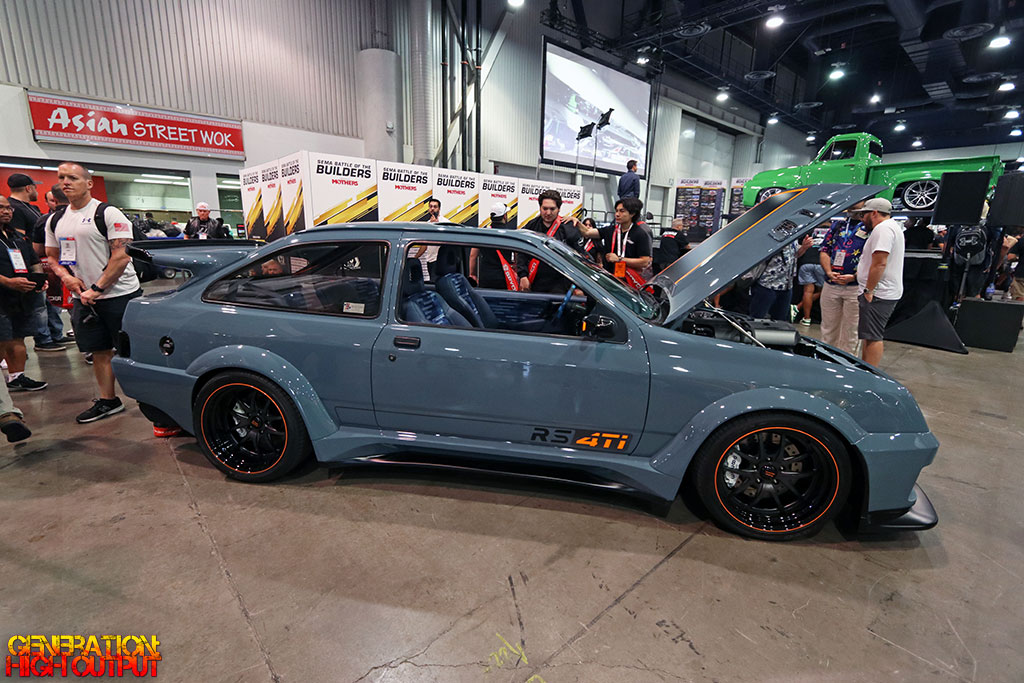
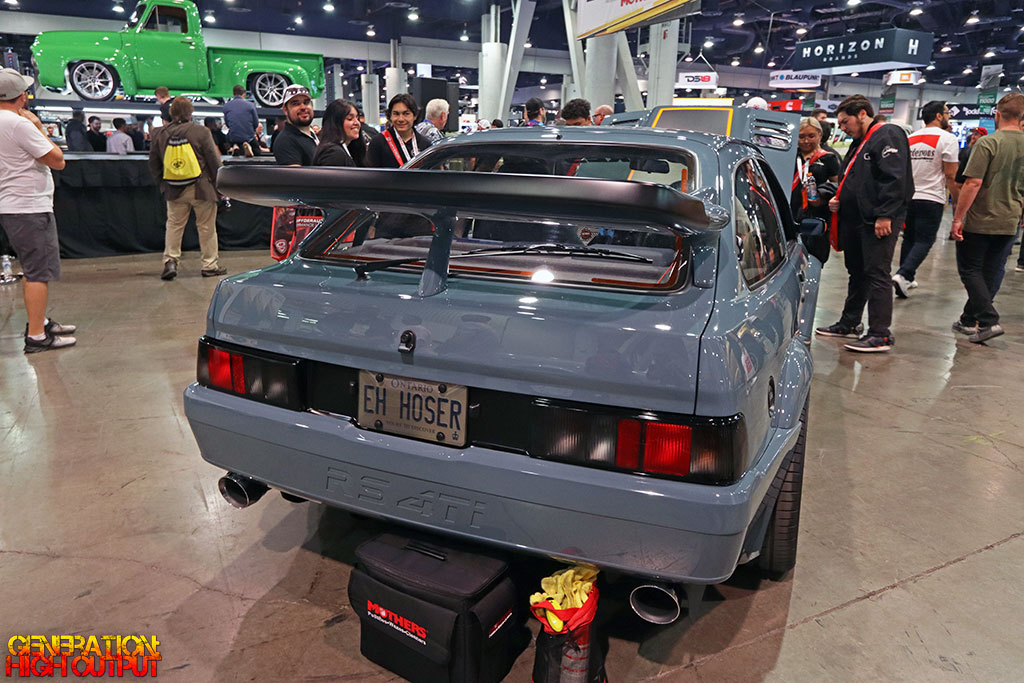
I’ve been a fan of the bodystyle for years, as well as pretty much anything with a turbo from the 80s. When I saw this XR4Ti in the Battle of the Builders area at SEMA 2023, I was immediately drawn to it. The first thing I noticed was the color – Ford’s “Area51” Blue with highlighter orange accents. They coordinate well together and provide a unique look to the car. It rides on a set of American Racing VF529 wheels finished in black, though personally I feel that silver would have stood out better. A set of Toyo Proxes tires provides the necessary grip when cornering.
The next thing I noticed was the wide flares over the wheel arches. The XR4Ti was never available in a widebody version – this one was completely custom made by Jordan Henke and his team at JH Restorations in Windsor, Ontario. They 3D scanned the car and made their own widebody kit and carbon fiber hood – technology that is commonplace today but would have been unimaginable in the late ’80s.
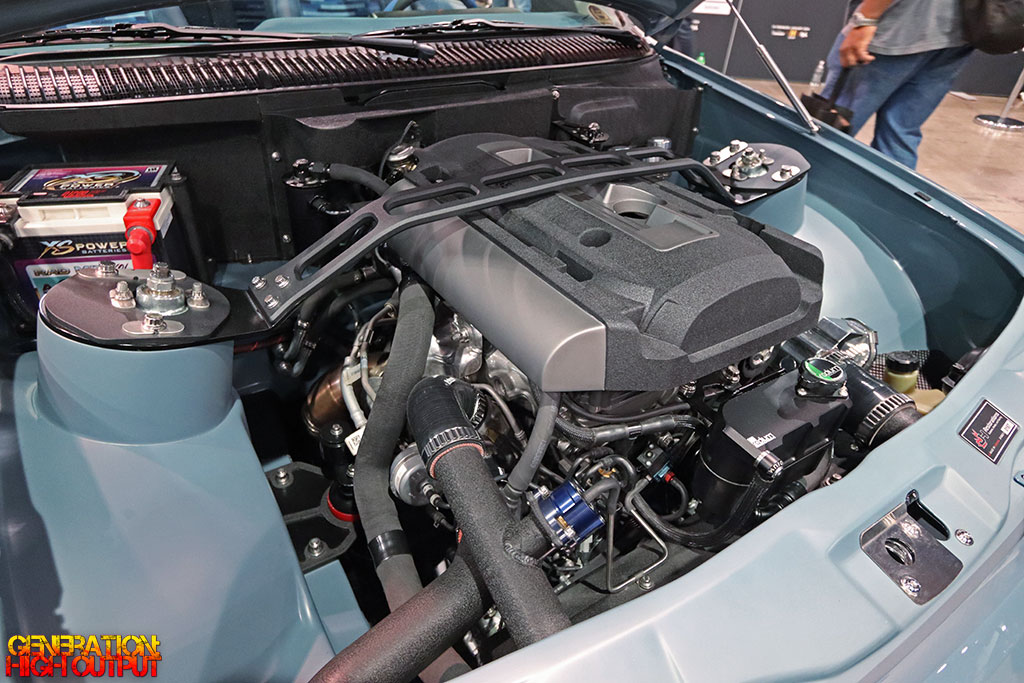
Every inch of this car has been upgraded with modern components and technology. The original engine was replaced with a Ford 2.3L Ecoboost turbo engine coupled to a Tremec TKX five-speed transmission and an 8.8 rear differential from a 2018 Mustang. I like that the 2.3L Turbo engine remains true to the original spirit of the car.
The suspension was also completely re-engineered and is based on Corvette C6 hubs with QA1 coilovers. Integrated into that are 14-inch disc brakes from Wilwood, front and rear.
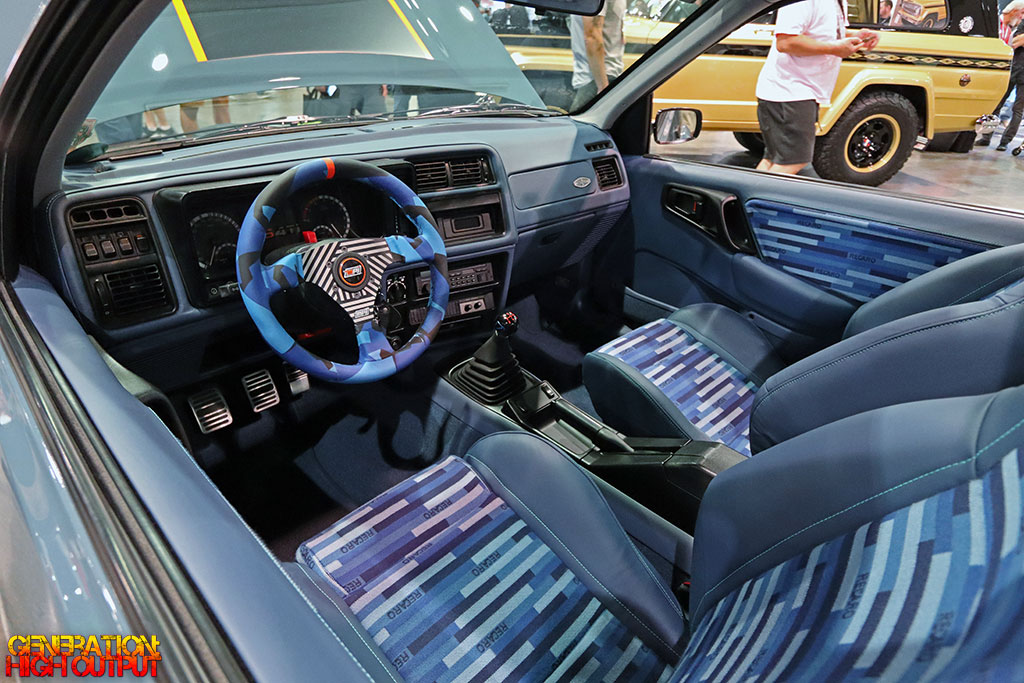
The interior is a comfortable place to be. The retro-style Recaro racing seats are wrapped in leather with Recaro fabric seat inserts. A set of custom Dakota Digital gauges provides the driver with all of the necessary information.
Jordan Henke made it to the Top 10 Finalists at the 2023 Battle of the Builders at SEMA – an impressive achievement!

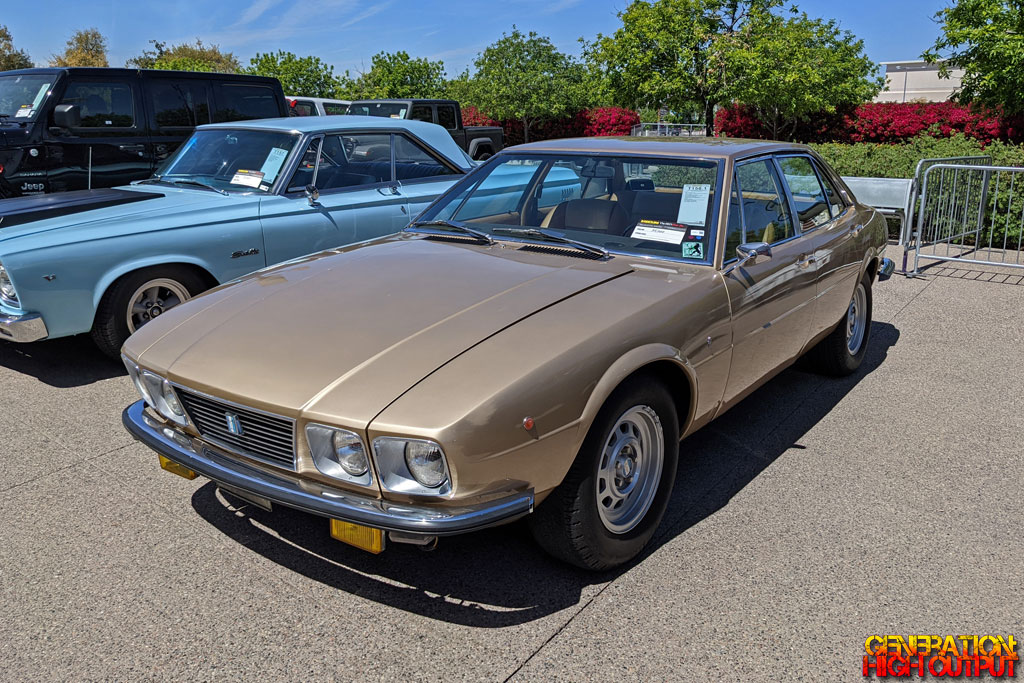 The iconic Jaguar XJ made its debut in 1968 with the XJ6. The luxury sedan was offered with three engine choices, the 2.8L making 140 hp, the 4.2L making 186 hp, and the 5.3L V12 making 250 hp. The car became an icon with its quad round headlamps and elegant styling.
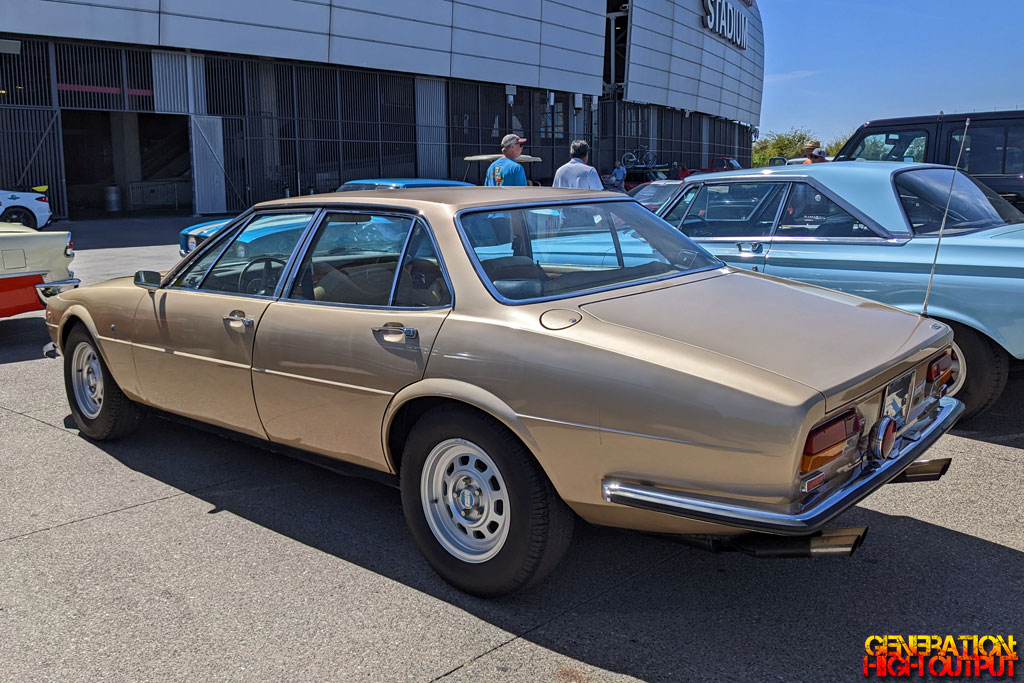 DeTomaso’s car was much more powerful, with a 330 hp Ford 351 V8 engine under the bonnet. The body was hand crafted by Ghia in Italy.
 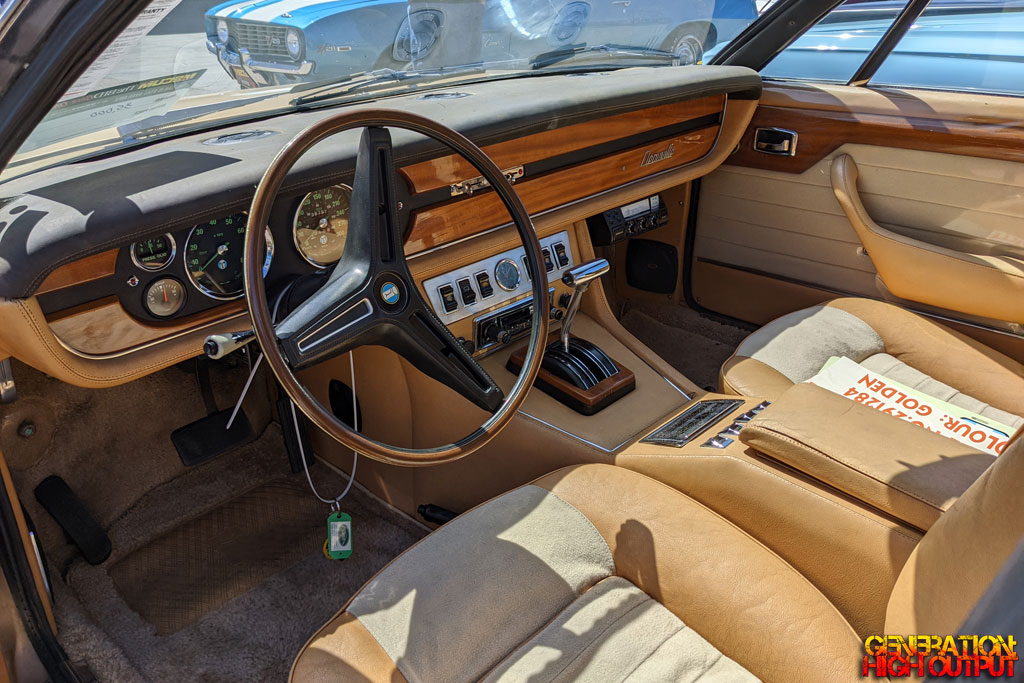 DeTomaso’s biggest commercial success was the two-seat Pantera, which saw 7,260 units produced. The Deauville saw just 244 of these cars built during the fifteen year production run. That is not what I would call a commercial success.
 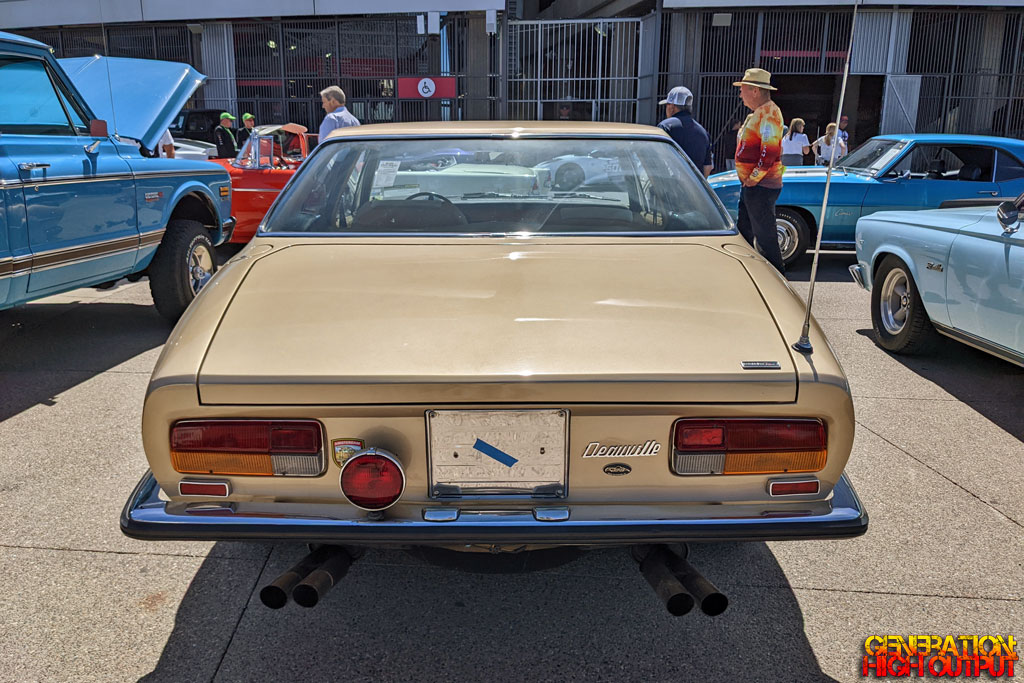 Still, the Deauville is an interesting car for its rarity. I caught up with this one at the Mecum Collector Car Auction in Glendale, Arizona in March 2023. The car failed to sell at auction and was listed in an after-auction page on Mecum’s website.