
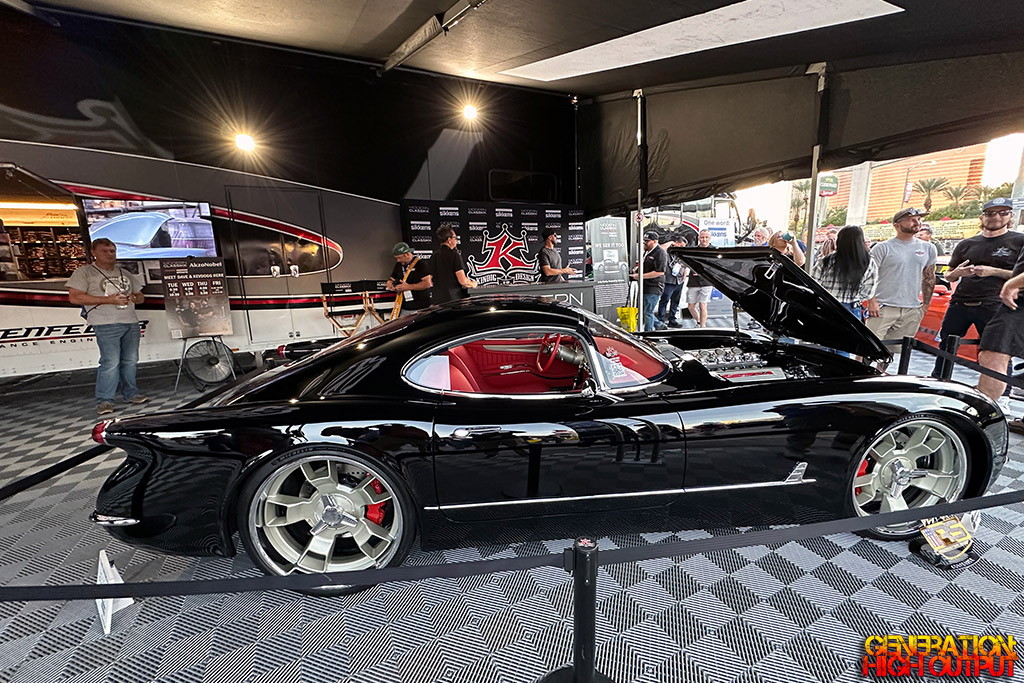
 Every once in a while at SEMA you come across a car that immediately tells you two things:
1. A ridiculous amount of time, money, and talent went into it
2. It will probably never do anything as undignified as getting a grocery run or sitting in traffic next to a lifted Tahoe with mismatched panels
This year, that car was the new CF1 Fastback from Kindig-It Design.
And honestly, it doesn’t really feel fair calling it a “car” in the normal sense. It feels more like a design study that was made into a real object.
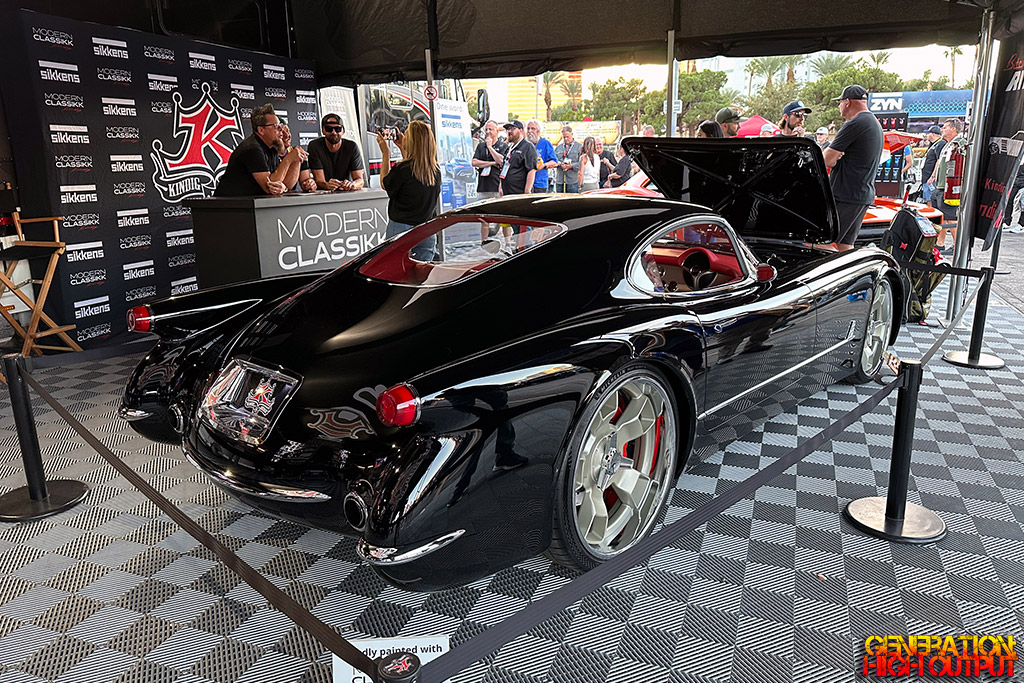
Dave Kindig’s Side Project
If you’ve spent any time around custom cars, the SEMA Show, or turned on cable TV in the past decade, you probably already know the name Dave Kindig. His shop in the Salt Lake City area has basically turned into a rolling portfolio of “what if we just… did it better than factory” ideas, many of which have been documented over 11 seasons of Bitchin’ Rides.
But somewhere along the way, Kindig launched a side project of building a small-run of series production cars. The CF1 series is that idea fully realized.
It started with the CF1 Roadster in 2021, followed by the Cabriolet in 2023, and now the Fastback version making its debut at SEMA 2025.
Each one is a continuation of a thought experiment:
“What would a 1953 Corvette look like if it was actually allowed to evolve normally instead of getting frozen in time?”
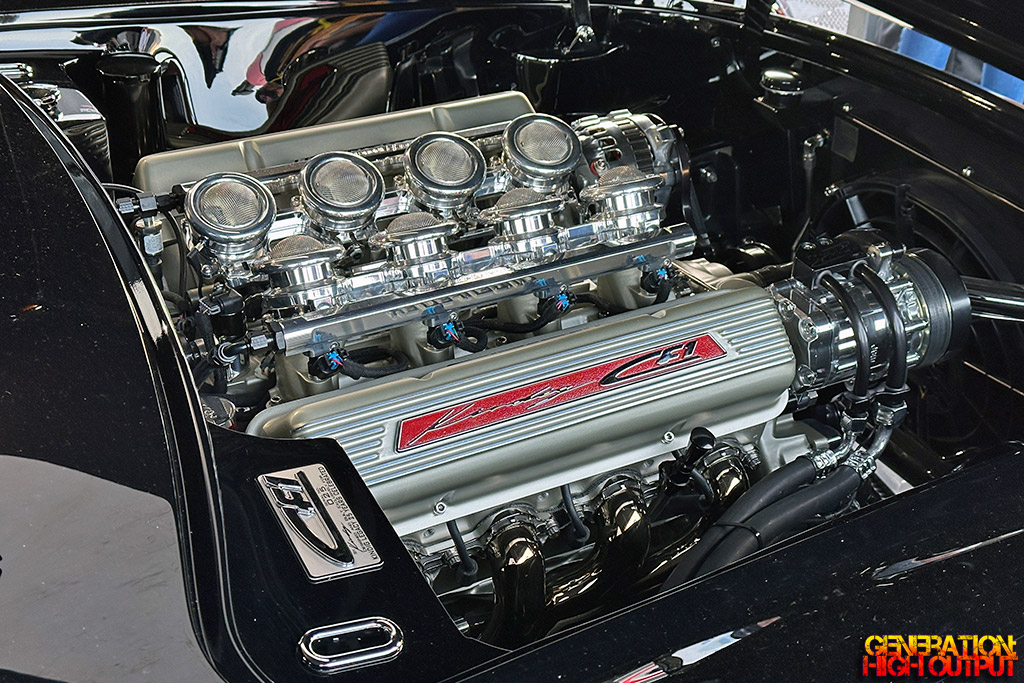
A Corvette That Never Existed, But Should Have
The inspiration is obvious: the original 1953 Chevrolet Corvette. But the CF1 Fastback isn’t really a tribute car in the traditional sense.
It’s more like someone took the concept of that car and removed all the limitations that existed in 1953 such as budget, materials, tire technology, chassis engineering, and general understanding of physics, and then rebuilt it from scratch.
There are no donor shells. No chopped-up classics being sacrificed in the name of nostalgia. Just a fully custom carbon fiber body sitting on a purpose-built platform.
Which, depending on your mood, is either the purest form of respect for the original design… or a very expensive way of refusing to leave the past alone.
Underneath the Pretty Surface
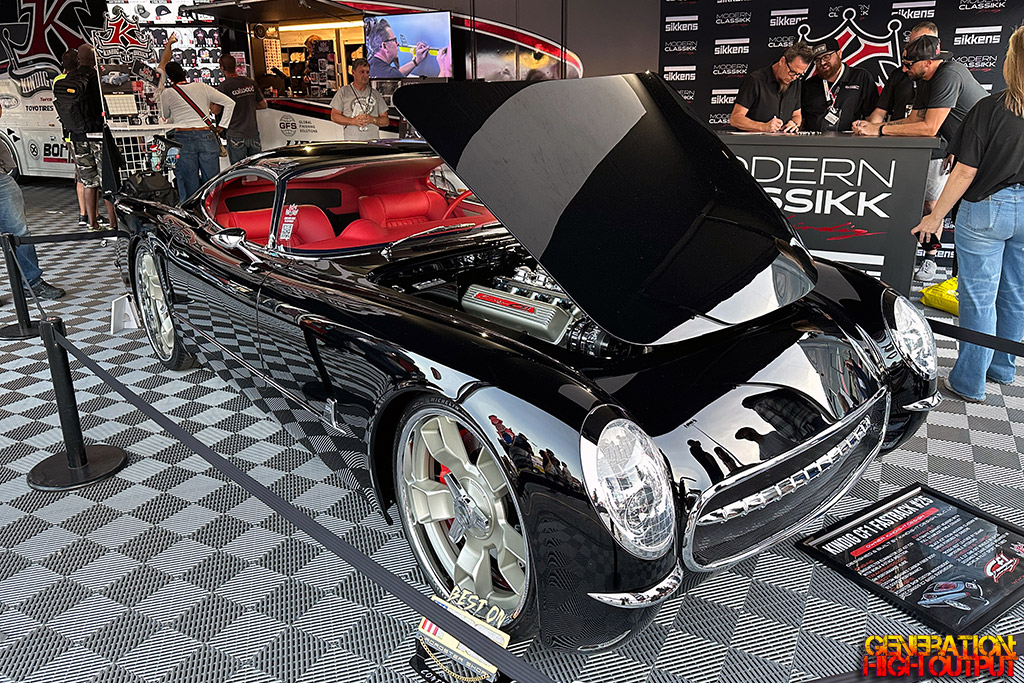
The CF1 starts with a custom chassis from Roadster Shop, using suspension geometry borrowed from the C7 Corvette platform. This isn’t a “vintage feel” car that also happens to stop and turn poorly. It’s engineered to behave like something modern, even if it looks like it belongs in a black-and-white photograph.
Power comes from a 427 cubic inch LS7-based engine built by Lingenfelter Performance—an Eliminator package pushing around 650 horsepower. On top sits an 8-stack electronic fuel injection system from Borla, feeding a full stainless exhaust setup that probably sounds a lot angrier than anything wearing 1950s styling should reasonably sound.
Bolted behind it is a GM Performance 4L80E transmission, which is about as far from “vintage” as you can get without involving a CVT and regret.
So yes—it looks like a classic Corvette.
But mechanically, it behaves like something that quietly skipped 70 years of automotive evolution and showed up already finished.
Interior: Luxury That Doesn’t Know It’s in a Hot Rod
Inside, things go from “restomod” to “luxury boutique hotel that forgot it was supposed to be a car.”
Rosso red leather by Seams Impossible Interiors gives the cabin a level of visual drama that feels closer to concept car than street machine. Dakota Digital gauges handle instrumentation duties, a Vintage Air system keeps things comfortable, and a custom steering wheel with a tilt column.
It’s all very deliberate. Very controlled. Very expensive.
And very far removed from anything that ever had a carburetor and a choke lever.
Jesus, Take the Wheel
The CF1 rides on custom EVOD wheels designed by Kindig himself. They are 21 inches up front, 22 in the rear. They are too big and too goofy for the car. I know it’s a restomod, but I feel that a more “OEM Plus” style wheel would suit the car better. The proportions of the car don’t look right with the wheel arches completely filled.
Time, Money, and the Slow Disappearance of “Normal Ownership”
Each CF1 takes roughly 9 to 14 months to build depending on specification. Finished examples of the CF1 Roadster have sold at auction for between $500 to $700,000 dollars, which puts it firmly in the category of “objects that will be carefully curated rather than used.”
And that’s where things get a little complicated.
Because the CF1 Fastback is undeniably beautiful. It’s one of those cars you walk around twice without realizing you’ve done it. It has presence, proportion, and craftsmanship that most production cars don’t even attempt anymore.
But it also feels like it’s been pre-assigned a life that never includes:
• Parking lots
• Road trips with questionable gas stations
• Door dings from someone’s overenthusiastic Civic door
• Or any situation involving weather
It’s already been mentally placed on a pedestal.
Probably before it even left the booth.
Final Thoughts
What Kindig-It Design has done with the CF1 Fastback is technically impressive in every measurable way. The engineering, design execution, and build quality are all at a level that most manufacturers would struggle to match outside of a concept studio.
But it also highlights something a little bittersweet about the modern custom world.
We’ve gotten so good at building dream cars that we’ve almost eliminated the part where they have to live in the real world.
And maybe that’s the trade-off.
The CF1 Fastback isn’t really meant to be driven like a normal car. It’s meant to exist. Which is fine.
But part of me can’t help but think the original 1953 Corvette didn’t plan on becoming an untouchable art piece either.
Follow Kindig-It Design:
https://kindigit.com/
https://www.facebook.com/Kindigit/
https://www.instagram.com/kindigitdesign/
https://www.youtube.com/@kindigitdesignofficial
