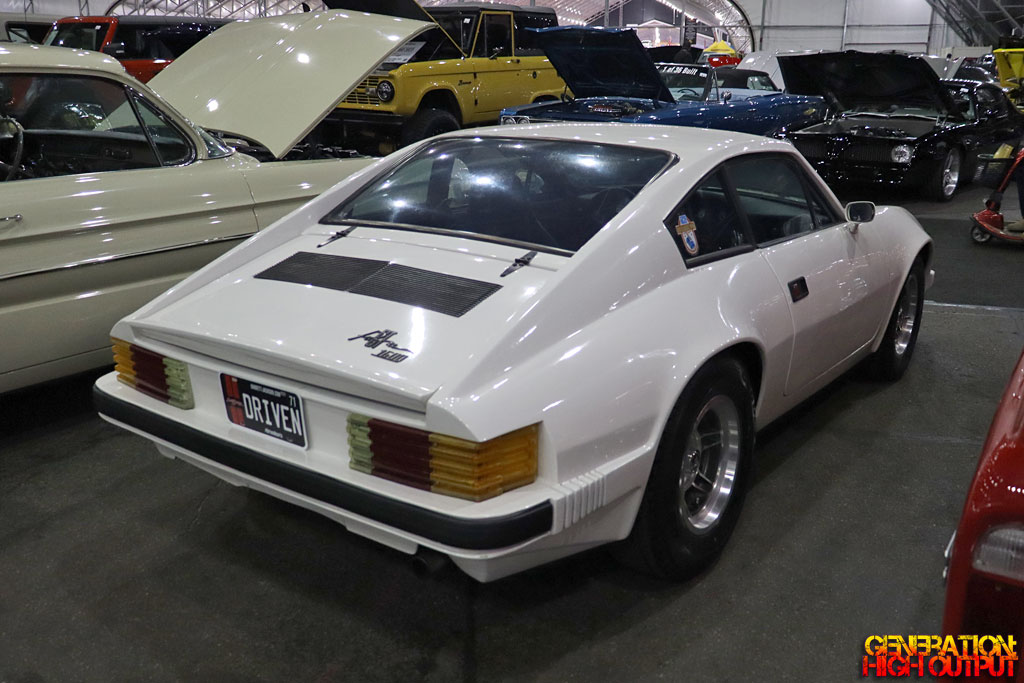
1979 Puma GTE at Barrett-Jackson Scottsdale 2023

The 1970s saw a surge of interest in fiberglass kit cars built on a Volkswagen chassis. Cars such as the Bradley GT and Fiberfab were popular at the time.

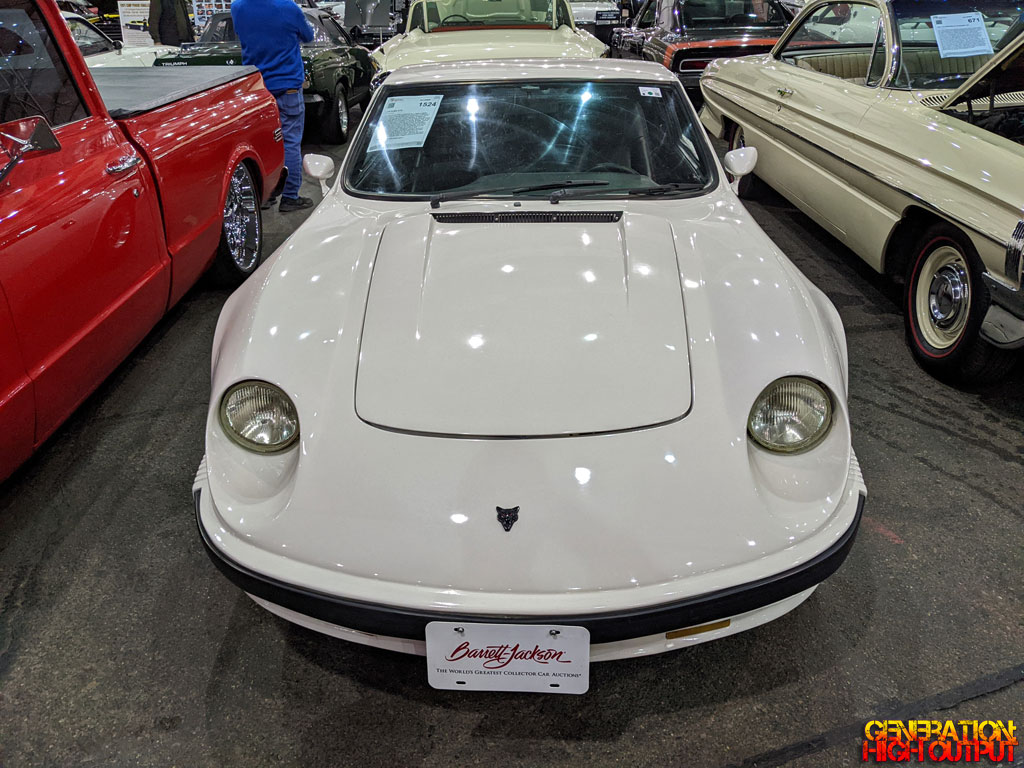
The Puma GT is based on the chassis of a Volkswagen Brasilia chassis. The Brasilia was a 3-door economy hatchback, but here it has been reimagined as a 2-door, rear engine sports car.

This car is titled as a 1979 Puma GTE and features a 1600cc engine paired with a 4-speed manual transmission. The car has a leather interior, air conditioning, power windows, alarm system, and touchscreen audio system.
The Puma 1500 GT was first revealed at the 1970 Ibero-American Exhibition in Seville, Spain. Later that same year, the engine capacity increased to 1600cc and the car evolved to the 1600GTE.

The Puma GTE, the most famous sports car made in Brazil at the time, was produced with a fiberglass body and Volkswagen boxer engine from 1970 through 1980. This model was based on the Puma GT; the letter “E” added to the nomenclature means “export” or “Europe” according to other sources. This was the more successful Puma model with a higher-volume production.
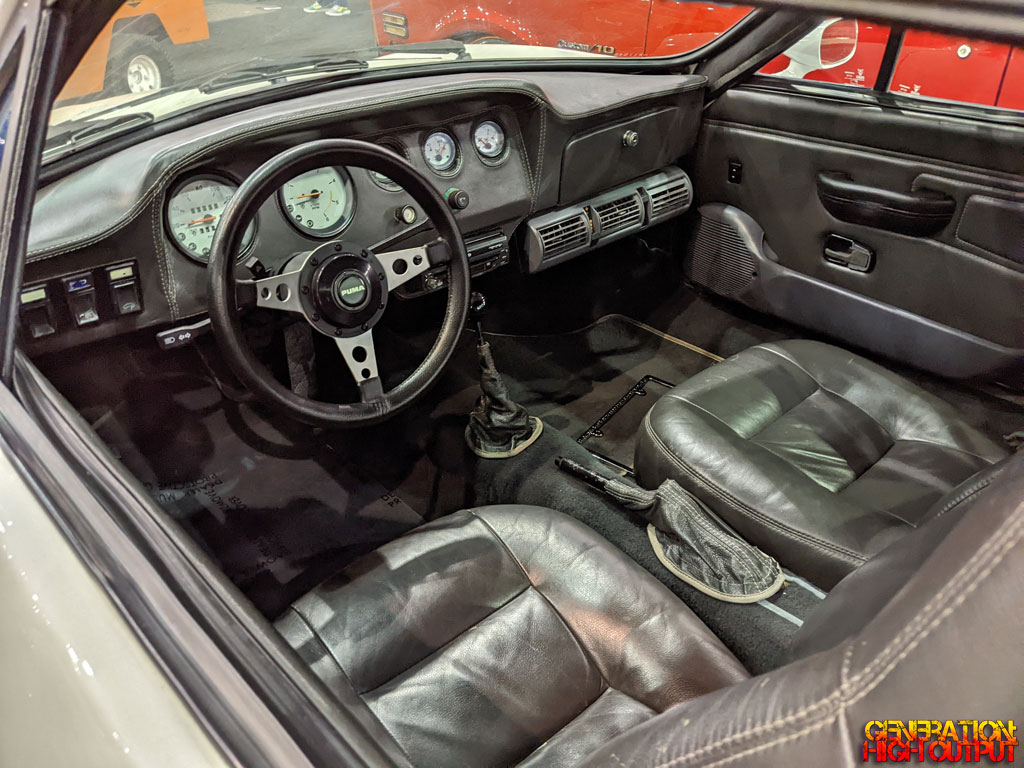
I see a little bit of Porsche, Datsun, and other cars in the design and styling of the car.

This car sold for $23,650 at the Barrett-Jackson Scottsdale 2023 collector car auction. What do you think about the Puma GTE?
Honda Goldwing Turbo Phantom Reverse Trike

Recently I attended the Hot Wheels Legends Car Show in Gilbert, Arizona on September 10, 2022. There were many cool vehicles to admire, but one that really stood out to me was this amazing reverse trike.

A reverse trike is a 3-wheeled vehicle with two wheels up front and one at the back. Though it has been around for a while, the idea really took off in 2015 with the introduction of the popular Polaris Slingshot.

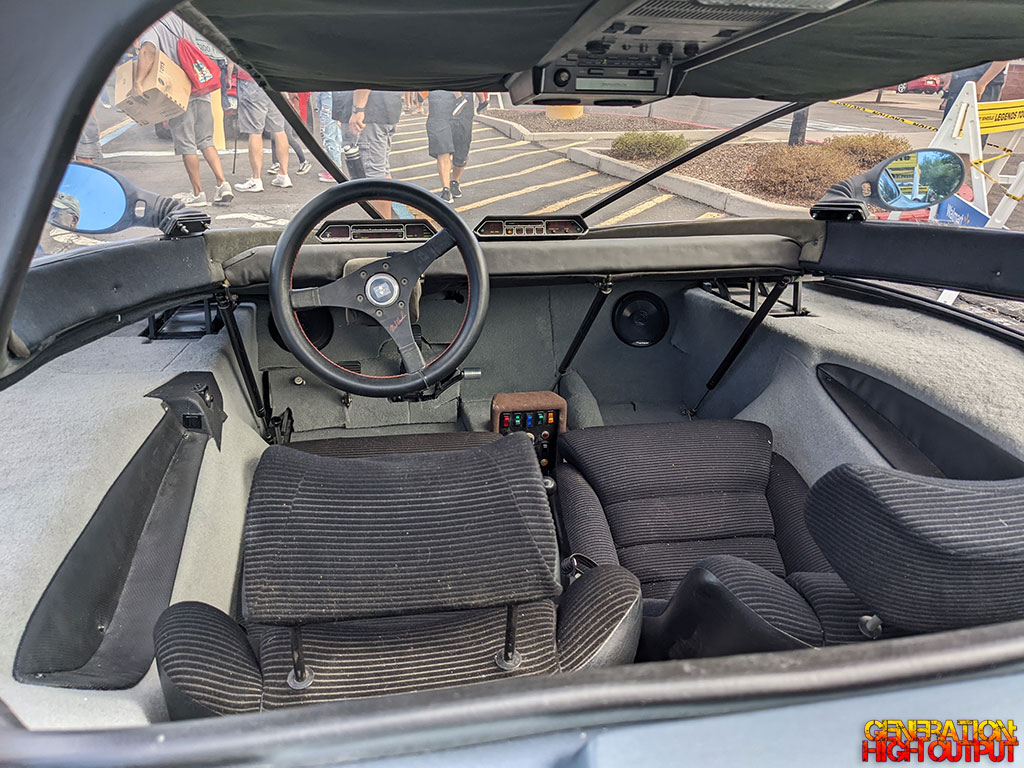
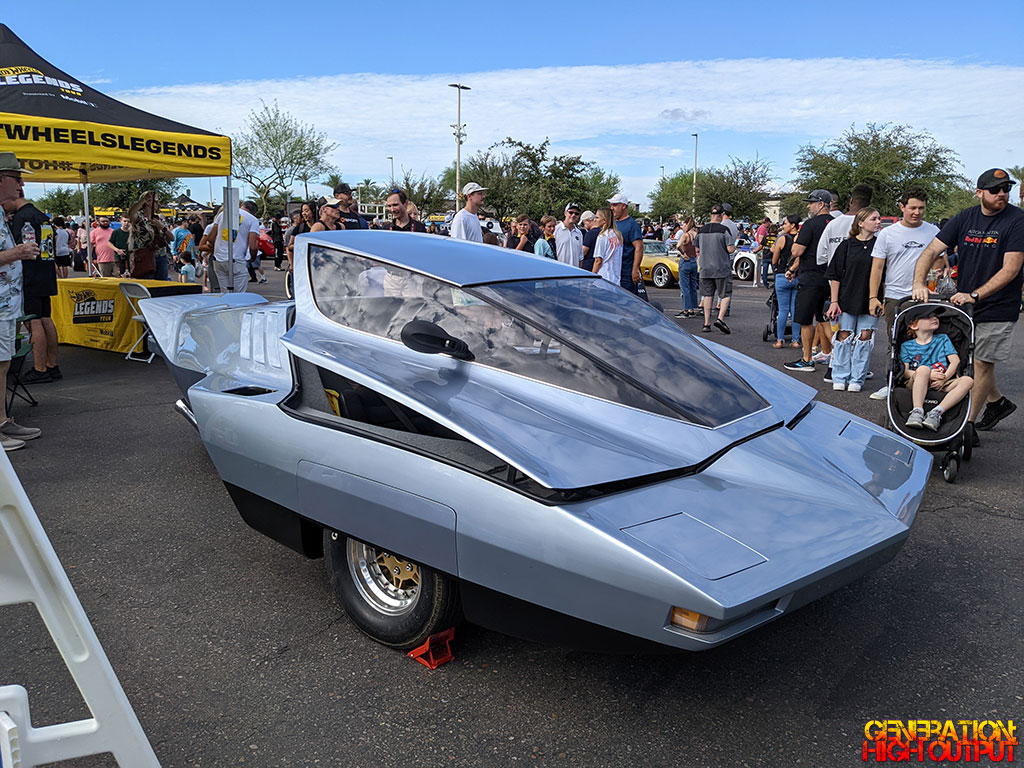
This trike is the 80s version of the Slingshot. It’s based on a Honda Goldwing motorcycle, but converted to a 3-wheeler. Two passengers sit inside of a fully enclosed cockpit, which has a clamshell or canopy door that opens up like a fighter jet to climb inside.

The interior looks cramped, with two bucket seats wedged side to side. A radio is mounted to the overhead console, due to lack of space for it anywhere else. When the canopy opens, the dashboard and steering wheel tilt up with it. I spy some sort of digital gauge cluster sitting on top of the dashboard.

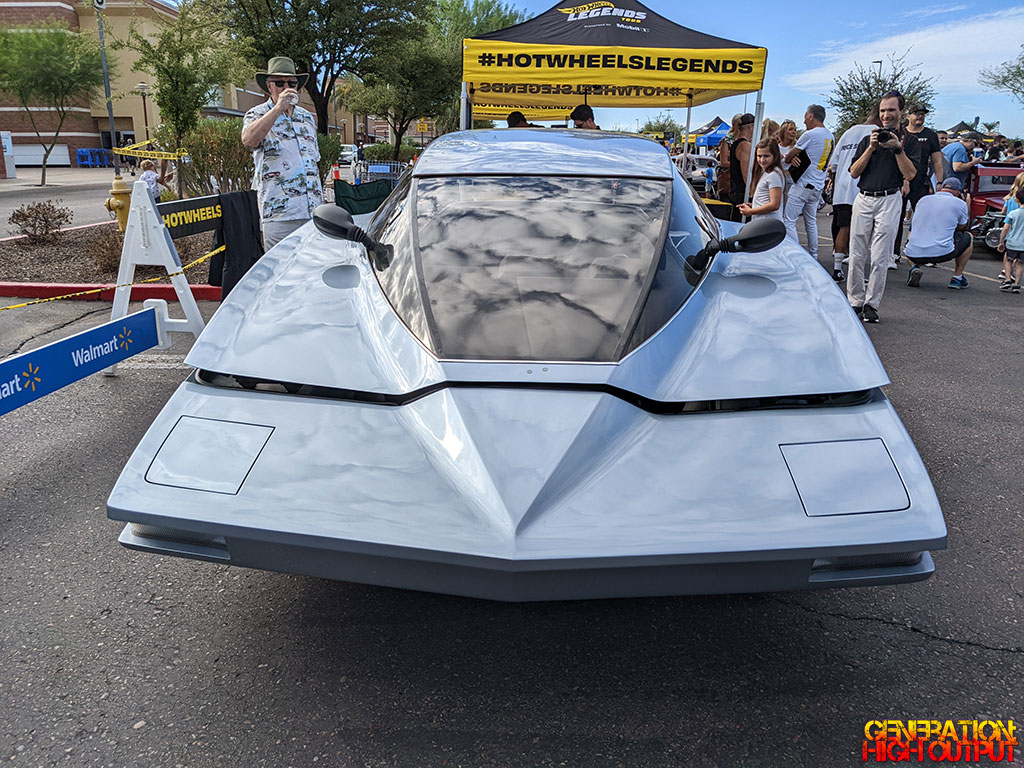
On the exterior, the fiberglass body shell has a vaguely Corvette-shaped front end with pop-up headlights. Two side mirrors protrude from the otherwise sleek looking body, which has a pointed front beak that looks like the rear of a 1963 Corvette.

A few websites were helpful in telling the history of this unique vehicle.

The vehicle was originally designed by Ron Will, a designer at General Motors, and his brother Lee. It was powered by a Honda Goldwing motorcycle which was attached to a tube chassis. The front suspension was sourced from a Volkswagen and the steering from an MG.

The vehicle debuted at the 1978 LA Auto Show, with a total of 3 units being built. However, the Turbo Phantom never went into production.

Today, the vehicle belongs to Ron Will, who lives in Fountain Hills, Arizona. Ron later left General Motors and went to work for Subaru, where helped design the original Subaru Outback.

The Turbo Phantom is a seriously cool, very 80s vehicle and I am grateful to the owner for bringing it out to the Hot Wheels Legends Tour. It was very cool to see this vehicle in person!


T-buckets Aren’t For Anyone Anymore

The generational gap between now and then can best be summed up with the idiom “You can’t have your cake and eat it too.” Continue reading

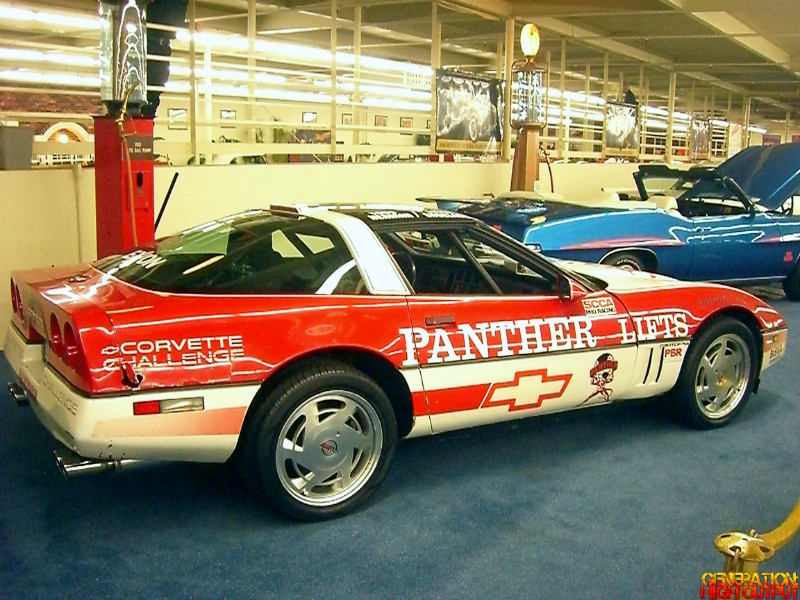
Imperial Palace Car Collection: 1988-89 SCCA Corvette Challenge

I love C4 Corvettes.

They’re last unrefined burp of automotive machismo to wear the Fleur-de-lis/Checkered flags. They ran every bizarre type of small block that Chevy could cram into them: Crossfire, TPI, the DOHC LT-5, and even twin-turbo models (RPO B2K) from the factory.

In it’s time, the C4 handily beat many of it’s “super car” contemporaries in performance comparisons. It was the fastest, meanest, plastic-fantastic-piece-of-shit on the road. It liked to metaphorically hold it’s competitors down like an evil bully and make them smell it’s nasty, overhead valved farts and then shove them into a trashcan. On the road, where there was no authority other than the local police department, the super cars had to take their lumps and move on. On the track however, they complained to the SCCA about the C4’s utter domination. The blue-bloods of racing were sick of being pushed around like the antagonist of some Pantera song, and by 1988 they had gotten their way. Continue reading