SEMA 2024: 1993 Honda Civic EG Hatch Tesla Swapped by RyWire

The 1990s Honda Civic hatchback is one of those cars where you either had one, knew someone who had one, or wanted one. Cheap to own and endlessly modifiable, the Civic EG hatch was a favorite among tuners.

I remember high school classmates rolling up in Civics with neon underglow, painted interior bits, and the ever-present “fart can” exhaust. This was an era of questionable taste and boundless creativity. Keep in mind, this was only a few years after the original Fast and the Furious movie came out.

Fast forward to 2024, and the Civic is still a staple in the tuning world, but the game has changed. At the 2024 SEMA Show in Las Vegas, the Toyo Tires Treadpass area featured a remarkable build that represents just how far this 30+ year-old platform can be pushed. Enter RyWire Motorsports’ fully electric 1993 Honda Civic EG hatchback, which combines JDM style with cutting-edge EV tech.The car was built by Ryan Basseri of RyWire Motorsports of Santa Ana, California. Basseri is no stranger to high-end vehicle builds and custom wiring. He previously did a full EV conversion on a Honda S2000, which is documented on the RyWire YouTube channel. But this Civic? It’s next-level.

Gone is the original gas-powered Honda engine, replaced with a Tesla-sourced electric powertrain. He salvaged a Tesla motor, inverter, and charge controller and adapted them to fit the EG chassis.

Under the hood, the exceptionally clean installation shows off Basseri’s attention to detail. The electric motor delivers an estimated 300 horsepower, which is triple the car’s original 90 horsepower. In the trunk is a 16 kWh battery pack, which was salvaged from a Chrysler Pacifica hybrid. The pack runs through an AEM battery management system and offers roughly 70 miles of range, which is more than enough for short trips around the neighborhood or silently rolling up to the local cars and coffee.

And yes, it even has air conditioning! A stock Tesla compressor has been adapted to work in this setup, ensuring the essential passenger comfort of cooled air on a Southern California day.

Braking has also received a high-tech overhaul. The factory vacuum-assisted system has been swapped for a Bosch iBooster unit from a Honda CR-V, complete with a custom reservoir. The fully electric iBooster provides consistent and reliable brake pressure, which is essential when dealing with instant torque.

Inside, the car is just as impressive. Instead of the rattle-can-painted dash, the RyWire EG features Recaro DC2 JDM Type-R front seats, with the rear seat reupholstered to match in black suede with red stitching. The cockpit is rounded out with a fully digital AEM dash and a Spoon steering wheel.

The stance is proper, sitting on custom Nitron springs and a set of 15-inch Volk Racing TE37 wheels in dark silver. These one-piece forged wheels are a favorite among JDM enthusiasts and lend a timeless motorsport look to the modernized hatch.

The RyWire Civic wasn’t alone at SEMA this year. Sharing the spotlight was a second Civic in the CSF Radiators booth. That car was a red 1999 EK hatch with a dual-motor, all-wheel-drive swap and a larger 85 kWh battery pack built into a custom-fabricated floor. But while that car was technically more impressive, the 1993 EG in the Toyo Tires pavilion was the one that caught my eye for its super clean setup.

This build is more than just a show car, it is pushing the boundaries of the Honda tuning scene into the EV era. While many see electric conversions as soulless, RyWire has shown that with craftsmanship, creativity, and respect for the platform, even the humble Civic hatch can be reborn as something truly electrifying.

For more, follow @rywire_motorsport on Instagram.

Honda Goldwing Turbo Phantom Reverse Trike

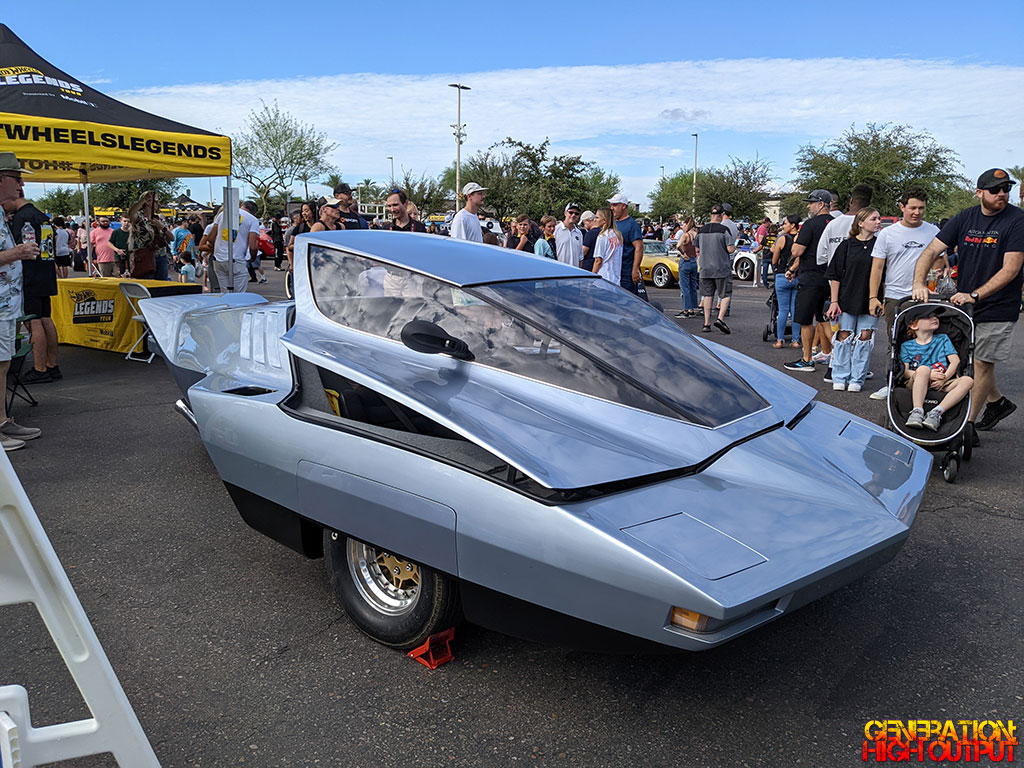
Recently I attended the Hot Wheels Legends Car Show in Gilbert, Arizona on September 10, 2022. There were many cool vehicles to admire, but one that really stood out to me was this amazing reverse trike.

A reverse trike is a 3-wheeled vehicle with two wheels up front and one at the back. Though it has been around for a while, the idea really took off in 2015 with the introduction of the popular Polaris Slingshot.

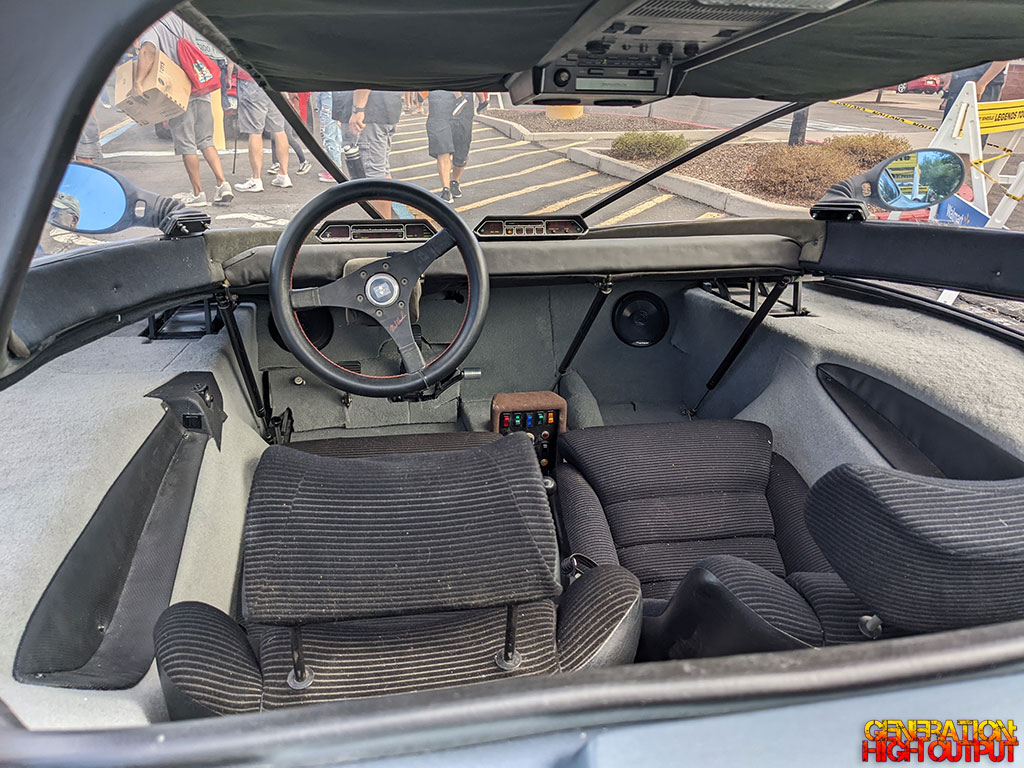
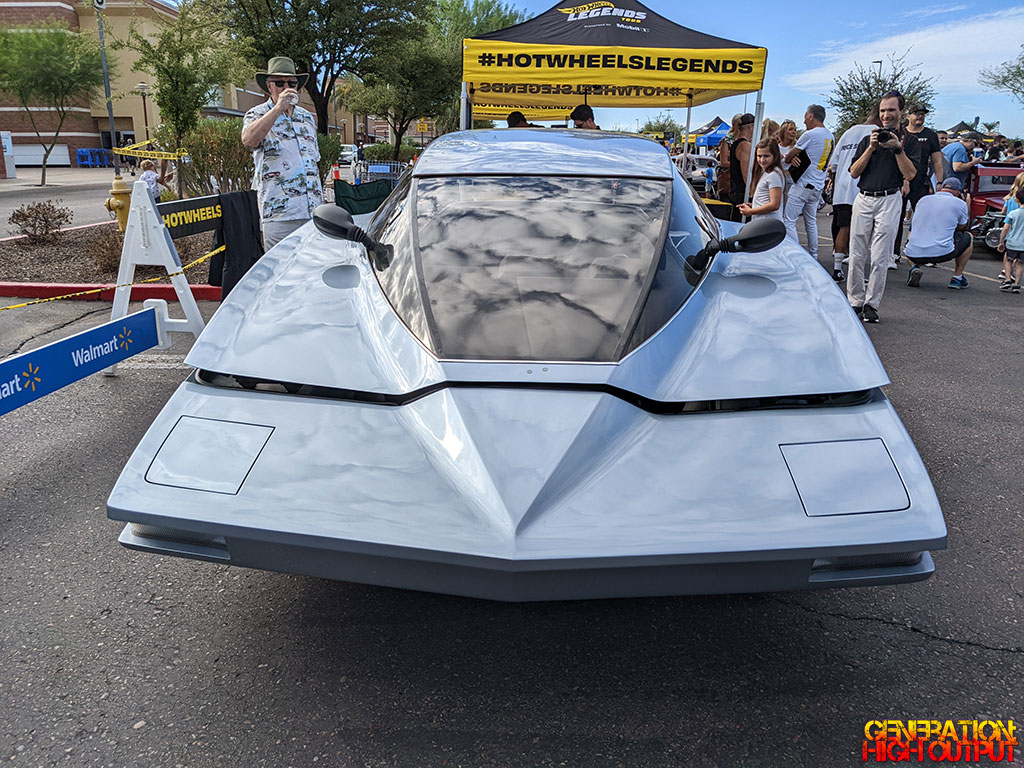
This trike is the 80s version of the Slingshot. It’s based on a Honda Goldwing motorcycle, but converted to a 3-wheeler. Two passengers sit inside of a fully enclosed cockpit, which has a clamshell or canopy door that opens up like a fighter jet to climb inside.

The interior looks cramped, with two bucket seats wedged side to side. A radio is mounted to the overhead console, due to lack of space for it anywhere else. When the canopy opens, the dashboard and steering wheel tilt up with it. I spy some sort of digital gauge cluster sitting on top of the dashboard.

On the exterior, the fiberglass body shell has a vaguely Corvette-shaped front end with pop-up headlights. Two side mirrors protrude from the otherwise sleek looking body, which has a pointed front beak that looks like the rear of a 1963 Corvette.

A few websites were helpful in telling the history of this unique vehicle.

The vehicle was originally designed by Ron Will, a designer at General Motors, and his brother Lee. It was powered by a Honda Goldwing motorcycle which was attached to a tube chassis. The front suspension was sourced from a Volkswagen and the steering from an MG.

The vehicle debuted at the 1978 LA Auto Show, with a total of 3 units being built. However, the Turbo Phantom never went into production.

Today, the vehicle belongs to Ron Will, who lives in Fountain Hills, Arizona. Ron later left General Motors and went to work for Subaru, where helped design the original Subaru Outback.

The Turbo Phantom is a seriously cool, very 80s vehicle and I am grateful to the owner for bringing it out to the Hot Wheels Legends Tour. It was very cool to see this vehicle in person!


Not Sold Here: Honda Beat

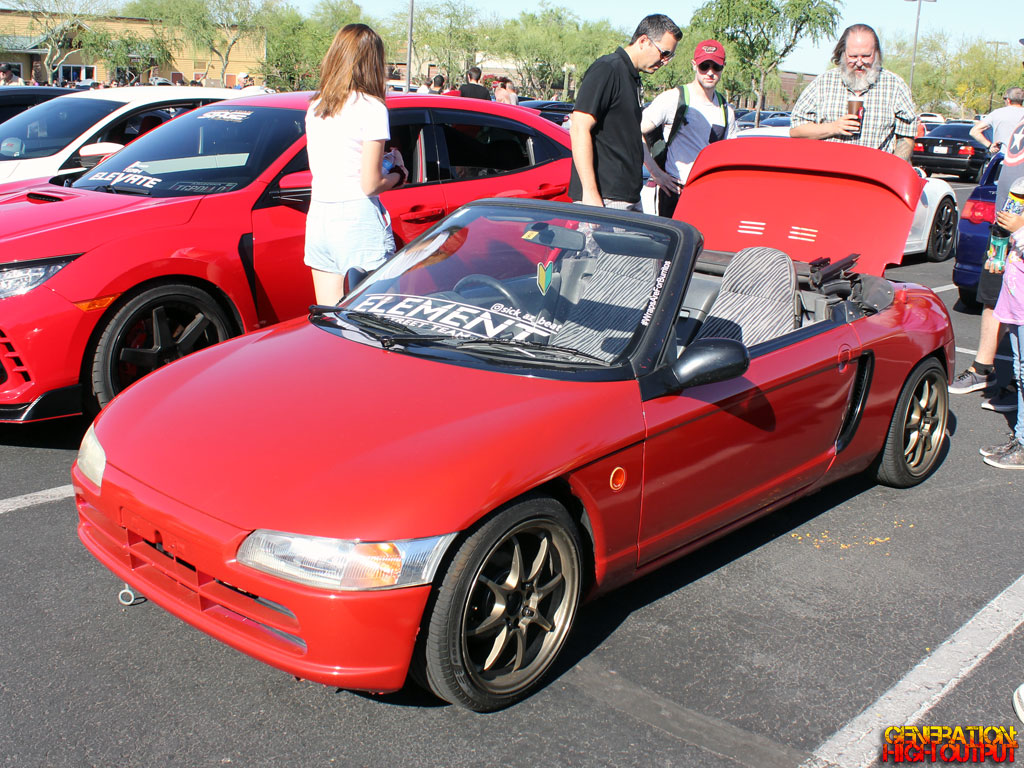
In today’s edition of Not Sold Here, we are featuring the Honda Beat. The Beat is a special class of super small vehicles for which there is no equivalent in the United States. Smaller than a subcompact, these cars are often called “kei cars” in Japan. I featured another Japanese vehicle, the Subaru Microvan, a few years ago. The difference is that the Subaru was actually imported to the U.S. while the Honda Beat was not.

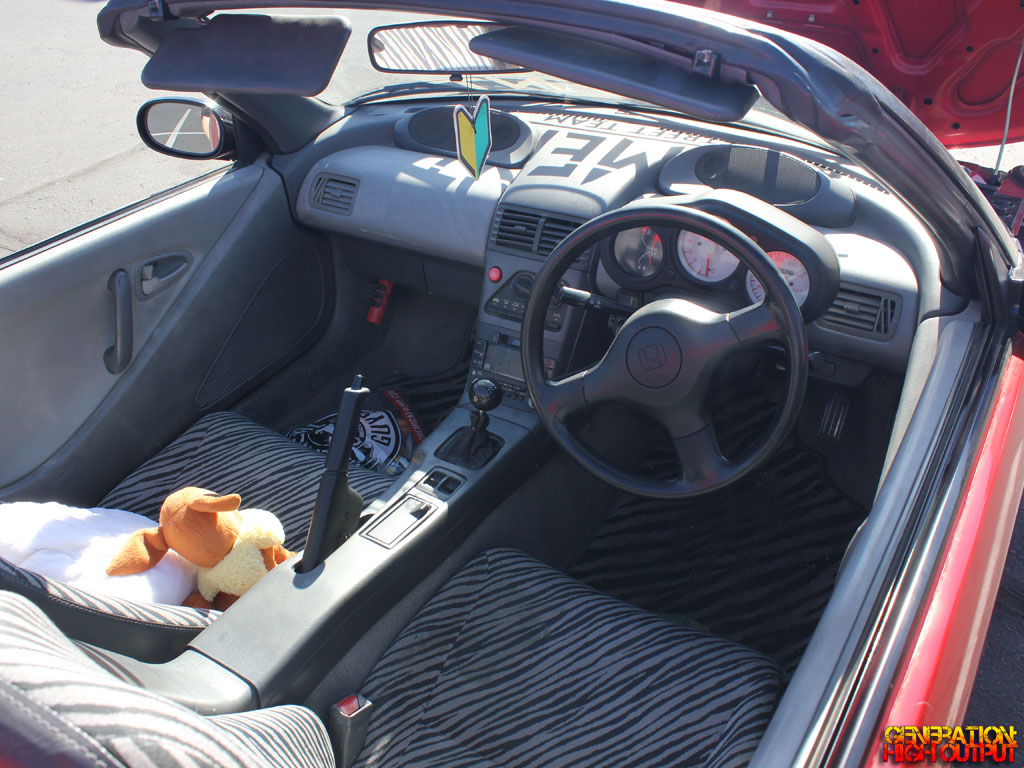
I ran across this Honda Beat at the monthly Cars and Coffee gathering in Scottsdale. It is unbelievably small in person. Although it’s hard to visualize, the Honda Beat is nearly 10 inches narrower and 400 lbs lighter than the original Mazda Miata. It really is like a street legal go-kart. The philosophy behind these kei cars is to have small, efficient transportation for the narrow streets and crowded cities of Japan. As such, they were not designed to be particularly sporty. The inline 3-cylinder engine displaces 656 cc (40.0 cubic inches) and puts out a whopping 63 horsepower. The Honda Beat was only available with a 5-speed manual transmission.

There is a law in the United States that allows vehicles 25 years or older to be imported and driven on the roads, even though the vehicles do not meet US Federal crash test standards. This “show and display” law is the reason why you might be seeing more R32 Skylines and other right-hand drive Japanese vehicles at your favorite car shows. It is very likely that this Honda was imported under that same law.

About 34,000 of these cars were built during the production run from 1991 to 1996. It is unknown how many of them have made it to the U.S., but I’m certain the number is quite small. The car drew a huge number of curious onlookers at the show – much more than some of the brand new exotics and supercars that cost many times what this vehicle is worth.

This is a very unique car and I’m glad to have run across it at the Saturday Motorsports Gathering put on by Scuderia Southwest.

1989-91 Sterling 827 Vitesse Fastback (Acura Legend)

Back in the 1980’s Honda determined that if they were going to have a luxury division (Acura) they would need a ‘full size’ car to compete. With the midsized Accord as their only option for badge engineering they looked elsewhere. They ended up collaborating with the British company Rover. This resulted in two cars that were very similar, one for each company. Continue reading

Hella-tyte wagon

I love wagons so much, so it pains me to see this very attractive Accord wagon with these Jet-Set-Radio looking stickers on the back, rocking some wheels that were probably brand new when the car was. Don’t you wonder what connects our generation’s enthusiast to the utilitarian wagon?

One of my favorite cars I owned was a 1994 Mercury Sable wagon with a 3.8L V6. I got rid of it after it blew a head gasket (don’t act surprised) but man did I love mobbing that thing around town with it’s torque-steer inducing big six (compared to the 3.0L Vulcan) and the back seats folded flat. I would love to have another, it’s just too bad that the front transaxle would probably spew its guts if I did anything to hop up the Essex underneath.

UPDATE 05/23/13:

After posting this article on facebook it’s gotten a lot attention. Mostly negative towards me and my dislike for all things big-wheeled and ground-dragging. To each their own, I suppose. However, the owner Brian Salamunec has a pretty good sense of humor and enjoyed seeing the article. For those interested in this kind of car, I’m providing some links to the above 1996 Accord Wagon, and an even further modified 1997 wagon that was completed approximately a decade ago according to the owner.

1997 Accord EX Wagon link 1

1997 Accord EX Wagon link 2

1996 Accord Wagon Link 1 (the above car)