Xclutch Brings Supercharged Holden VE Commodore Ute to SEMA 2018

The SEMA Show in Las Vegas brings together thousands of manufacturers of automotive equipment and accessories from around the world. Out of all the thousands of show vehicles on display at the 2018 SEMA Show, perhaps none traveled a further distance to attend than the Holden SS-V from Xclutch.

Xclutch is based in Adelaide, South Australia and shipped this right-hand drive Ute over for the SEMA Show. According to a post on the company’s Instagram account, the vehicle traveled 3,000 miles on the road, 10,000 miles on the water and another 1,500 miles on a train. What a journey!

The SS-V is a high-performance Ute that was sold in Australia from 2007-2013. In stock configuration, the 6.0L L98 V8 engine puts out 362 hp (250 kW) and 391 ft-lbs (530 N-m). However, this one has been upgraded with a Harrop FDFI1900 supercharger kit, which boosts the power output to 603 hp (450 kW) and 626 ft-lbs (850 N-m). The included air-to-water intercooler helps keep temperatures under control.

The vehicle includes a number of additional performance upgrades. Of course, it includes a high-performance 9″ triple plate ceramic clutch and 4140 chromoly flywheel from Xclutch. This setup is capable of handling up to 2,000 ft-lbs of torque (2750 N-m).

The car is equipped with a full stainless steel exhaust and headers, and X Force Varex mufflers. There is also a Varex SmartBox which allows the user to easily adjust the exhaust sound level via a wireless remote.

Stopping power comes from Disc Brakes Australia 5000 series disc brakes in the front, and DBA T2 series disc brakes in the rear. The whole car rides on a set of 20×10 ROH RF1 wheels wrapped in Achilles ATR Sport tires.

Australian vehicles aren’t commonly seen here in the USA, particularly Utes. It was a real treat to see this one at the 2018 SEMA show and in the SEMA Cruise. Thanks to Xclutch for bringing it over. Be sure to check out Xclutch USA for high performance clutches to fit street, racing, and off-road applications worldwide.
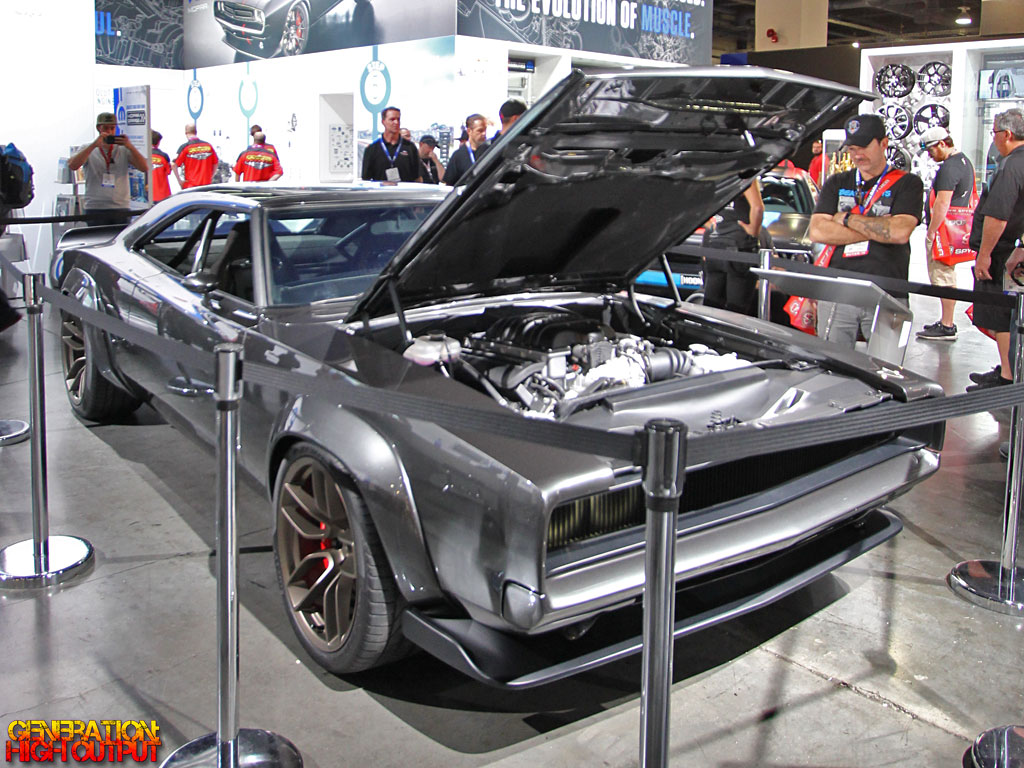
SEMA 2018: Dodge Introduces 1,000 Horsepower “Hellephant” Crate Engine

From the time the Dodge Challenger revival was confirmed in 2006, Dodge has been on a roll with their high-performance enthusiast vehicles. When the third-generation Challenger made its debut in 2008, the 6.1L (372) SRT8 model put out a healthy 425 horsepower.

Dodge bumped it up again in 2011, when the Challenger SRT8 received a new 6.4L (392) HEMI V8 making 470 horses. In 2014, Dodge stunned the automotive world when they introduced the Hellcat with its 6.2L (376) HEMI making a staggering 707 horsepower – the most powerful production engine in a muscle car at that time. In 2017, the bar was raised yet again with the announcement of the SRT Demon, a supercharged version featuring an eye-popping 808 horsepower on 91 octane gas, or 840 horsepower on 100-octane.

How much further can they go? Well at SEMA 2018, we got an answer. Mopar fans were delighted to hear about Chrysler’s latest creation: a supercharged, all aluminum 7.0-liter (426 cubic inch) HEMI crate engine. The “Hellephant” as it is nicknamed, will produce 1,000 horsepower and 950 lb-ft of torque. It is far and away the most powerful crate engine ever offered by an OEM.

To promote the new engine, Chrysler’s Product Design Office (PDO) came up with the idea of installing the engine into a classic 1968 Dodge Charger. The “Super Charger” is equipped with a stock T-6060 six-speed manual transmission, along with a number of custom touches.

  • “De Grigio” Grey Metallic paint
  • Brembo six-piston disc brakes
  • Side mirrors from a 1971 Duster
  • 5-inch exhaust tips borrowed from the Alfa Romeo Stelvio
  • Dodge Viper steering wheel
  • Dodge Viper seats, wrapped in Alcantara with red stitching
  • Sabelt four-point racing harnesses
  • Custom roll cage with 2-inch diameter tube
  • Rear seat delete
  • LED brake lights
  • 20×11″ front wheels, 21×12″ custom rear wheels
  • lowered 3.5 inches in front, 2.5 inches in rear
  • shaved door handles, drip rails, trunk lock

Pricing for the Hellephant engine was not announced, though it will likely be more than the $19,530 price tag for the Hellcat crate engine. It is expected to be available for sale in early 2019.

Part Number Reference:

Interior
Fuel Level, Full Sweep, Electronic 2 1/16″, Black Dial – 77060043
Oil Pressure, Short Sweep, Electronic 2 1/16″, Range 0-100 psi, Black Dial – 77060045
Speedometer, In-Dash, Full Sweep, Electronic 3 3/8″, Range 0-160 mph, Black Dial – 77060055
Voltmeter, Short Sweep, Electronic, 2 1/16″, Range 8-18 volts, White Dial – 77060050
Tachometer, In-Dash, Full Sweep, Electronic 3 3/8″, Range 0-10,000 rpm, Black Dial – 77060057
Water Temperature

Performance/Engine
426 Supercharged Crate HEMI Engine Kit: 77072500
Hellephant 426 Supercharged Crate HEMI Engine: P5160194
6.2L EO Air Filter Element – 77072491
6.2L Supercharged Crate HEMI Engine FEAD Basics Kit (includes alternator, power steering pump, pulleys, and hardware) – 77072492


Not Sold Here: Honda Beat

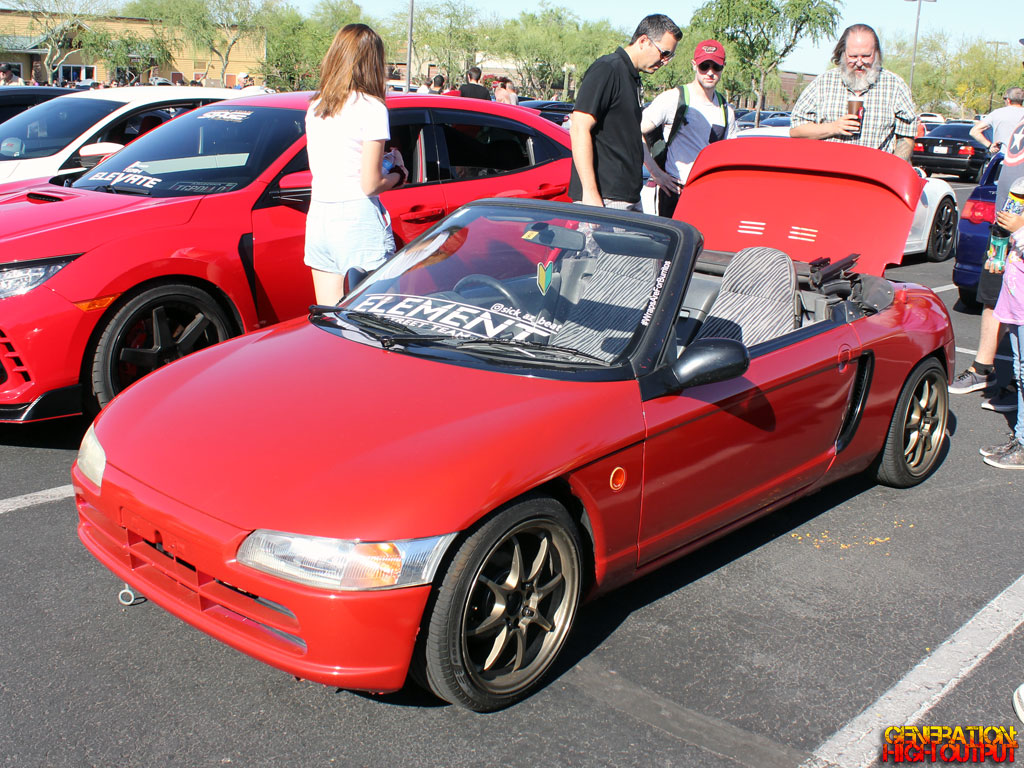
In today’s edition of Not Sold Here, we are featuring the Honda Beat. The Beat is a special class of super small vehicles for which there is no equivalent in the United States. Smaller than a subcompact, these cars are often called “kei cars” in Japan. I featured another Japanese vehicle, the Subaru Microvan, a few years ago. The difference is that the Subaru was actually imported to the U.S. while the Honda Beat was not.

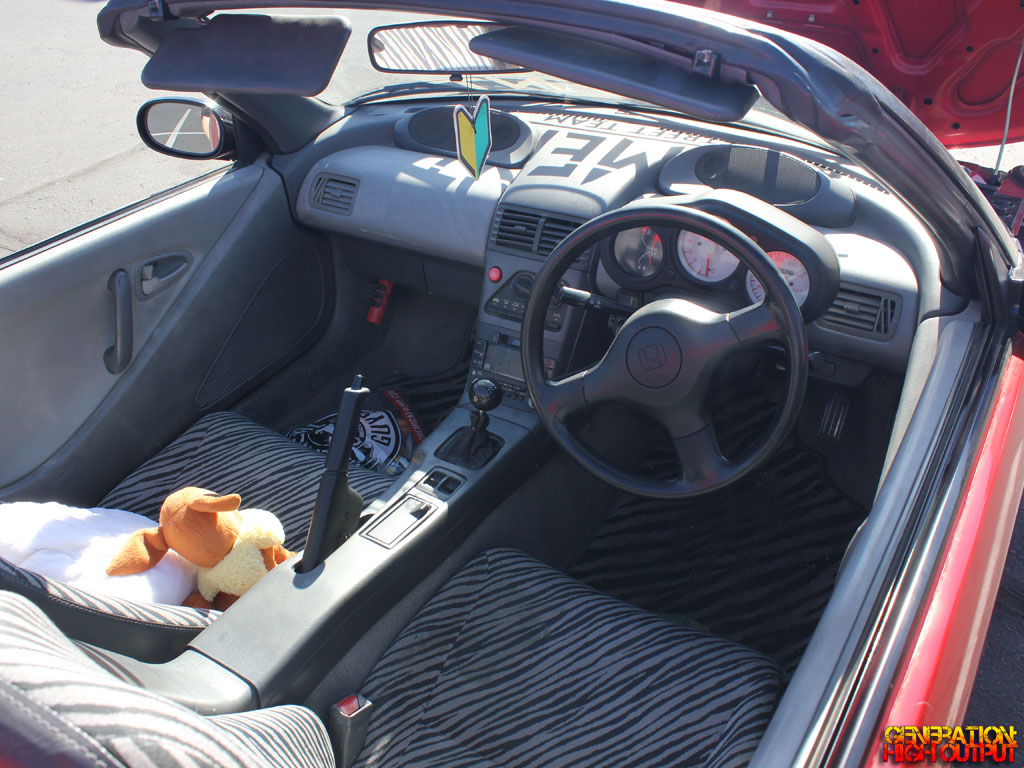
I ran across this Honda Beat at the monthly Cars and Coffee gathering in Scottsdale. It is unbelievably small in person. Although it’s hard to visualize, the Honda Beat is nearly 10 inches narrower and 400 lbs lighter than the original Mazda Miata. It really is like a street legal go-kart. The philosophy behind these kei cars is to have small, efficient transportation for the narrow streets and crowded cities of Japan. As such, they were not designed to be particularly sporty. The inline 3-cylinder engine displaces 656 cc (40.0 cubic inches) and puts out a whopping 63 horsepower. The Honda Beat was only available with a 5-speed manual transmission.

There is a law in the United States that allows vehicles 25 years or older to be imported and driven on the roads, even though the vehicles do not meet US Federal crash test standards. This “show and display” law is the reason why you might be seeing more R32 Skylines and other right-hand drive Japanese vehicles at your favorite car shows. It is very likely that this Honda was imported under that same law.

About 34,000 of these cars were built during the production run from 1991 to 1996. It is unknown how many of them have made it to the U.S., but I’m certain the number is quite small. The car drew a huge number of curious onlookers at the show – much more than some of the brand new exotics and supercars that cost many times what this vehicle is worth.

This is a very unique car and I’m glad to have run across it at the Saturday Motorsports Gathering put on by Scuderia Southwest.

Gold Rush Rally: GRX 2018 in Scottsdale

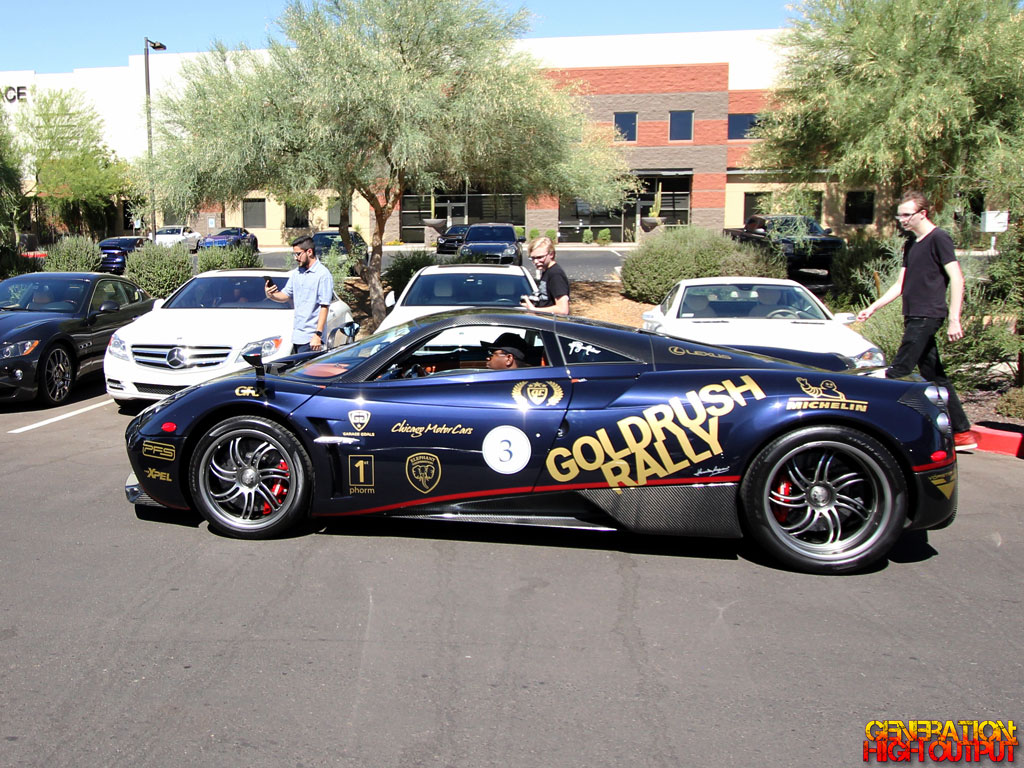
Pagani Huayra at the Gold Rush Rally in Scottsdale

The origins of the automotive rally date back more than 100 years to 1895 in France, when early motorsports enthusiasts came up with a point-to-point race using public roads, as there were very few race tracks at the time. Today, the tradition of a city to city road rally is as popular as ever.

One of the most elite in the United States is the Gold Rush Rally, now in its 10th year. For 2018 the route covers ten cities in ten days, stretching more than 3,500 miles from Boston to Las Vegas.

The event is open to those who can afford the steep price tag of $22,000 for the full route, or $11,000 for half of the journey. The cost includes VIP parties, lodging in first-class accommodations, and the experience of being part of a rolling party of automotive mayhem. As you might imagine, the entry fee attracts a certain type of individual with a preference for exotic, high-end supercars and luxury cars. These cars are often modified with body kits, aftermarket wheels, and exotic wraps. Think of it like your local car meet, only far more expensive.

Over 20 teams registered for the 2018 event, which has also attracted a number of high-level corporate sponsors including Barrett-Jackson, Michelin Tires, Lexus, and Vorsteiner just to name a few. The rally features support vehicles, police escorts, and private track experiences along the way.

While I am not part of the Gold Rush Rally nor am I a sponsor or a vendor, I do have an appreciation for exotic cars and for the lifestyle, so I decided to head out to Scottsdale to check out the cars and the teams on Day 9 of the ten-day event.

Vorsteiner Ferrari

Sunday, June 1, 2018
The cars rolled into the parking lot at Luxury Auto Collection after spending the night at the 5-star Fairmont Princess Resort. LAC was the host of this event, with breakfast for the teams and a chance to see the GRR teams for the public. I arrived half an hour early and was greeted by a crowd of 30-40 car spotters already in place, lined up along both sides of the road. Telephoto lenses, stabilizers, and DSLR cameras were the order of the day. Continue reading

Intermeccanica Indra 2+2 Coupe

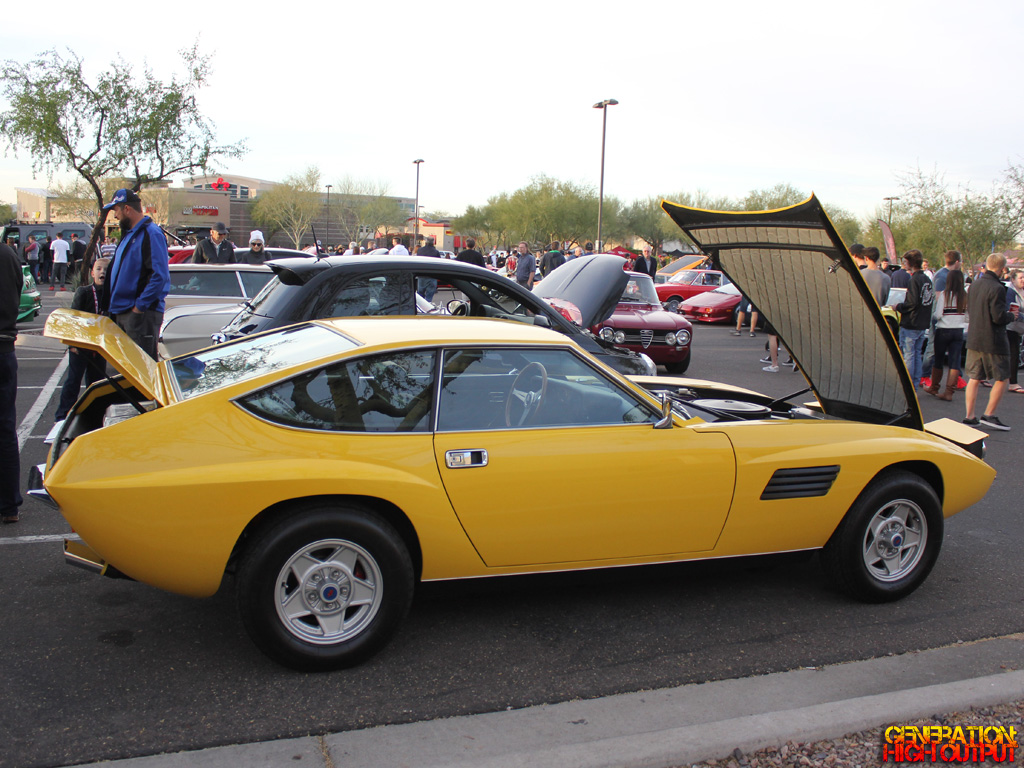
Now HERE’s something you don’t see every day! In fact, I would be quite surprised if you had heard of an Intermeccanica Indra before. I certainly had not, until I was standing in front of this one at the monthly Cars and Coffee car show in Scottsdale, Arizona. I was vaguely familiar with Intermeccanica because of the Italia, the car which took me years to figure out what it was.

Founded in Torino, Italy in 1959, the company began producing small numbers of sports cars such as the Apollo GT. I think the design of the Indra is very representative of what was happening in Italy in the 1970s. You can see a little bit of everything in this car, yet it doesn’t look like a carbon copy of a Ferrari, Lamborghini, or DeTomaso. The Intermeccanica has some distinct design elements, like the shape of the quarter windows, the flares over the wheel arches, and the vents on the front fenders.
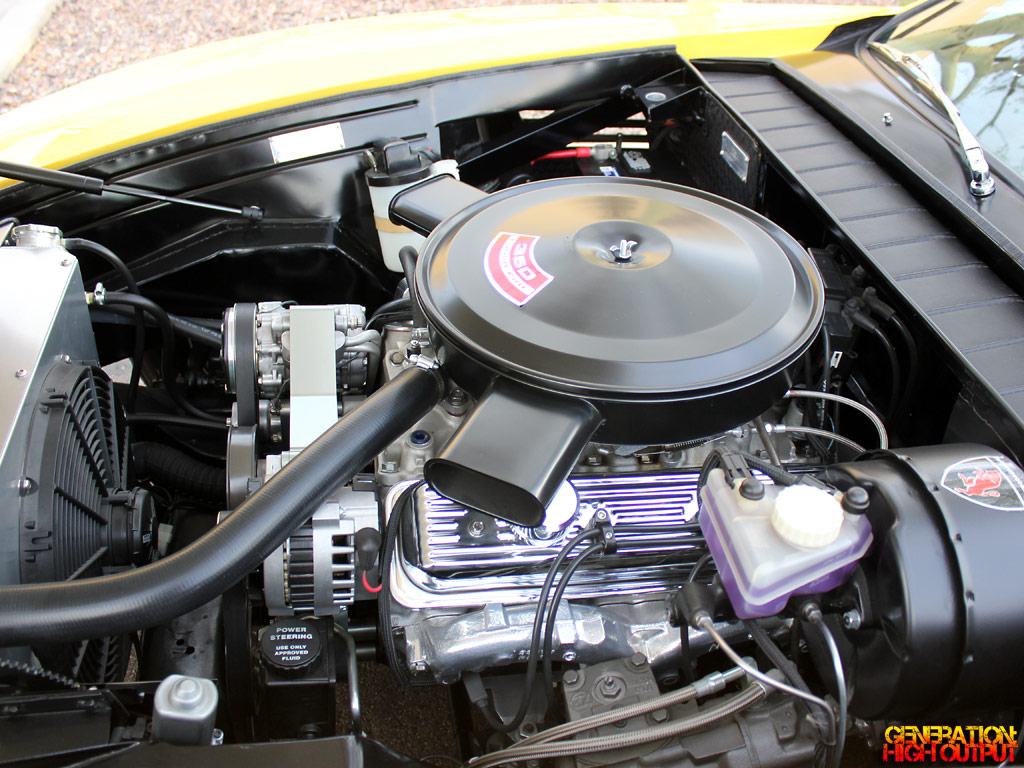
The Indra is an exceptionally rare car, with only 127 examples completed between early 1971 and mid-1974. According to the website intermeccanica.org, the breakdown was approximately 60 convertibles, 40 coupes and 27 two plus twos. That makes this yellow 2+2 the rarest of the rare! This one is well-equipped with an automatic transmission, power windows, air conditioning, a stereo, and a full complement of gauges.With a Chevrolet 350 under the hood, maintenance is both affordable and easy on the powertrain. I spent a few minutes chatting with the owner of this wonderful and unique car. He told me the car has had a complete restoration on the paint and body, with everything sorted out. Standing next to it, I can attest that for a 1970s Italian car, this one was in stunning condition.

The one custom touch the owner made was to have the Intermeccanica logo embroidered on the seats – he said it didn’t come that way from the factory, but he really liked it.

The car was on Dealer plates from South Dakota. A sign in the trunk said that the car was restored by Executive Touch Restorations in Sioux Falls, and that the paint and body work was done by Pierre’s Body Shop, also in Sioux Falls.

It rides on a set of Cromodora 6Jx14H2 14-inch wheels with period-correct Michelin XWX tires.

I really enjoyed learning about this interesting piece of automotive history, and I hope that you enjoyed reading about it!


1975 Lamborghini Urraco – One Odd Bull

Readers who remember the 70s will recall the gas crisis of 1973 and the long-lasting effects it had on the global market for high performance cars. In response to the uncertain economic times and skyrocketing fuel costs, supercar manufacturers began to produce “budget supercars” like the V6-powered Ferrari Dino and Maserati Merak. Lamborghini was still producing the Miura, but they also rolled out a budget supercar of their own: the Urraco.

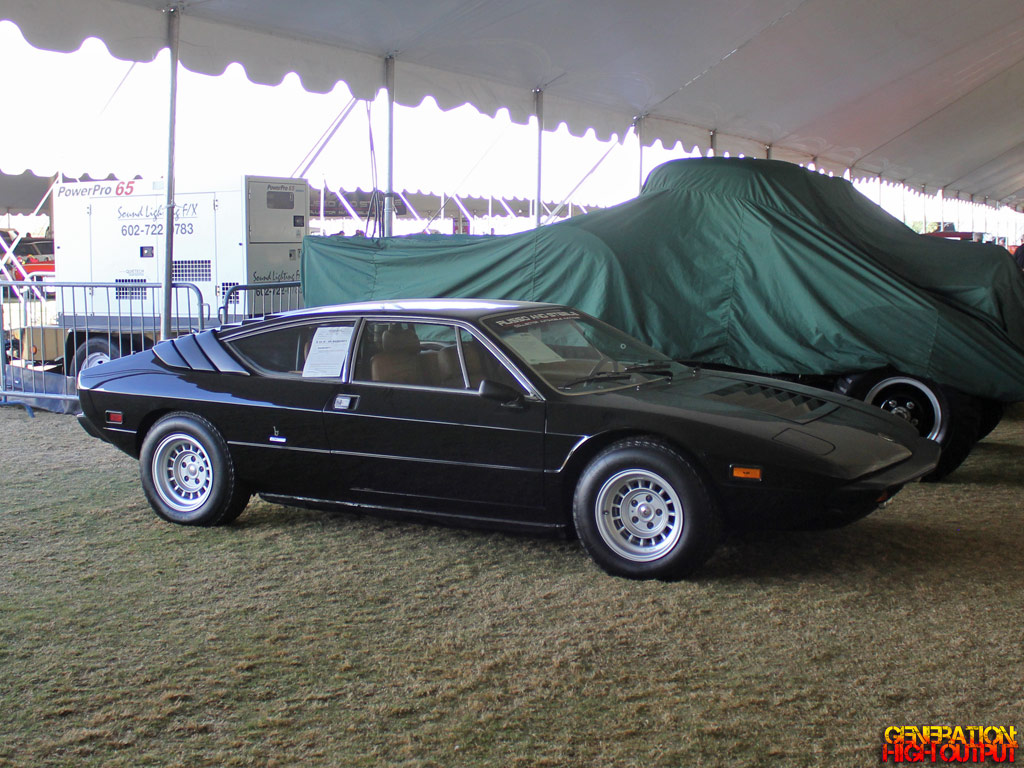
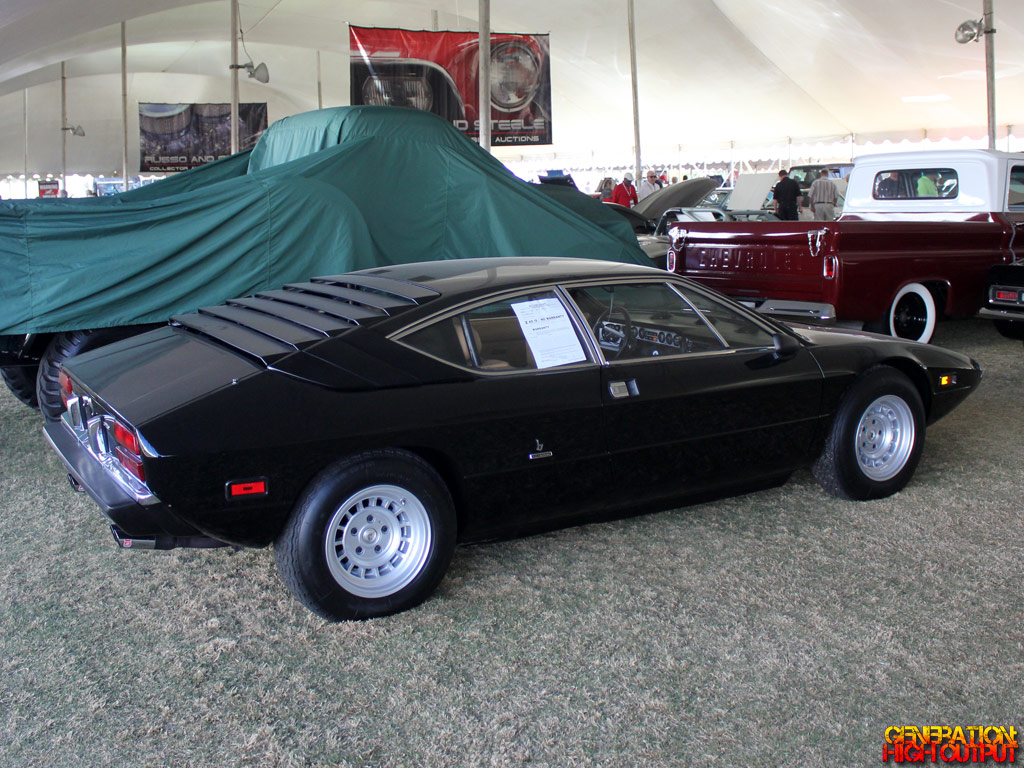
The Urraco is an extraordinarily rare car, with total production of just 791 vehicles between 1973 to 1979. Of those, just 21 were manufactured for export to the United States market. This car is one of them. I had a chance to get up close and personal with this 1975 Urraco P111 at the 2018 Russo and Steele Collector Car Auction in Scottsdale, Arizona.

The basis of Lamborghini’s cars has long been the V12 powerplant, but not with the Urraco. Because it was intended to be a more affordable supercar, it conceals a V8 engine under the rear hatch making 217 horsepower – significantly more than the Dino 206 and 246 GT and the early Merak (non-SS models).

This car was advertised as being in excellent mechanical condition, with an engine rebuild and major service completed in 2016 at a cost of $36,000. Other perks include the original owner’s manual and spare assembly, service history with records and receipts, and a 40-hour detailing job.
While a modern Lamborghini interior looks like the cockpit of a fighter jet, the cars of the 1970s were much more spartan. This Urraco sports a full suite of gauges, a stereo, and even factory air conditioning! I’m not sure if this was standard on US market cars or an option, but it would certainly be essential for an Arizona car.

I have to say that this 1975 Urraco was one of the more interesting cars at the Russo and Steele Scottsdale 2018 auction, and I am very glad I went. It’s definitely the odd bull of the herd as it doesn’t have the famous Lamborghini V12 or the amazing looks of the Miura, but it’s a part of the company’s history nonetheless. Collector car auctions offer a chance to see those rare and unique vehicles that you just don’t see every day, and Russo and Steele did not disappoint in that regard. I am very glad I went and would recommend that you do the same, if you are in the market for a unique collector vehicle.