Save the Date: Arizona Concours returns January 18, 2026

Scottsdale hosts prestigious collector car and motorcycle event

The world’s most interesting and exciting automobiles are often referred to as Sculpture in Motion, their kinetic beauty expressing the joy and excitement of motoring.

Sculpture in Motion is the theme of the next Arizona Concours d’Elegance, a premiere celebration of superb vehicles from the past and present, scheduled for Sunday, January 18, 2026, on the parklike lawns of the Scottsdale Civic Center.

A professionally judged and curated assembly of 100 rarely seen dream cars and high-value collector vehicles, the Arizona Concours is presented in partnership with Scottsdale Arts, the organization responsible for an array of artistic services in the city.

Spectators admire cars on the show field. Photo: Trevor Freeman

The 8th edition of the Concours will display exceptional vehicles from around the world, guaranteed to impress and excite not only dedicated car lovers but anyone who appreciates the beauty of expressive design, enjoyed in the atmosphere of a stylish garden party.

Ed Winkler, who serves as co-chairman of the Arizona Concours, along with Chuck Stanford Jr., said, “2026 is shaping up to be a great year for the Arizona Concours.

“Once again, the Concours will be an upscale lifestyle event featuring rare and fascinating vehicles arrayed on the grass, with entrants and spectators, some in period costumes, strolling the lawns under the sparkling-blue Arizona sky.”

Donald Osborne speaks with guests at the 2025 Arizona Concours d’Elegance. Photo: Michael Ross.

The Arizona Concours committee has designated 15 judged classes for 2026, including special classes that range from the 140th anniversary of Mercedes-Benz, the event’s featured marque, to a class for dune buggies and beach cruisers.

Other classes include a celebration of 125 years of Indian motorcycles, mid-century station wagons, post-war European sports/racing cars, and exotic supercars from 2000 through 2025.

Awards are presented in each class, along with a variety of special awards and the two coveted Best of Show trophies – one for pre-World War II and one for post-war. There is also an award for favorite costume.

1936 Bugatti Type 57SC Atlantic and 2023 Bugatti Chiron SS 57 One of One. Photo: Michael Ross.

Stanford, a longtime Mercedes-Benz enthusiast, noted that 2026 is a significant year for the esteemed German car company.

“As the company that invented the automobile, Mercedes-Benz has always been at the forefront of automotive engineering and has presented the world with extraordinary examples of voluptuous design and fierce competitiveness,” Stanford said. “I’m certain that a wide variety of Mercedes-Benz style and heritage will be on display come January in Scottsdale.”

Proceeds from the Arizona Concours benefit local artists and art programs, as well as the Concours’s longtime beneficiary, Make-A-Wish® Arizona, the founding chapter of the national organization that grants wishes for children facing life-threatening medical conditions.

The Arizona Concours not only raises money for Make-A-Wish but gets some of the children involved in judging the cars and awarding a specially designed trophy to their favorite.

Tickets for the Arizona Concours d’Elegance at the Scottsdale Civic Center will be available starting August 1. For information about tickets, vehicle submissions and sponsorships, visit the Concours website at ArizonaConcours.org.

About the Arizona Concours d’Elegance

A curated and judged exhibition of the world’s finest collector cars, the Arizona Concours d’Elegance is a celebration of automotive design held every January. A point of pride for the region’s car community, the non-profit event supports Make-A-Wish® Arizona, as well the arts and local artists.

About Scottsdale Arts

Through its partnership with the City of Scottsdale, the nonprofit Scottsdale Arts creates diverse, inspired arts experiences and educational opportunities that foster active, lifelong community engagement with the arts. Since its founding in 1987, Scottsdale Arts has grown into a nationally recognized, multi-disciplinary arts organization offering an exceptional variety of programs through four acclaimed branches — Scottsdale Center for the Performing Arts, Scottsdale Museum of Contemporary Art (SMoCA), Scottsdale Public Art and Scottsdale Arts Learning & Innovation — serving more than 600,000 participants annually.
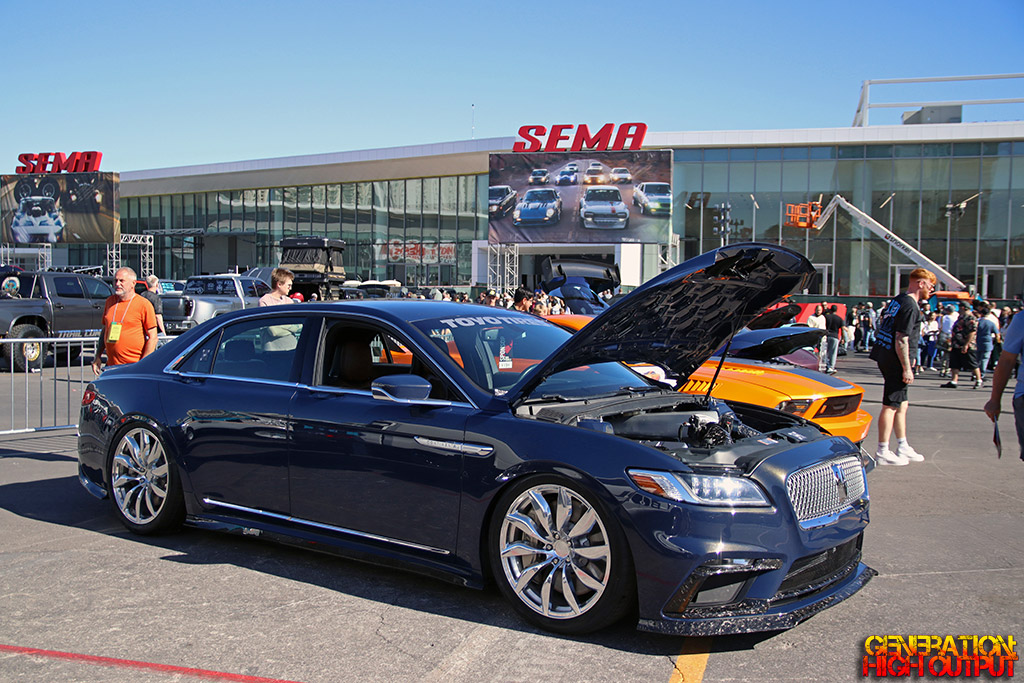
SEMA 2025: The 2017 Lincoln Continental V10 Swap That Shouldn’t Exist (But Does)

Every year at SEMA you get used to the usual pattern.

Rat Rods. Diesel swaps. Twin turbo setups making 1500 horsepower. Restomods that cost more than a house. And then, buried somewhere between the corporate booths and the endless rows of first-gen Camaros, you find something that makes you stop walking for a second and just stare at it like you’re trying to figure out if it’s real or if you are just dehydrated after spending too long in the Las Vegas sun.

This year, that thing was a 2017 Lincoln Continental with a V10 shoved into it.

Not swapped in. Not “cleanly integrated.” Shoved in. With intent.

Built by Diego and Jack over at Build It Yourself (@biy_buildityourself), this Continental has been their personal 3-year quest to answer a question nobody asked:
“What if we took a modern front-wheel-drive luxury sedan and turned it into something that sounds like it escaped a prototype F1 testing program?”

And then, instead of stopping there…they kept going.

The Engine Situation Is Completely Unreasonable

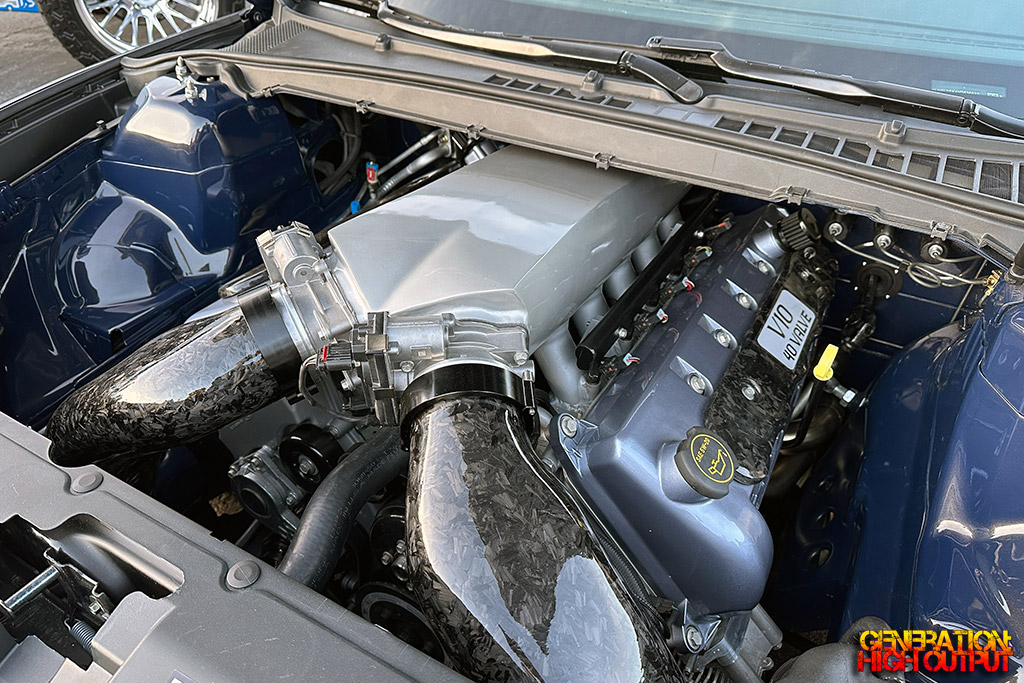
Under the hood sits a 6.8L V10 sourced from a Ford truck. That alone would be enough for most people to call it a day, post a YouTube video, and go buy another project car to ruin. But that’s not what happened.

They went full send and built custom cylinder heads by literally cutting up and welding together four Ford V8 heads into two 4-valve heads for a V10. The result is what they’re calling the world’s first Ford 6.8L 4-valve V10.

As if that weren’t enough, the guys also fabricated custom camshafts, and a custom intake manifold for the engine. The whole thing runs on a FuelTech FT550 standalone ECU.

This is so much more than an engine swap, it’s re-engineering the entire car for a purpose it was never meant to serve.

At some point you have to assume they stopped asking “should we?” and switched entirely to “how hard could it be?”

Re-Engineered for Performance

From the factory, this Continental was front-wheel drive with an automatic transmission. Now it’s rear-wheel drive with a manual.

The guys swapped in a Getrag MT82 6-speed, which required fabricating a transmission tunnel into the floor pan like it was no big deal.

There’s something deeply amusing about a modern luxury sedan being forcibly converted into a layout it never had any intention of accepting. It’s like convincing a well-dressed accountant to start drifting.

The Subtle Parts That Are Not Subtle At All

Underneath all of this chaos is a Mustang subframe, because apparently nothing says “this belongs together” like mixing luxury sedans with pony car suspension geometry.

The full custom exhaust system has been fabricated to the point where it sounds like an F1 car. It sounds absolutely unreal coming from a sedate-looking sedan.

There are also a number of 3D printed components throughout the build, such as the custom intake ducts. It’s satisfying how this build combines traditional fabrication and modern prototyping methods, like 3D scanning and design.

It Still Looks Like a Lincoln (Which Is the Weirdest Part)

The most unsettling part of the whole thing is that, from a distance, it still looks like a normal 2017 Continental. It has the stock body lines, and even retains the stock wheels. The only hint (aside from the sound) is the custom front bumper with forged carbon fiber air dam and accents.

And then you realize that underneath what looks like a quiet luxury sedan is a hand-built mechanical science experiment.

That mismatch is what makes it interesting.

Built in a Garage. Not a Facility. A Garage.

The part that sticks the most is not the spec sheet, it’s the origin story. This wasn’t built by a manufacturer, or a professional race shop, or a corporate-backed SEMA program with a marketing department and a render artist.

It was built by two guys in a home garage in Michigan. Which raises the uncomfortable question of what exactly separates “professional engineering” from “extremely determined individuals with too many tools and access to YouTube.”

Because at a certain point, the line gets blurry. And this car is way past that line.

Recognition at SEMA

Somehow, among everything else at the 2025 show, this Continental earned Pick of the Show from automotive photographer Larry Chen.

Which feels appropriate. Not because it’s perfect, but because it’s exactly the kind of thing that makes SEMA still worth walking through—something that shouldn’t exist, does exist, and forces you to rethink what is possible for a production car platform.

Final Thoughts

A modern Lincoln Continental was never supposed to become a V10, rear-wheel-drive, manual-transmission, garage-built engineering thesis with welded cylinder heads and an F1 soundtrack.
But that’s kind of the point.

This isn’t really about performance numbers or refinement or even whether it makes sense.

It’s about two people looking at a normal car and deciding, very calmly and very deliberately, that it wasn’t interesting enough yet.

And then fixing that problem the hard way.

Follow Build It Yourself:

https://www.youtube.com/@biy_buildityourself
https://www.instagram.com/biy_buildityourself/

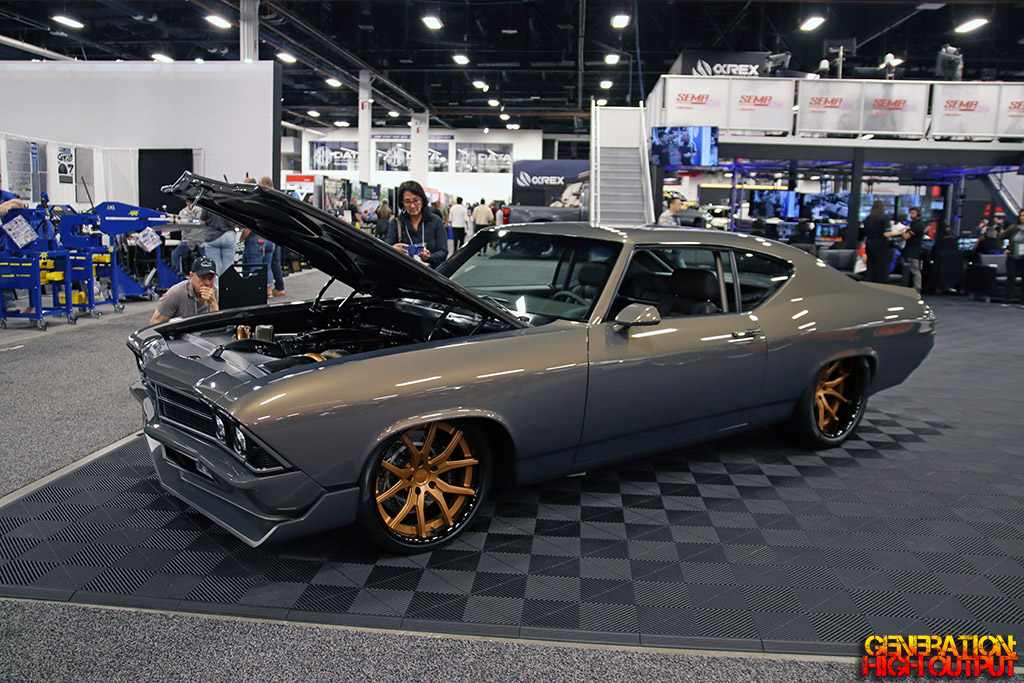
SEMA 2025: 1969 Chevrolet Chevelle Twin Turbo Restomod by Velocity Restorations

Velocity Restorations has a shop in Cantonment, Florida, which is one of those places you only really think about when you’re driving through and wondering how many classic trucks are out there quietly rusting into the ground behind someone’s barn.

They’ve built a solid reputation doing full restorations and restomods on classic Broncos, Blazers, Scouts, and the usual Chevy C/K and Ford F-Series trucks. Basically the kind of stuff that either gets “frame-off restored to factory spec” or “left under a tarp for 20 years until someone drags it into daylight with a tractor.”

So at the 2025 SEMA Show, I wasn’t exactly expecting them to show up with a 1969 Chevrolet Chevelle that looks like it got lost on its way to a completely different universe. And yet, there it was.

A restomod 1969 Chevrolet Chevelle built in partnership with Dutch Boys Hot Rods, sitting there like it had been assembled by someone who read the factory service manual once and then immediately decided it needed “more everything.”
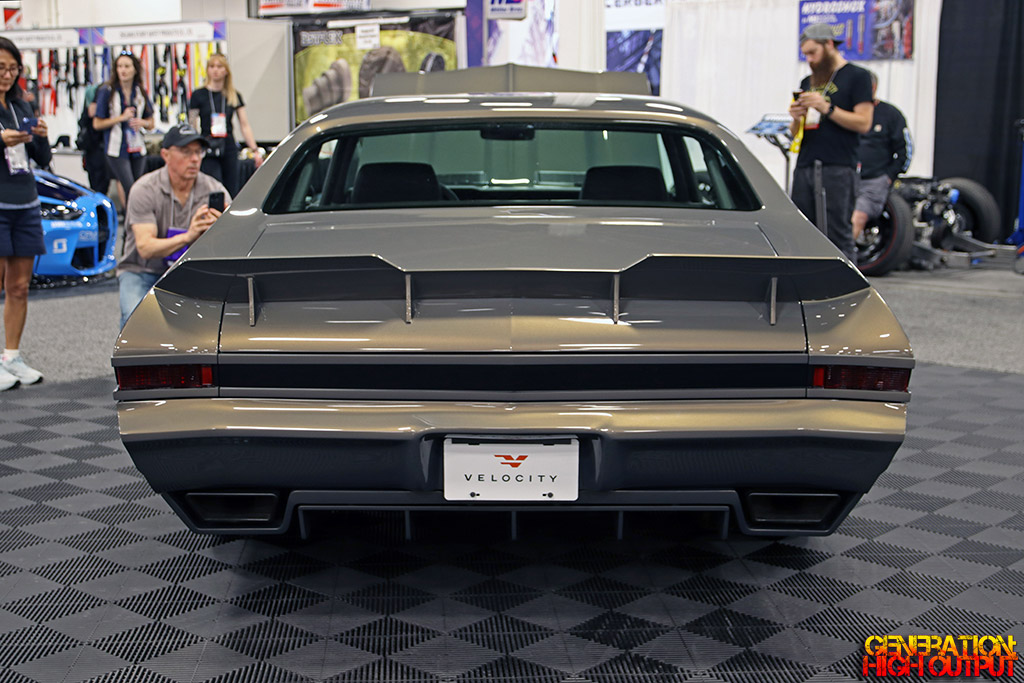
Before anyone jumps in with corrections, yes, it’s a 1969, but it’s wearing rear sheet metal from a 1968 Chevelle. I don’t know why they did that. Nobody at the show seemed interested in explaining it either, which honestly feels on-brand for SEMA at this point. You just accept things and move on.

And from there it only gets more complicated.

The body has billet door handles, a hand-built front splitter, a custom rear diffuser, and tucked bumpers. Which is basically a polite way of saying they smoothed and sharpened everything until it looks like a Chevelle that has been spending time in a wind tunnel instead of a Midwestern driveway.
Underneath, it sits on a Roadster Shop Fast Track chassis with modern suspension, Baer 6-piston disc brakes, and three-piece billet wheels from Greening Auto Company wrapped in Pirelli tires. At some point you stop calling it a restoration and start calling it “an engineering problem with really nice paint.”

Speaking of which, the paint is a three-stage Aurelium Bronze Pearl from BASF Glasurit, which is one of those colors that looks normal until it catches light in a way that makes you briefly consider repainting everything you own.

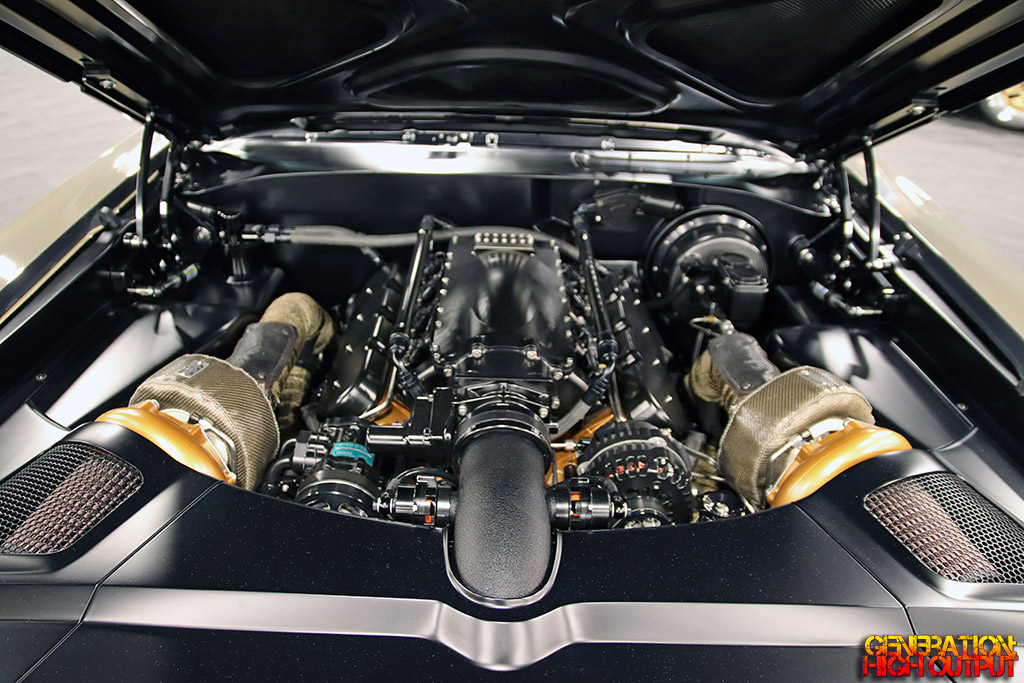
Under the hood is where things completely stop behaving. It’s a 427 cubic inch LS built by Nelson Racing Engines with twin turbochargers making a claimed 1,000 horsepower, backed by a TREMEC T-56 Magnum six-speed manual. Which is a funny combination when you remember the original version of this car was happy just existing with a big block and a carburetor that may or may not have been tuned correctly depending on the weather.

The engine bay has custom hand-built closeout panels, which is the kind of detail you only really appreciate when you realize someone had to spend hours making metal behave in ways it absolutely did not want to behave.

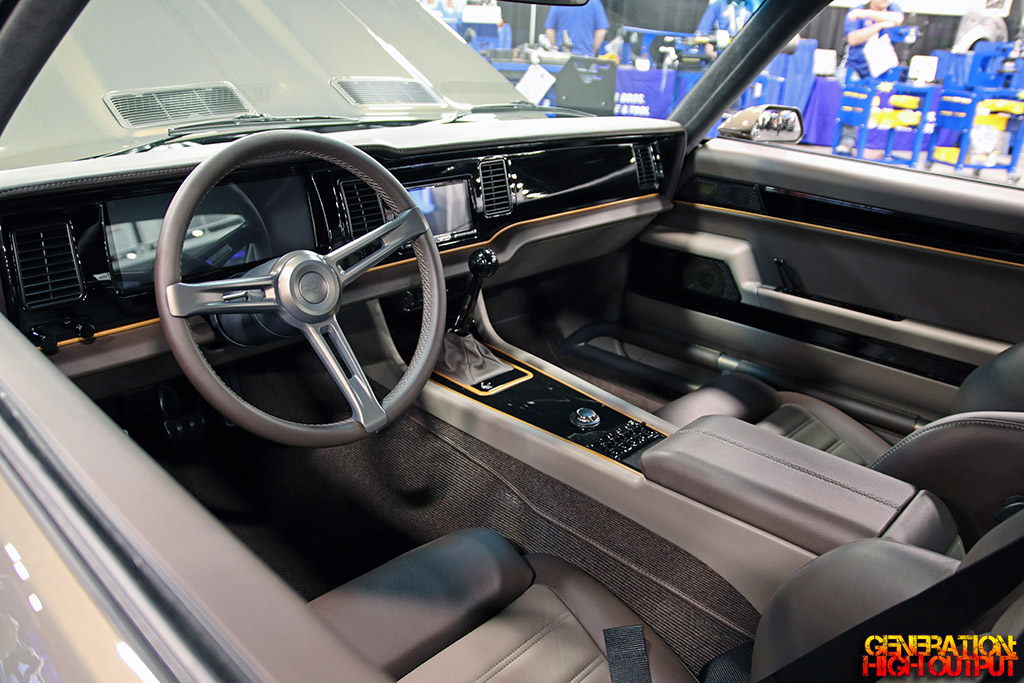
Inside, it’s a full custom setup with a roll cage, Recaro Expert M seats, a Holley EFI Pro dashboard, an Alpine head unit, Focal speakers, and a Sparc Industries steering wheel. It’s the kind of interior that looks like it was designed by someone who wanted equal parts race car, concept car, and very expensive gaming simulator.

And here’s where I probably should admit something.

I grew up around a 1972 Chevelle that has been in my family for as long as I can remember. Not the same one, obviously, but the same shape, the same smell, the same way the door sounds when it closes like it’s still made of something that could survive a minor war.

So I’ve always had a soft spot for these cars. Not in the “collector value” sense. More in the “this is what I think a car is supposed to look like” sense.

Seeing a 1969 Chevelle turned into a 1,000-horsepower modern muscle car with smoothed and shaved body work, flush mounted glass, and wide tires is one of those things that should probably bother me more than it does.

Instead, I just kind of stood there thinking about how my family’s version would probably stall trying to leave the parking lot if it had to deal with modern fuel, let alone twin turbos.

Anyways.

It’s not really a Chevelle anymore in the traditional sense. It’s more like someone took the idea of a Chevelle, fed it a gym membership, a CAD file, and a very large budget, and then said “go do something aggressive with your life.”

And honestly… I’m not entirely sure what that says about it.

Or me.

Probably nothing good.

I’ll probably go look at old factory Chevelle brochures again later just to reset my brain.

Follow Velocity Restorations:

https://www.velocityrestorations.com/
https://www.facebook.com/VelocityRestorations/
https://www.instagram.com/velocityrestorations/

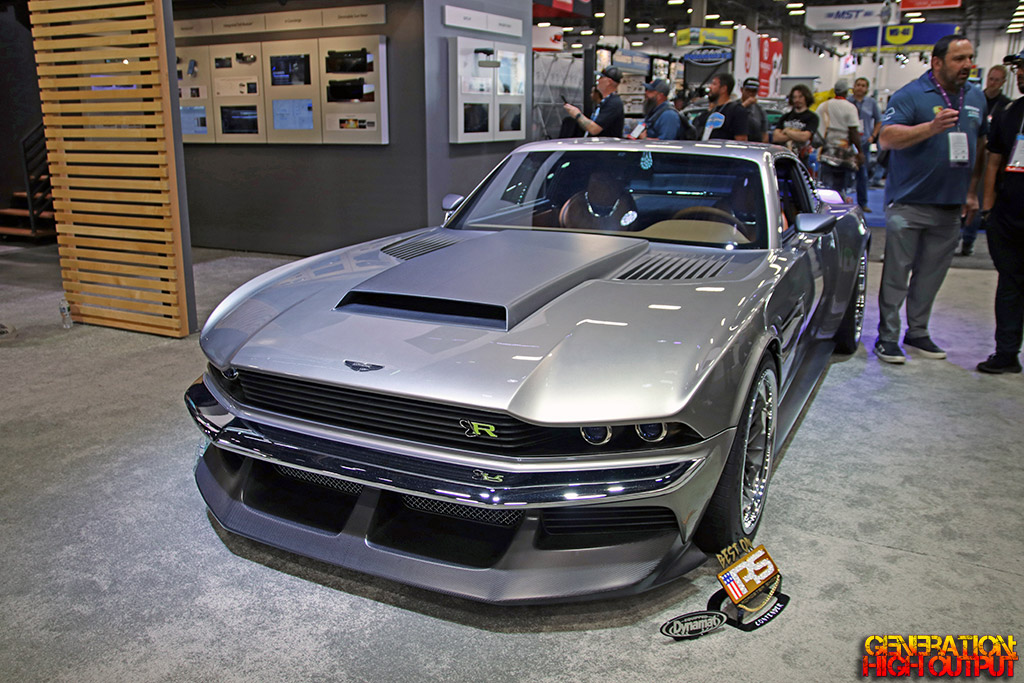
SEMA 2025: 1971 Aston Martin DBS “Octavia” by Ringbrothers

One of my favorite custom car builders is the Wisconsin-based team of Mike and Jim Ring, better known as the Ringbrothers. Over the past two decades, the brothers have built some of the most meticulously engineered and beautifully crafted custom vehicles in the world. Their projects consistently combine innovative design, advanced manufacturing techniques, and incredible attention to detail.

The Ringbrothers unveiled their latest creation, a heavily modified 1971 Aston Martin DBS nicknamed “Octavia,” during Monterey Car Week in August. I caught up with the car a few months later at the 2025 SEMA Show in Las Vegas. The car was displayed in the Gentex booth and quickly became one of the standout builds of the show.

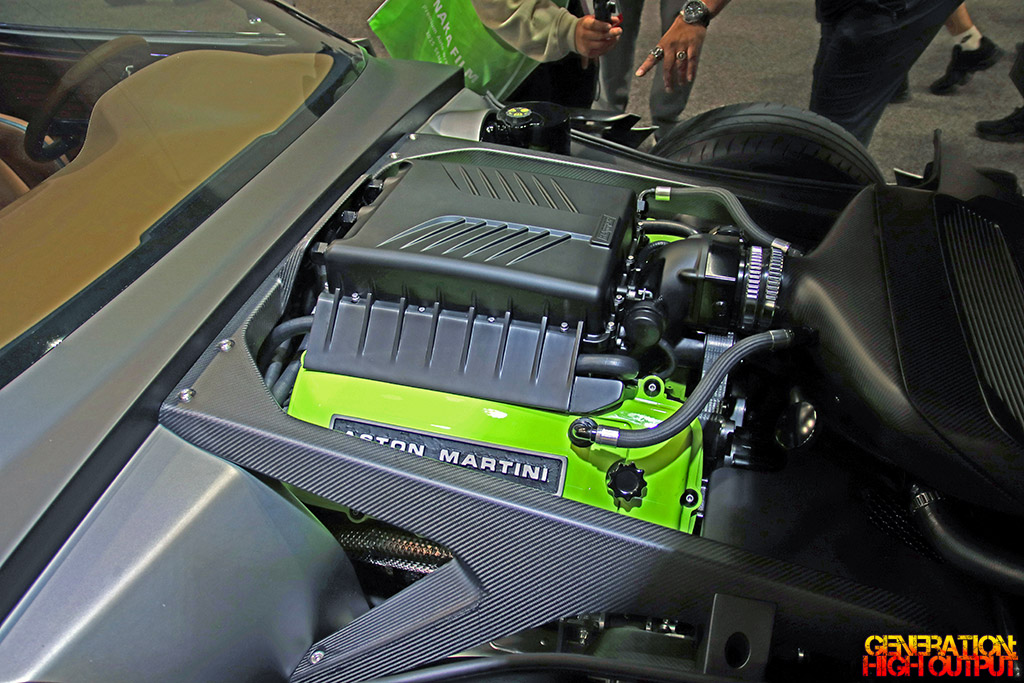
As with other Ringbrothers builds, there is more to the car than meets the eye. “Octavia” has numerous James Bond references. The custom BASF Glasurit paint color is called Double-O Silver, a nod to Bond’s 00-agent designation. The engine wears custom valve covers that say “Aston Martini,” while the dipstick handle is shaped like a Martini glass complete with an olive garnish. Even the car’s name references the villain Octavia from the 1983 James Bond film Octopussy.

The scope of the project is difficult to overstate. According to Ringbrothers, approximately 3,900 hours were invested in computer-aided design before construction even began. Starting with a Roadster Shop Fast Track chassis, another 4,300 hours went into the physical build, bringing the total project time to roughly 8,200 hours.

Although the car began life as a 1971 Aston Martin DBS, very little of the original vehicle remains. The entire body was recreated in carbon fiber and extensively modified. The front track was widened by eight inches, while the rear gained an additional ten inches. The wheelbase was also stretched by three inches to achieve the desired proportions and stance.
Power comes from a Wegner Motorsports-built 5.0-liter Ford Coyote V8 equipped with a custom Harrop supercharger and controlled by a Holley Terminator X-Max engine management system. The combination produces an impressive 805 horsepower. A Bowler Performance TR-6060 Magnum six-speed manual transaxle transfers power to the rear wheels.

Handling and comfort are vastly improved thanks to the independent rear suspension system. It rides on a set of custom HRE wheels measuring 19×11 inches in the front and 20×13 inches in the rear, wrapped in Michelin Pilot Sport Cup 2 tires. Behind those, Brembo disc brakes provide upgraded stopping power.

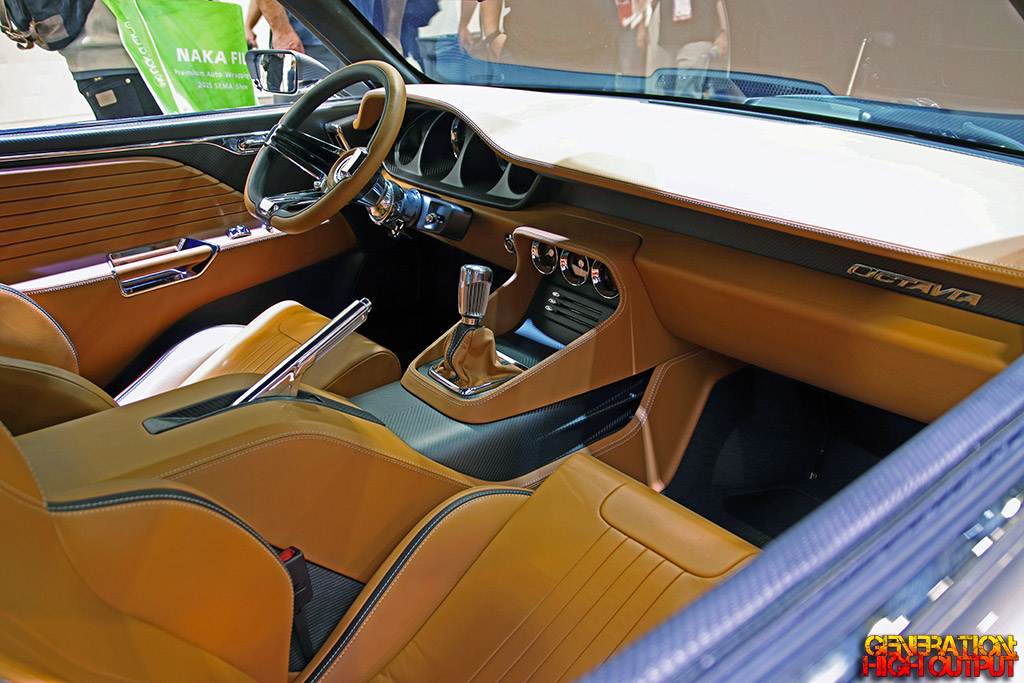
Ringbrothers also fabricated a custom exhaust system with Borla mufflers and unique exhaust tips machined from carbon fiber and stainless steel. Inside, the cabin was completely reimagined by Steve Pearson of Upholstery Unlimited, creating a bespoke interior worthy of the extensive exterior and mechanical modifications.

The Ringbrothers have built some remarkable vehicles over the years, but Octavia may be their most ambitious project to date. They transformed a 1970s luxury car into a modern muscle car with custom bodywork, modern performance, advanced materials, and James Bond-inspired details, creating a truly unique automobile. “Octavia” shows what Ringbrothers can do, and why they are one of the premier custom car builders in the industry.

Follow the Ringbrothers:

https://www.ringbrothers.com/
https://www.facebook.com/RingBrothersOfficial/
https://www.instagram.com/ringbrothers/

2023 Brabus 900 Rocket R Takes Porsche 911 Tuning to New Heights

Since it debuted more than 60 years ago, the Porsche 911 has become one of the most iconic and recognizable sports cars of all time. Its legendary status makes it a popular choice for tuners and modifiers to enhance the car’s capabilities even further.
Porsche offers factory-tuned and limited edition models of the 911, but for those seeking something a bit more special, there are companies such as: Gunther Werks, RUF, Singer, and Canepa, as well as bespoke tuners like Magnus Walker and Rauh-Welt Begriff (RWB).

A few years ago, German tuning and design company Brabus began modifying Porsches, too. Brabus is most well-known as a tuner of Mercedes-Benz vehicles. In 2020, they began production of the Brabus Rocket, a highly modified version of the 911 Turbo S.

One of these cars will be crossing the auction block at the 2026 Barrett-Jackson Collector Car Auction in Scottsdale, Arizona. The car is a 2023 Brabus 900 Rocket R, and it is an incredibly special car. This is a car for someone who wants a 911 that has been elevated to new heights. Let’s take a deep dive into what makes this car so special.

To start, the Brabus 900 Rocket R is incredibly limited, with just 25 units produced worldwide. Adding to the exclusivity, this car is one of just two that are street legal in the United States, and the only one finished in “Mexico Blue” exterior paint. Owing to its blue exterior over blue interior, the car is appropriately nicknamed “Blue Magic.”

While the standard 911 Turbo S has about 640 horsepower, the Rocket R makes 900 horsepower from its 3.8L twin-turbo flat-six engine, and 1,000 n-m of torque. This is coupled to Porsche’s superb 8-speed PDK gearbox, which blends everyday usability with race-level performance. It is a potent combination that delivers exhilarating performance across the powerband. This allows the car to rocket from 0-60 mph in 2.5 seconds, 0-120 mph in 7.2 seconds, and a top speed of 211 mph.


The car features a full exterior treatment including WIDESTAR front and rear bumpers, carbon fiber lip spoiler, and carbon fiber side mirrors. The car is approximately 2.6 inches wider than a stock 911 Turbo S. The air ducts in the front fenders are fully functional, helping to expel heat from the wheel arches.

Other Brabus upgrades include: Brabus height-adjustable suspension and shock absorbers, Brabus brakes, Brabus carbon fiber body package, and a full luxury interior with leather, Alcantara, and carbon fiber.

The car features a Brabus Inconel high-performance exhaust system with four tailpipes. Inconel is a special alloy of steel that is developed for high temperatures. It is mostly used in the aerospace industry on rockets, making it a perfect fit for the Brabus 900 Rocket R. The exhaust has electronically controlled valves with two modes – a “Coming Home” mode that is perfect for a relaxed cruise, or a “Sport” mode that allows for experiencing the full range of the car’s powerful 900 hp engine.

The car rides on a set of Brabus Monoblock P Platinum Edition wheels with carbon aero discs, which measure 21 inches up front and 22 inches in the rear. Wrapped in Continental SportContact 7 tires, they are sure to provide maximum grip.

This is a 911 done to a very high level, and one that just a few lucky owners will get to experience.

The car’s original MSRP was $585,000 USD, so it will be interesting to see what it sells for in January 2026. This car will be crossing the block at the Barrett-Jackson Scottsdale 2026 collector car auction, with NO RESERVE price.

For more information, see this link: https://www.barrett-jackson.com/2026-scottsdale/docket/vehicle/2023-brabus-900-rocket-r-291058

Update: The car SOLD for $1 million on 24 Jan 2026!

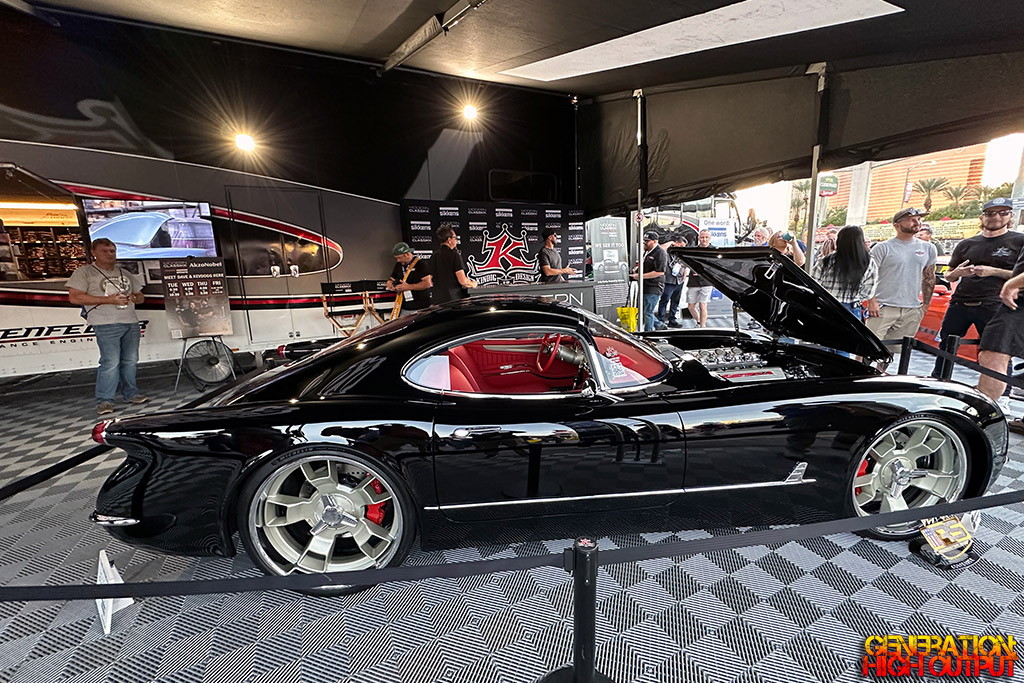
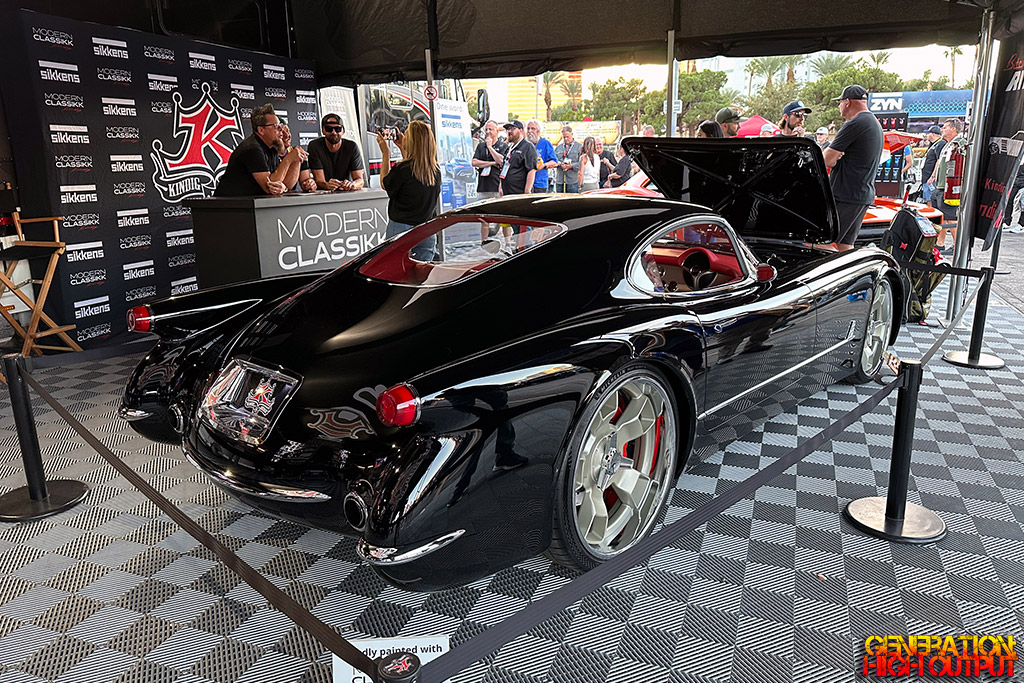
SEMA 2025: 1953 Corvette CF1 Fastback by Kindig-It Design

Every once in a while at SEMA you come across a car that immediately tells you two things:

1. A ridiculous amount of time, money, and talent went into it
2. It will probably never do anything as undignified as getting a grocery run or sitting in traffic next to a lifted Tahoe with mismatched panels

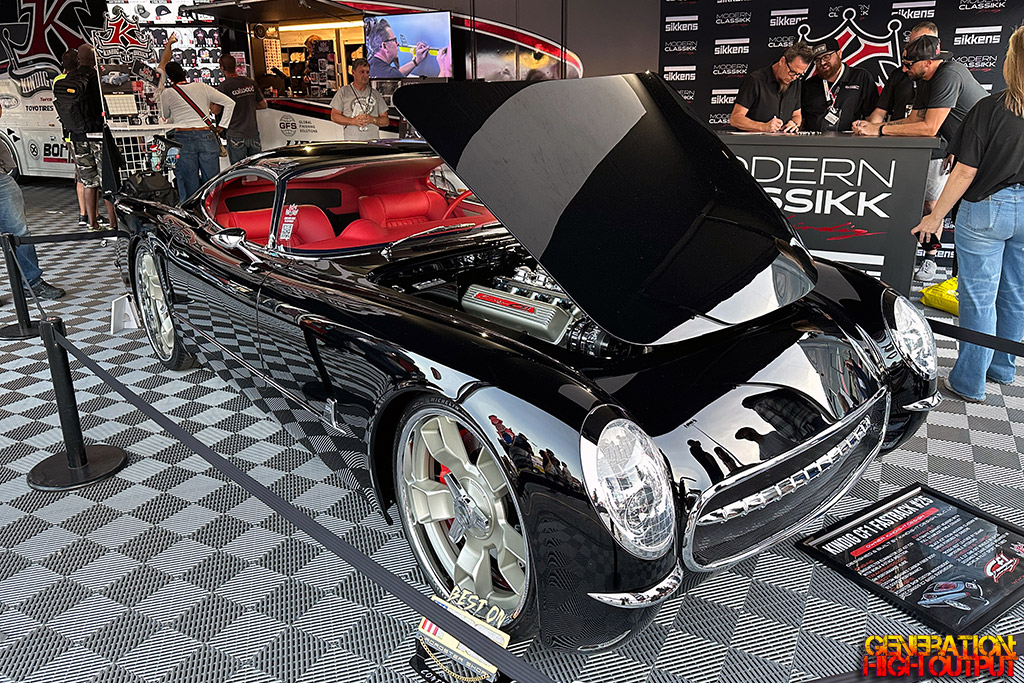
This year, that car was the new CF1 Fastback from Kindig-It Design.

And honestly, it doesn’t really feel fair calling it a “car” in the normal sense. It feels more like a design study that was made into a real object.

Dave Kindig’s Side Project

If you’ve spent any time around custom cars, the SEMA Show, or turned on cable TV in the past decade, you probably already know the name Dave Kindig. His shop in the Salt Lake City area has basically turned into a rolling portfolio of “what if we just… did it better than factory” ideas, many of which have been documented over 11 seasons of Bitchin’ Rides.

But somewhere along the way, Kindig launched a side project of building a small-run of series production cars. The CF1 series is that idea fully realized.

It started with the CF1 Roadster in 2021, followed by the Cabriolet in 2023, and now the Fastback version making its debut at SEMA 2025.

Each one is a continuation of a thought experiment:

“What would a 1953 Corvette look like if it was actually allowed to evolve normally instead of getting frozen in time?”

A Corvette That Never Existed, But Should Have

The inspiration is obvious: the original 1953 Chevrolet Corvette. But the CF1 Fastback isn’t really a tribute car in the traditional sense.

It’s more like someone took the concept of that car and removed all the limitations that existed in 1953 such as budget, materials, tire technology, chassis engineering, and general understanding of physics, and then rebuilt it from scratch.

There are no donor shells. No chopped-up classics being sacrificed in the name of nostalgia. Just a fully custom carbon fiber body sitting on a purpose-built platform.

Which, depending on your mood, is either the purest form of respect for the original design… or a very expensive way of refusing to leave the past alone.

Underneath the Pretty Surface

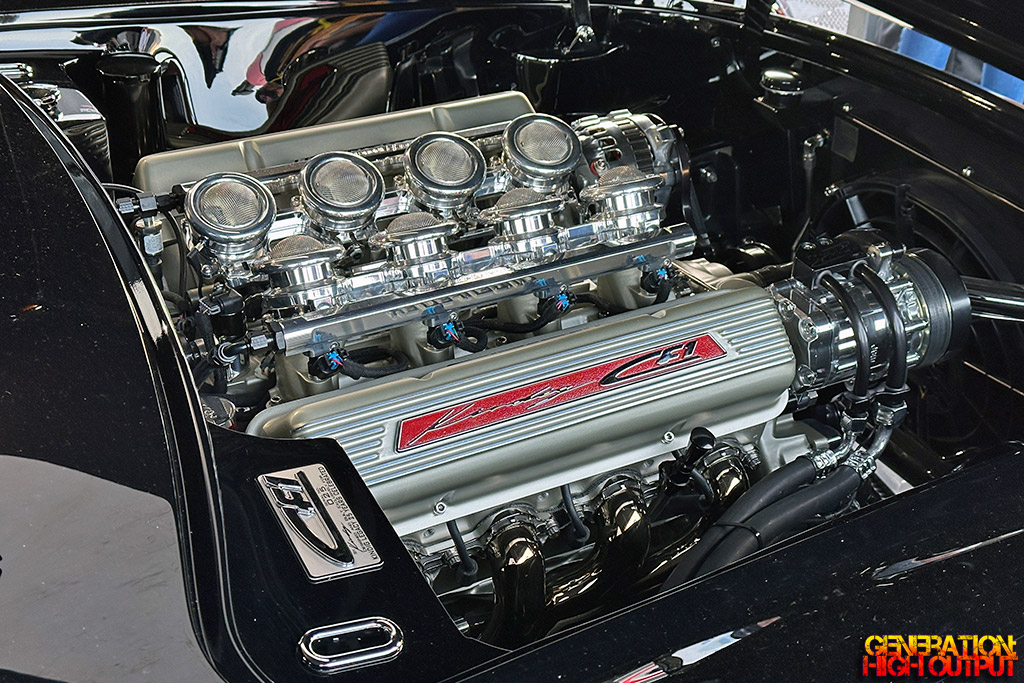
The CF1 starts with a custom chassis from Roadster Shop, using suspension geometry borrowed from the C7 Corvette platform. This isn’t a “vintage feel” car that also happens to stop and turn poorly. It’s engineered to behave like something modern, even if it looks like it belongs in a black-and-white photograph.

Power comes from a 427 cubic inch LS7-based engine built by Lingenfelter Performance—an Eliminator package pushing around 650 horsepower. On top sits an 8-stack electronic fuel injection system from Borla, feeding a full stainless exhaust setup that probably sounds a lot angrier than anything wearing 1950s styling should reasonably sound.

Bolted behind it is a GM Performance 4L80E transmission, which is about as far from “vintage” as you can get without involving a CVT and regret.

So yes—it looks like a classic Corvette.

But mechanically, it behaves like something that quietly skipped 70 years of automotive evolution and showed up already finished.

Interior: Luxury That Doesn’t Know It’s in a Hot Rod

Inside, things go from “restomod” to “luxury boutique hotel that forgot it was supposed to be a car.”

Rosso red leather by Seams Impossible Interiors gives the cabin a level of visual drama that feels closer to concept car than street machine. Dakota Digital gauges handle instrumentation duties, a Vintage Air system keeps things comfortable, and a custom steering wheel with a tilt column.

It’s all very deliberate. Very controlled. Very expensive.

And very far removed from anything that ever had a carburetor and a choke lever.

Jesus, Take the Wheel

The CF1 rides on custom EVOD wheels designed by Kindig himself. They are 21 inches up front, 22 in the rear. They are too big and too goofy for the car. I know it’s a restomod, but I feel that a more “OEM Plus” style wheel would suit the car better. The proportions of the car don’t look right with the wheel arches completely filled.


Time, Money, and the Slow Disappearance of “Normal Ownership”

Each CF1 takes roughly 9 to 14 months to build depending on specification. Finished examples of the CF1 Roadster have sold at auction for between $500 to $700,000 dollars, which puts it firmly in the category of “objects that will be carefully curated rather than used.”

And that’s where things get a little complicated.

Because the CF1 Fastback is undeniably beautiful. It’s one of those cars you walk around twice without realizing you’ve done it. It has presence, proportion, and craftsmanship that most production cars don’t even attempt anymore.

But it also feels like it’s been pre-assigned a life that never includes:
• Parking lots
• Road trips with questionable gas stations
• Door dings from someone’s overenthusiastic Civic door
• Or any situation involving weather

It’s already been mentally placed on a pedestal.

Probably before it even left the booth.

Final Thoughts

What Kindig-It Design has done with the CF1 Fastback is technically impressive in every measurable way. The engineering, design execution, and build quality are all at a level that most manufacturers would struggle to match outside of a concept studio.

But it also highlights something a little bittersweet about the modern custom world.

We’ve gotten so good at building dream cars that we’ve almost eliminated the part where they have to live in the real world.

And maybe that’s the trade-off.

The CF1 Fastback isn’t really meant to be driven like a normal car. It’s meant to exist. Which is fine.

But part of me can’t help but think the original 1953 Corvette didn’t plan on becoming an untouchable art piece either.

Follow Kindig-It Design:

https://kindigit.com/
https://www.facebook.com/Kindigit/
https://www.instagram.com/kindigitdesign/
https://www.youtube.com/@kindigitdesignofficial